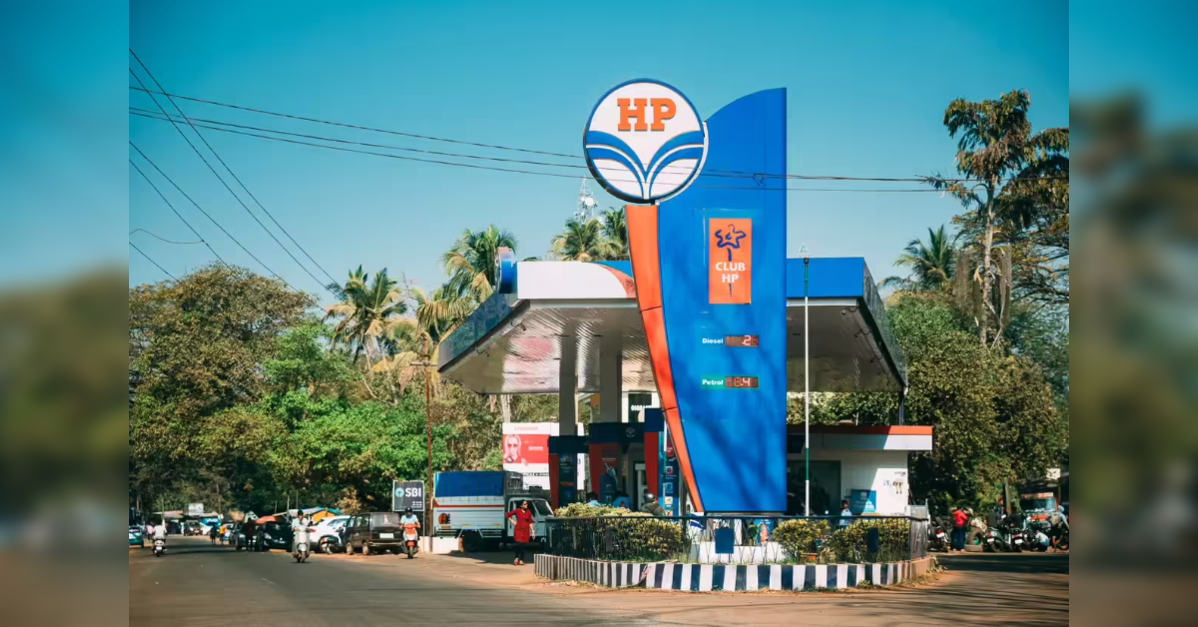
Hindustan Petroleum Corporation Limited (HPCL) delivered an exceptionally strong performance in the second quarter, reporting a staggering 27-fold surge in profit after tax to ₹3,859 crore year-over-year. This remarkable leap, primarily driven by robust refining margins and a lower comparative base from the previous fiscal year, underscores the operational efficiencies and market conditions that buoyed refiners in Q2 2025. While such figures naturally capture investor attention, a deeper dive, especially through the lens of current market dynamics and forward-looking indicators, is essential to understand the sustainability of these gains in a rapidly evolving energy landscape.
HPCL’s Q2 2025: A Deep Dive into Margin-Driven Growth
HPCL’s impressive second-quarter results were a testament to favorable market conditions and strategic operational execution. The company’s gross refining margins (GRM) more than doubled year-over-year, reaching an impressive $8.80 per barrel. This significant margin expansion was the primary catalyst behind the profit surge, transforming a previous year’s profit of ₹142.67 crore into the reported ₹3,859 crore. Beyond refining, the company’s crude throughput accelerated by 4.3% to 6.57 million metric tonnes, indicating strong operational utilization. Furthermore, HPCL’s aviation business segment demonstrated resilience and strategic prowess, recording a 6.1% growth during the quarter, starkly contrasting an industry-wide degrowth of 2%. Revenue from operations also saw a modest increase of approximately 2%, crossing the ₹1.09 lakh crore mark. This multifaceted performance culminated in the announcement of an interim dividend of ₹5 per equity share, payable to eligible shareholders by November 27, signaling confidence to its investor base.
Navigating Current Market Headwinds: Refining Margins Under Pressure?
While HPCL’s Q2 2025 performance was stellar, current market conditions present a notably different picture for refiners. As of today, Brent Crude trades at $90.38 per barrel, marking a sharp 9.07% decline within the day and a significant 19.9% drop from $112.78 just 14 days ago. Similarly, WTI Crude has fallen to $82.59 per barrel, down 9.41% today. This dramatic shift in crude pricing from the period HPCL’s strong margins were realized introduces a fresh set of variables for the refining sector. While lower input costs can theoretically boost margins, the speed and magnitude of this decline often signal broader demand concerns or an oversupply situation. Moreover, product prices are also reacting; gasoline trades at $2.93 per gallon, down 5.18% today. Investors are keenly asking about the price of oil per barrel by the end of 2026, a question directly impacting refiner profitability. Sustained volatility and potential downward pressure on crude prices could compress refining margins if the price of refined products falls at an equivalent or faster rate, challenging the $8.80/barrel margins seen in Q2 2025.
Upcoming Events to Shape the Refining Outlook
The immediate future holds several pivotal events that will significantly influence crude price trajectories and, by extension, the outlook for refiners. Investors are closely monitoring the upcoming OPEC+ Joint Ministerial Monitoring Committee (JMMC) Meeting on April 19, followed by the full OPEC+ Ministerial Meeting on April 20. These gatherings are crucial, especially given current market volatility and investor inquiries regarding OPEC+ current production quotas. Any decision on production levels – whether an extension of current cuts, a slight increase, or even a surprise cut – will directly impact global crude supply and pricing, thereby setting the stage for refining economics. A decision to maintain or deepen cuts could stabilize or even push crude prices higher, potentially squeezing margins if product demand remains soft. Conversely, an increase in quotas could further depress crude prices, which could be margin-positive if product demand holds firm. Beyond OPEC+, the weekly API and EIA crude inventory reports on April 21/22 and April 28/29, respectively, along with the Baker Hughes Rig Count on April 24 and May 1, will provide essential real-time insights into supply-demand balances within major energy markets. These data points are critical for investors seeking to gauge the near-term health and direction of the oil and gas sector.
Investor Focus: Beyond the Q2 Spike
The investor community, as evidenced by questions ranging from predictions for oil prices by the end of 2026 to the performance of specific refiners like Repsol, clearly recognizes that HPCL’s exceptional Q2 2025 is a snapshot in time. While the declared interim dividend and the stock’s 3.53% rise to ₹468.35 on the BSE post-announcement reflect positive sentiment, the broader narrative for refiners is one of adapting to dynamic market conditions. The ability of companies like HPCL to sustain robust refining margins amidst potentially lower crude prices and fluctuating demand will be paramount. Strategic investments in areas like aviation fuel, where HPCL outperformed the industry, demonstrate a pathway to diversification and resilience. However, the macro-environment, influenced by OPEC+ decisions and global economic health, will dictate the overall profitability landscape. Investors should look beyond historical highs and focus on a refiner’s agility, cost management, and ability to navigate commodity price volatility, using upcoming market signals as critical guidance for their investment decisions in the coming quarters.


