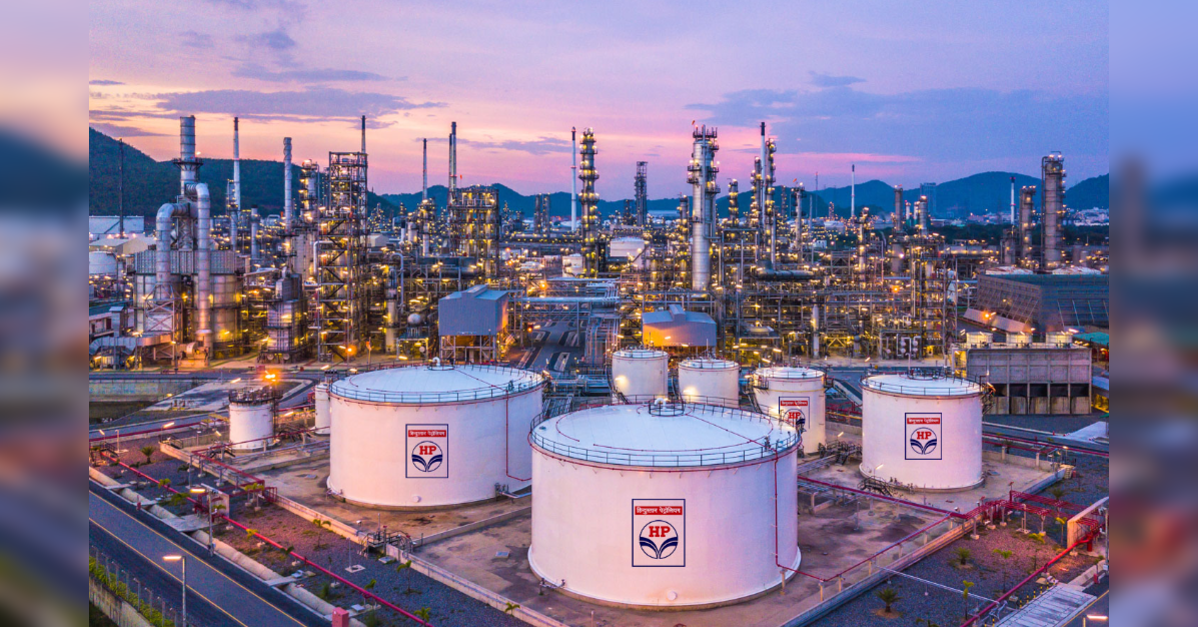
The global oil and gas market is always susceptible to localized disruptions, and the recent operational challenges faced by Hindustan Petroleum Corporation Limited (HPCL) at its Mumbai refinery serve as a potent reminder. The state-owned refiner’s unexpected move to issue rare tenders for the import of significant volumes of transport fuels — specifically 34,000 tons of gasoline and 65,000 tons of gasoil for early November delivery at Mundra port — highlights how even well-established players can be caught off guard by crude quality issues. This incident not only impacts HPCL’s immediate operational efficiency but also sends ripples through regional product balances, prompting investors to scrutinize refining margins and the broader stability of global fuel supply in an already volatile market.
HPCL’s Operational Setback: A Deep Dive into Crude Quality
HPCL’s decision to seek substantial fuel imports stems directly from severe operational issues at its Mumbai refinery. The root cause has been identified as a specific batch of crude oil, totaling 54.6 million tons, sourced from Hindustan Oil Exploration and processed in October. This crude was found to possess exceptionally high salt and chloride content, leading to significant corrosion in the refinery’s downstream units. The immediate consequence was a disruption in processing capabilities, resulting in suboptimal outputs and a necessary reduction in production. For a company of HPCL’s stature, issuing tenders for finished product imports is an uncommon measure, underscoring the severity and unexpected nature of the equipment damage. This incident provides a stark reminder of the critical importance of crude assay and quality control in refining operations, where even minor variations can lead to costly downtime and supply chain disruptions.
Market Response and Current Price Dynamics
The HPCL situation unfolds against a backdrop of significant shifts in global energy markets. As of today, Brent crude trades at $90.38 per barrel, marking a sharp decline of 9.07% within the day, with a range between $86.08 and $98.97. Similarly, WTI crude has seen a substantial drop of 9.41%, settling at $82.59, moving within a day range of $78.97 to $90.34. Gasoline prices are also feeling the pressure, currently at $2.93, down 5.18% for the day. This recent volatility is not an isolated event; the 14-day trend for Brent crude shows a steep decline from $112.78 on March 30, 2026, to its current level, representing a 19.9% decrease. While HPCL’s import tenders are localized, they add a layer of complexity to regional product balances. In a market already grappling with significant price swings, any unexpected demand for refined products can exert upward pressure on regional prices, potentially impacting margins for other refiners and end-user costs, even as crude prices soften globally. Investors are keenly watching how this unexpected demand from a major regional player influences the delicate supply-demand equilibrium for fuels.
Navigating Investor Concerns and Future Price Outlook
Our proprietary reader intent data reveals a strong investor focus on the future trajectory of crude oil prices and the stability of global supply. Questions like “What do you predict the price of oil per barrel will be by end of 2026?” and “What are OPEC+ current production quotas?” dominate the discourse. The HPCL incident, while localized, feeds into this broader narrative of supply uncertainty. Unexpected refinery outages, combined with ongoing geopolitical tensions and the unpredictable nature of OPEC+ policy, contribute to a challenging environment for price forecasting. With the OPEC+ Joint Ministerial Monitoring Committee (JMMC) Meeting scheduled for April 19, 2026, followed by the Ministerial Meeting on April 20, investors will be looking for clarity on production quotas and market stabilization efforts. Any decisions made by the cartel will directly influence the global crude supply, impacting not only the cost of crude for refiners like HPCL but also the overall sentiment in the oil futures market. The interplay between these major policy events and localized operational disruptions will be critical in shaping the market’s direction through 2026.
Strategic Implications and Forward-Looking Supply Dynamics
Looking ahead, HPCL’s experience could trigger a reassessment of crude sourcing strategies across the refining sector, particularly for facilities that process diverse crude grades. The financial implications for HPCL, including the cost of imported fuels and the expenses associated with refinery repairs and lost production, will likely be a focal point in their upcoming quarterly reports. Beyond HPCL, the incident underscores the broader vulnerability of refining infrastructure to crude quality issues, which could prompt increased scrutiny of supply chain resilience. The market will closely monitor upcoming data releases such as the API Weekly Crude Inventory (April 21, 2026, and April 28, 2026) and the EIA Weekly Petroleum Status Report (April 22, 2026, and April 29, 2026). These reports will provide crucial insights into broader U.S. and global crude and product inventories, offering a more complete picture of demand trends and overall supply health. A sustained dip in product inventories, exacerbated by events like HPCL’s import needs, could signal tighter market conditions despite the current downturn in crude prices. As the industry moves towards greater efficiency and cost optimization, understanding and mitigating risks associated with crude quality will remain paramount for refiners worldwide, directly influencing their profitability and the stability of global fuel markets.


