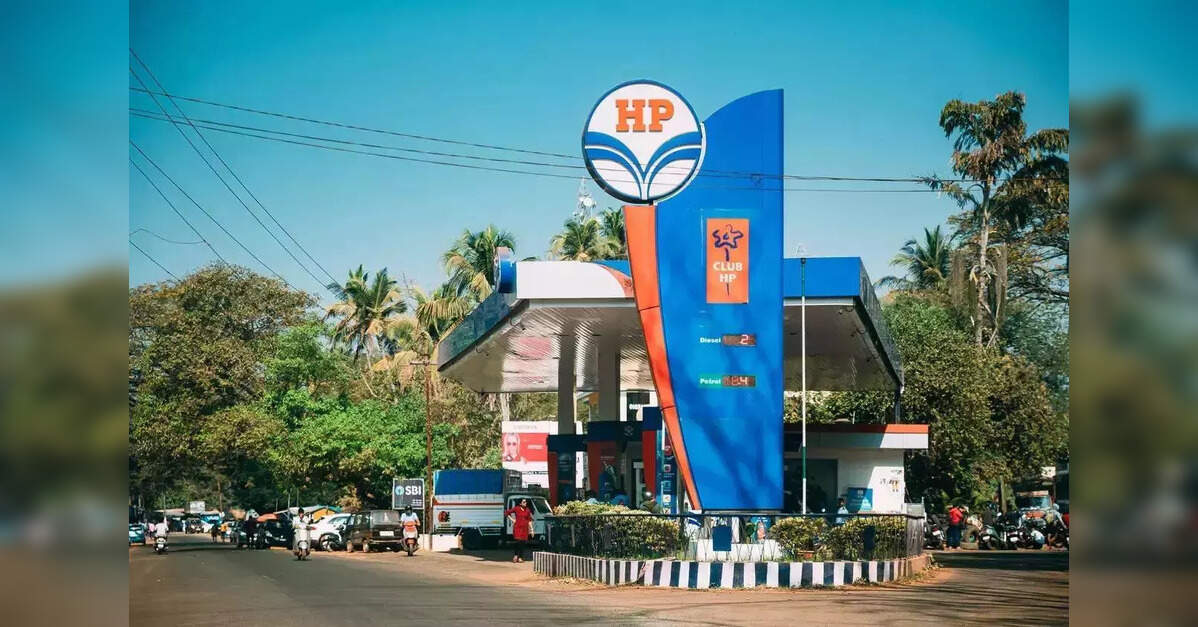
The global oil and gas landscape is a complex tapestry woven with threads of supply dynamics, demand fluctuations, geopolitical shifts, and crucially, operational integrity. While market participants often focus on headline price movements, the underlying health of infrastructure and the consistency of feedstock quality are equally vital for sustained profitability and investor confidence. A recent incident involving Hindustan Petroleum Corporation (HPCL) and Hindustan Oil Exploration Co. (HOECL) serves as a potent reminder of these often-overlooked risks, highlighting how even seemingly routine crude transactions can lead to significant operational disruptions and financial liabilities. For astute investors, this event underscores the necessity of a deeper dive into corporate operational resilience, especially in a market grappling with significant price volatility.
The Hidden Costs of Crude Quality Compromise
In October 2025, HPCL’s Mumbai refinery faced substantial operational challenges, including corrosion in its downstream units, suboptimal outputs, and a subsequent reduction in production. The root cause was identified as crude oil sourced from HOECL’s B-80 Mumbai Offshore oil field. HPCL had procured 54.6 million tonnes of this crude through an auction held on August 25, 2025. Subsequent processing of a portion of this volume revealed critical issues: unusually high salt and chloride content, which HPCL stated were beyond the contractual terms of their Crude Offtake Sales Agreement. This deviation from specifications directly led to equipment damage and operational inefficiencies, forcing HPCL to pursue claims and damages against HOECL. The immediate market reaction on the day the issues came to light saw HPCL’s scrip close at ₹454, up 3.51%, possibly reflecting investor confidence in their ability to manage the situation and pursue compensation. Conversely, HOECL’s scrip ended at ₹161.95, down 0.64%, signaling investor apprehension regarding the potential liabilities. For long-term investors, this incident is a stark illustration that the true cost of crude extends far beyond its purchase price, encompassing potential repair expenses, lost production revenue, and the legal costs associated with breach of contract. It emphasizes the critical importance of robust crude assay testing and strict adherence to quality specifications throughout the supply chain.
Market Headwinds Amplify Operational Risks
The HPCL incident, while occurring in late 2025, takes on even greater significance when viewed against the backdrop of current market conditions. As of today, Brent Crude is trading at $90.38, marking a significant 9.07% decline within the day, with a range between $86.08 and $98.97. Similarly, WTI Crude stands at $82.59, down 9.41%, having fluctuated between $78.97 and $90.34. This sharp daily downturn follows a more protracted slide; our proprietary data reveals Brent crude has plummeted from $112.78 on March 30 to its current $90.38, representing a substantial 19.9% decrease in less than three weeks. Gasoline prices are also feeling the pressure, currently at $2.93, down 5.18% today. In such a volatile and downward-trending market, refiners like HPCL are already facing squeezed margins. An operational disruption caused by off-spec crude, leading to corrosion and production cuts, exacerbates these financial pressures dramatically. The additional costs of repairs and lost output become far more impactful when the market is not providing a cushion of strong refining margins. For producers like HOECL, the incentive to ensure crude quality remains paramount, as any liability claims come at a time when their own revenue streams are contracting due to falling benchmark prices.
Navigating Supply Signals and Investor Sentiment
Current investor inquiries reflect a keen focus on the future trajectory of oil prices and the stability of global supply. Many of our readers are actively asking about the likely price of oil per barrel by the end of 2026 and seeking clarity on OPEC+ current production quotas. These questions underscore the market’s reliance on clear supply signals, especially as we head into a crucial period. The upcoming OPEC+ Joint Ministerial Monitoring Committee (JMMC) Meeting on April 19, followed by the full OPEC+ Ministerial Meeting on April 20, are pivotal events. Any decisions or indications regarding production quotas from these gatherings will directly impact global crude availability and, consequently, influence price stability and refining feedstock costs. Furthermore, the API Weekly Crude Inventory reports on April 21 and April 28, alongside the EIA Weekly Petroleum Status Reports on April 22 and April 29, will provide critical insights into short-term supply-demand balances within the U.S. market. Rounding out the supply picture, the Baker Hughes Rig Count on April 24 and May 1 will offer forward-looking indicators for North American production trends. In this environment of anticipated supply shifts, the HPCL incident serves as a cautionary tale: even if ample crude is available, its fitness for purpose is non-negotiable. Operational integrity, therefore, becomes a crucial factor for investors assessing how companies will navigate these upcoming supply dynamics and potential market volatility.
Deeper Due Diligence for Energy Investors
Beyond broad market price predictions, which our readers frequently seek, such as forecasts for oil prices by year-end or the performance of specific companies like Repsol in April 2026, the HPCL-HOECL case illuminates a critical area for investor due diligence: operational risk and supply chain resilience. For investors evaluating refining companies, it becomes imperative to scrutinize their crude sourcing strategies, the robustness of their quality control protocols, and their asset integrity management programs. How effectively can a refiner identify and mitigate the risks associated with off-spec crude before it impacts operations? What contractual safeguards are in place to recover damages? On the producer side, investors must assess a company’s track record for delivering crude within specified quality parameters and their financial capacity to absorb potential liabilities arising from contractual breaches. The ramifications of the HPCL incident extend beyond immediate financial impacts; they highlight the importance of trust and reliability within the energy supply chain. In a market characterized by fluctuating prices and evolving geopolitical landscapes, companies with superior operational controls and robust contractual frameworks will be better positioned to weather unforeseen challenges. Investors should therefore prioritize companies demonstrating strong governance over their technical operations and supply chain management, understanding that these factors can significantly differentiate long-term value in the dynamic oil and gas sector.


