The Chokepoint Challenge: Hormuz’s Outsized Impact on Global Flows
The Strait of Hormuz, a narrow maritime passage connecting the Persian Gulf with the Arabian Sea, stands as a perennial flashpoint in global energy markets. Recent approvals from Iran’s Parliament for a potential closure, following US airstrikes on its nuclear facilities, have sharply elevated supply chain risks for what is arguably the world’s most critical oil and gas trade route. Through this chokepoint, approximately 20 million barrels per day (mb/d) of global oil and a staggering 290 million standard cubic meters per day (mmscmd) of liquefied natural gas (LNG) pass daily. For a rapidly growing economy like India, the implications are particularly severe, with over one-third of its crude and more than 40 percent of its LNG imports directly exposed to disruption.
India’s energy security hinges significantly on this artery. In May 2025, the nation imported 23.4 million metric tonnes (approximately 5.5 mb/d) of crude, with over 2 mb/d – more than 35 percent – transiting through the Strait. Concurrently, India sources about 42 percent of its LNG, equating to 11.4 million metric tonnes, from Qatar, whose entire export capacity relies on the Hormuz passage. As of today, Brent crude trades at $95.01, showing a modest intraday gain of 0.23% following a period where it dropped by nearly 8.8% from $102.22 just two weeks ago. This recent dip provides a stark contrast to the potential volatility that a Hormuz closure could unleash, with market analysts projecting a surge beyond $80–85 per barrel in a sustained disruption scenario. Investors must consider this geopolitical premium when assessing current valuations.
India’s Shifting Energy Matrix: Building Resilience Through Diversification
In anticipation of such geopolitical vulnerabilities, India has been strategically diversifying its energy sourcing, a move that offers some degree of resilience against a potential Hormuz closure. Russian crude imports into India have dramatically increased, reaching 2.2 mb/d in June 2025 and now exceeding the combined inflows from traditional Middle Eastern nations. This shift reflects a tactical pivot by Indian refiners to secure discounted grades and leverage evolving logistics. Beyond Russia, alternative sourcing routes from the US (~0.44 mb/d), West Africa, Brazil, and Latin America offer volumes that bypass Hormuz altogether, utilizing the Suez Canal, Cape of Good Hope, or the Pacific Ocean.
The landscape of Indian refining further illustrates this adaptability. Private sector giants like Reliance and Nayara, which collectively export over 1.3 mb/d of petroleum products, have been agile in securing and processing diversified crude grades. State-run companies such as Indian Oil Corporation (IOCL), Bharat Petroleum Corporation Limited (BPCL), and Hindustan Petroleum Corporation Limited (HPCL) have also gradually expanded their crude sourcing base, albeit with potentially different risk appetites and procurement strategies. Furthermore, Saudi Arabia’s ability to reroute a portion of its oil via the Petroline–Yanbu corridor on the Red Sea offers a partial continuity for India, which imports 18-20 percent of its crude from the Kingdom.
LNG Market Dynamics: Qatar’s Influence and Spot Price Spikes
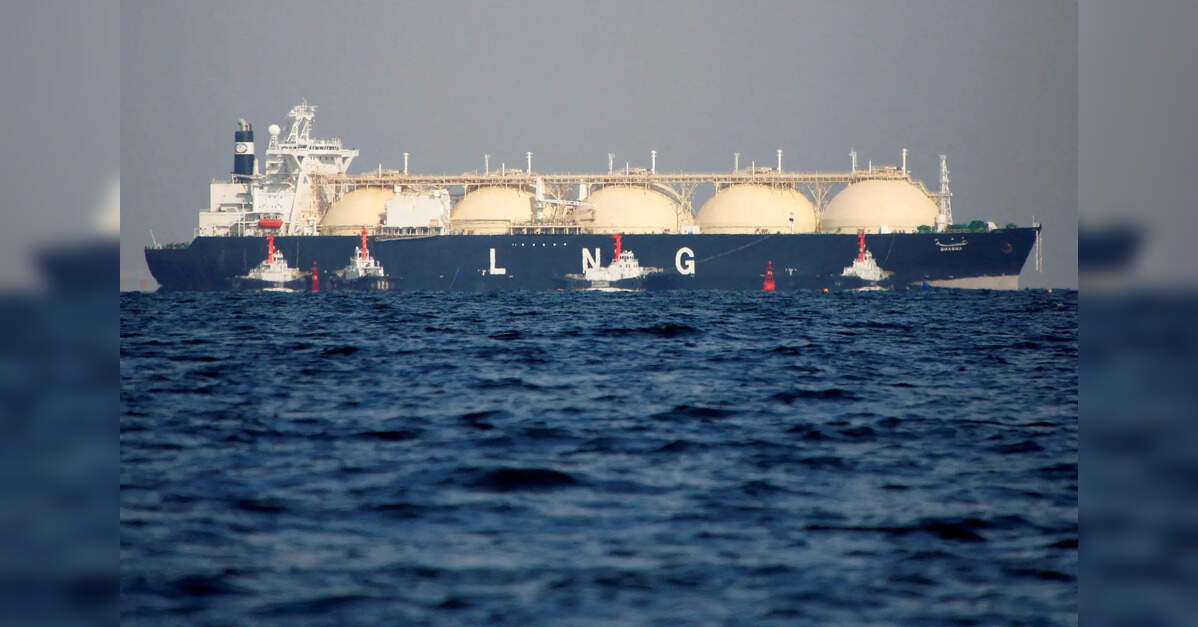
While crude oil diversification offers a degree of protection, India’s LNG supply chain presents a more concentrated vulnerability. Structurally, India’s LNG imports do come from a broader base, including Australia, Russia (Yamal, Arctic LNG), and the US. However, the heavy reliance on Qatari LNG, particularly through Petronet LNG’s significant contracted volumes of approximately 7.5 million metric tonnes per annum (mmtpa), introduces substantial exposure to potential delays, increased spot procurement, and price spikes. Recent actions, such as QatarEnergy requesting tankers to delay Gulf entry, serve as a clear signal of heightened caution in the region.
Investors are keenly asking what’s driving Asian LNG spot prices this week. Our data confirms a significant uptick, with Asian spot LNG prices increasing by approximately 11% week-on-week to $14/mmbtu. This surge directly reflects heightened supply chain anxieties and the critical role Qatar plays in meeting regional demand, particularly given its total reliance on Hormuz for exports. For Petronet LNG, any sustained shipment disruption could directly impact regasification volumes and, consequently, their profitability margins, making this a key area for investor scrutiny.
Forward Outlook: Geopolitical Tensions and Investor Vigilance
The specter of a Hormuz closure, though considered unlikely to be a full, sustained event due to its severe repercussions for Iran’s own exports and diplomatic ties with major buyers like China, remains a potent source of market volatility. A temporary closure, however, could trigger immediate surges in freight rates and crude prices. India holds crude reserves for about 90 days, including strategic petroleum reserves capable of bridging approximately 9-10 days of imports, offering some immediate buffer. Furthermore, policy tools such as duty cuts and subsidies provide additional levers for the government to manage inflationary pressures on consumers.
Our readers are frequently asking for a base-case Brent price forecast for the next quarter, and also the consensus 2026 Brent forecast. While today’s Brent price is at $95.01, the continuous threat from Hormuz is a persistent bullish factor. Should any sustained disruption materialize, the market consensus suggests Brent could easily push past the $80-85 per barrel threshold, significantly higher than today’s levels. With the OPEC+ Joint Ministerial Monitoring Committee (JMMC) meeting scheduled for April 18th, followed by the Full Ministerial meeting on April 20th, the market will be closely watching for any signals regarding supply adjustments in response to escalating geopolitical risks. These events, alongside the upcoming API and EIA weekly inventory reports, will offer critical data points on global supply-demand balances, influencing how the market prices in Hormuz-related risks. Downstream, however, oil marketing companies (OMCs) face ongoing margin pressures, with FY26 LPG under-recovery estimated at a substantial Rs 28,000 crore, highlighting the complex interplay of global supply shocks and domestic market realities.


