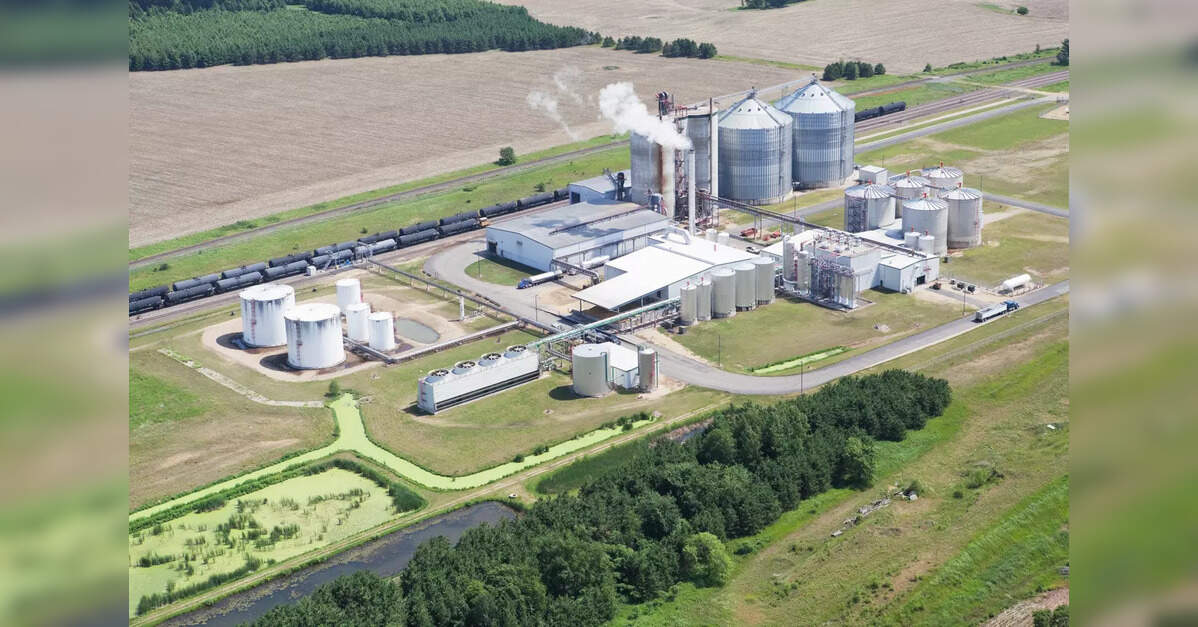
The global energy landscape continues its complex evolution, presenting investors with a dual challenge: meeting persistent demand while aggressively pursuing decarbonization. Against this backdrop, technological advancements that bridge these objectives are increasingly critical. Honeywell’s latest innovation, Biocrude Upgrading, offers a compelling solution, specifically targeting hard-to-abate sectors like maritime and aviation. This technology, which transforms agricultural and forestry waste into high-value marine fuel, gasoline, and sustainable aviation fuel (SAF), represents more than just a new process; it signifies a strategic pivot for energy companies looking to future-proof their portfolios and capture growth in the rapidly expanding renewable fuels market. Our analysis delves into how this development fits within current market dynamics, addresses key investor concerns, and positions itself ahead of critical industry events.
Navigating Volatility: The Investment Case for Biofuels Amidst Market Swings
Current market conditions paint a picture of significant volatility, a factor that often gives investors pause when considering new, capital-intensive technologies. As of today, Brent Crude trades at $90.38 per barrel, marking a sharp 9.07% decline within the day, with its range fluctuating between $86.08 and $98.97. Similarly, WTI Crude has fallen by 9.41% to $82.59, and gasoline prices have dropped 5.18% to $2.93. This dramatic intraday movement follows a broader trend; Brent has shed nearly 20% over the last 14 days, falling from $112.78 on March 30th to its current level. While such steep declines in traditional crude prices might seem to diminish the immediate appeal of alternative fuels, a deeper look reveals a different narrative for long-term investors. This very volatility underscores the strategic importance of diversifying energy portfolios. Technologies like Biocrude Upgrading offer a critical hedge against the unpredictable nature of fossil fuel markets, providing a pathway to stable, lower-carbon fuel production less directly tied to geopolitical shifts and short-term supply-demand imbalances. Investing in renewable fuel infrastructure, even during periods of market softness, positions companies to capitalize on future carbon pricing, stricter environmental regulations, and growing consumer demand for sustainable options.
Disrupting Hard-to-Abate Sectors: A Strategic Play for Decarbonization
The core value proposition of Honeywell’s Biocrude Upgrading technology lies in its direct assault on the decarbonization challenge within sectors historically difficult to green. The maritime industry, for instance, has relied on heavy fuel oil for decades, contributing approximately 3% of global greenhouse gas emissions. Aviation, another critical sector, faces similar pressures. This new process allows for the conversion of readily available, low-cost biomass feedstocks, such as wood chips and crop residues, into high-performance marine fuel, sustainable aviation fuel (SAF), and gasoline. A key innovation is the ability to process biocrude at collection sites, significantly reducing transport costs and improving overall economic viability. This modular, prefabricated plant design further accelerates project timelines and minimizes on-site construction requirements, making deployment more efficient and accessible. By addressing both feedstock availability and cost, the technology offers a tangible, scalable solution for companies facing mounting regulatory mandates and customer demand for cleaner operations. It complements Honeywell’s existing suite of renewable fuel solutions, positioning the company as a leader in providing diverse pathways to lower-carbon energy.
Beyond Short-Term Swings: Answering Investor Concerns with Long-Term Vision
Our proprietary reader intent data reveals a clear focus among investors on immediate market dynamics and financial performance. Questions such as “what do you predict the price of oil per barrel will be by end of 2026?” and inquiries about specific company performance, like “How well do you think Repsol will end in April 2026,” dominate investor conversations. These short-term outlooks are undoubtedly critical for tactical positioning. However, the introduction of technologies like Biocrude Upgrading offers a vital perspective on the long-term strategic questions that underpin these daily fluctuations. While investors are rightly concerned with OPEC+ production quotas and the immediate trajectory of crude prices, the underlying shift towards a lower-carbon economy remains a powerful, unavoidable force. Investing in renewable fuel technologies provides a strategic answer to how energy companies can navigate this transition, offering a hedge against future carbon taxes, evolving regulatory frameworks, and the increasing societal pressure for sustainable operations. This technology isn’t just about producing fuel; it’s about building resilience and opening new revenue streams in a world that is fundamentally rethinking its energy sources, thereby future-proofing portfolios against the very uncertainties that drive short-term market queries.
Key Events on the Horizon: Shaping the Biofuels Landscape
The coming weeks are packed with significant energy events that will undoubtedly influence the broader market sentiment, indirectly impacting the attractiveness of investments in renewable technologies like Biocrude Upgrading. The OPEC+ Joint Ministerial Monitoring Committee (JMMC) Meeting on April 19th, followed by the full OPEC+ Ministerial Meeting on April 20th, will provide crucial insights into global crude supply policy. Any decisions on production quotas will ripple through the market, affecting crude prices and, by extension, the competitive landscape for all fuel types. Furthermore, the weekly API and EIA Crude Inventory reports on April 21st, 22nd, 28th, and 29th, respectively, will offer immediate snapshots of U.S. supply and demand dynamics, influencing short-term price movements and market psychology. The Baker Hughes Rig Count on April 24th and May 1st will shed light on North American upstream activity. While these events primarily focus on traditional oil and gas, their outcomes set the overall energy investment climate. A tightening traditional market, for instance, could accelerate interest in alternative fuel sources due to perceived supply risks or higher prices. Conversely, an oversupplied market might intensify the pressure on new technologies to demonstrate superior cost-efficiency. Honeywell’s Biocrude Upgrading technology, with its emphasis on local feedstock and reduced production costs, is strategically positioned to thrive in various market conditions, offering a less volatile growth vector compared to the directly commodity-linked plays that these upcoming events will influence.


