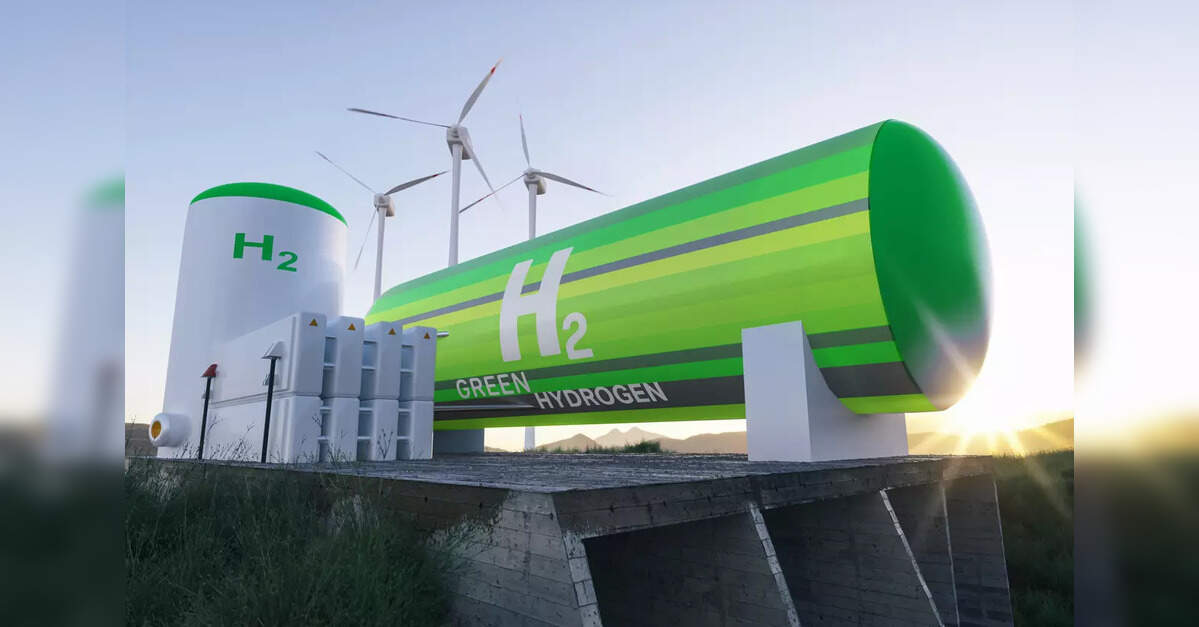
The global energy landscape is in constant flux, but few developments signal a long-term structural shift as profoundly as India’s aggressive push into green hydrogen. This strategic pivot is more than just an environmental initiative; it is a calculated bid for energy independence, economic growth, and a leadership position in the burgeoning clean energy economy. For oil and gas investors, understanding the scope and implications of such a monumental undertaking is crucial, as it will inevitably reshape future demand patterns and create new avenues for investment within the broader energy transition narrative.
India’s Green Hydrogen Offensive: A Multi-Trillion Rupee Opportunity
India has embarked on an ambitious journey with its National Green Hydrogen Mission, aiming to transform from a significant fossil fuel importer into a global hub for green hydrogen innovation, manufacturing, and export. This initiative is backed by a substantial outlay of ₹19,744 crore, approved in January 2023, and targets an impressive 5 MMT per annum of green hydrogen production by 2030. The economic ripple effect is projected to be enormous, with expectations of leveraging over ₹8 lakh crore in total investments into the green hydrogen industry, creating an estimated 6 lakh jobs by the end of the decade. This strategic move is designed to reduce the nation’s cumulative fossil fuel imports by ₹1 lakh crore by 2030, fostering ‘Aatmanirbharta’ or self-reliance through clean energy. By positioning itself at the forefront of this technology, India seeks to ensure its industries remain competitive in an increasingly carbon-conscious world, while simultaneously advancing its commitment to achieving Net Zero emissions by 2070. The focus extends beyond production, encompassing significant investment in research and development, with over 200 projects already supported across renewable energy, fuel cells, hydrogen, and storage technologies, complete with testing facilities and incubation programs designed to accelerate commercialization.
Crude Volatility Amidst Shifting Energy Paradigms
While long-term energy transition narratives gather momentum, the daily realities of the traditional oil and gas market continue to present their own dynamics. As of today, Brent crude trades at $98.17, reflecting a -1.23% dip within a daily range of $97.92-$98.67. WTI crude follows a similar trajectory, priced at $89.74, down 1.57% for the day. This recent softness continues a trend observed over the past two weeks, with Brent having shed $14, or 12.4%, from $112.57 on March 27th to $98.57 yesterday. Gasoline prices mirror this slight contraction, currently at $3.08, down 0.32%. This immediate market volatility suggests that while the long-term implications of initiatives like India’s green hydrogen push are significant, the market remains highly responsive to short-term supply-demand balances, geopolitical developments, and broader macroeconomic indicators. The consistent pressure on crude prices, even as global energy demand rises, indicates a market attempting to price in both immediate fundamentals and the nascent but growing impact of energy diversification efforts worldwide. Investors are keenly observing how these short-term fluctuations intersect with the longer-term structural shifts driven by countries committing to substantial clean energy investments.
Navigating Upcoming Catalysts and Long-Term Transition
The coming fortnight presents several critical traditional oil and gas market catalysts that investors are closely watching, even as the energy transition gains traction globally. This Friday, April 17th, we anticipate the Baker Hughes Rig Count, offering a crucial pulse check on North American drilling activity and potential future supply. Crucially, the OPEC+ Joint Ministerial Monitoring Committee (JMMC) meets on April 18th, followed by the Full Ministerial Meeting on April 20th. These gatherings will provide clarity on production quotas and market strategy in an environment where global demand projections are increasingly influenced by energy diversification efforts. Further weekly insights will come from the API Weekly Crude Inventory reports on April 21st and 28th, alongside the EIA Weekly Petroleum Status Reports on April 22nd and 29th, offering granular data on U.S. supply and demand. While these events typically drive short-to-medium term price action, their outcomes are now being viewed through a broader lens. Decisions made by OPEC+ regarding production, for instance, must increasingly factor in the accelerating pace of renewable energy adoption and green hydrogen development in major economies. The interplay between these traditional market drivers and the long-term commitment to clean energy, as exemplified by India, creates a complex but fascinating dynamic for investors to navigate.
Investor Focus: Data, Strategy, and Future Energy Models
Our proprietary reader intent data reveals a clear investor focus on understanding the underlying mechanisms of market analysis and the future of energy intelligence. Questions such as ‘What data sources does EnerGPT use?’ and ‘What APIs or feeds power your market data?’ highlight a sophisticated demand for transparency and reliability in market intelligence tools. Simultaneously, inquiries like ‘What are OPEC+ current production quotas?’ and ‘What is the current Brent crude price?’ underscore the persistent need for real-time, accurate traditional market metrics. However, the deeper questions, including ‘Why should I use EnerGPT?’ suggest investors are actively seeking tools and insights that bridge the gap between conventional oil and gas analysis and the complexities of the energy transition, including the rise of green hydrogen. This indicates a growing awareness that successful investment strategies in the coming decade must integrate both the established market fundamentals and the transformative potential of new energy technologies. India’s ambitious green hydrogen initiative is precisely the kind of development that prompts such questions, forcing investors to re-evaluate traditional models and seek comprehensive intelligence that can account for both the enduring power of hydrocarbons and the disruptive force of decarbonization.


