Glencore Acquires Li-Cycle, Boosts Battery Recycling
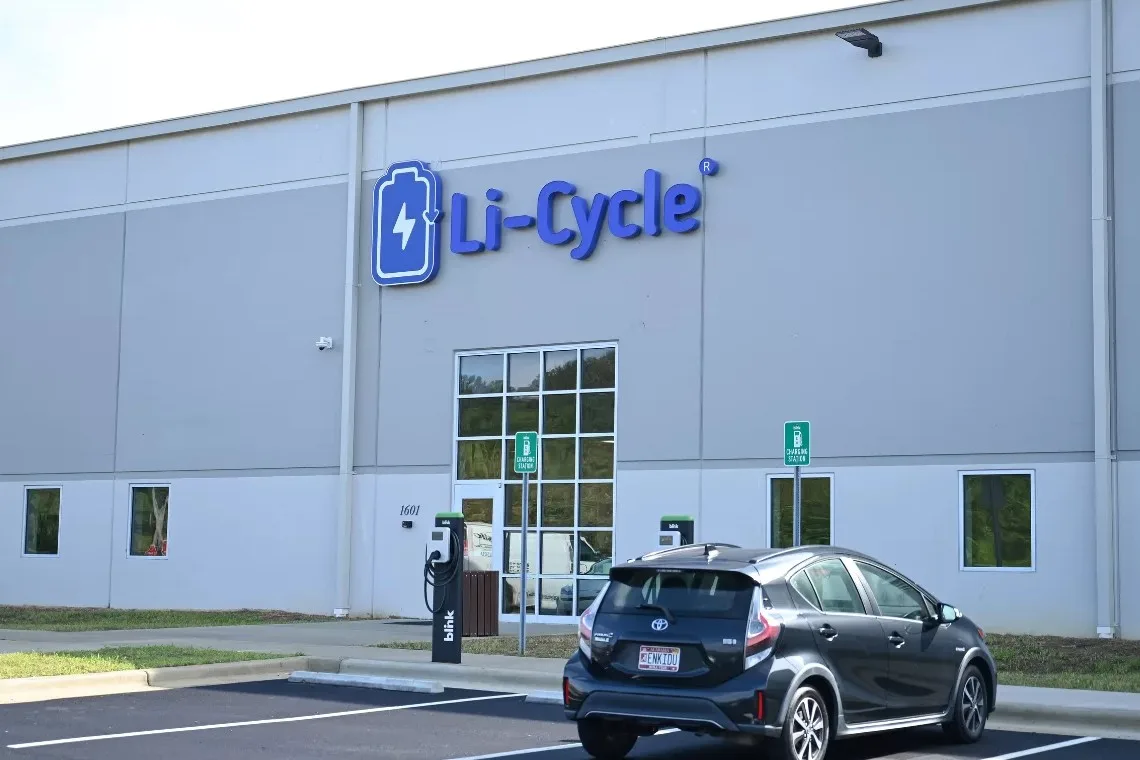
In a strategic move signaling a deeper commitment to the energy transition, commodities giant Glencore finalized its acquisition of Canadian battery recycling company Li-Cycle on August 8th, 2025. This deal, which includes four North American spoke facilities, a key European spoke plant in Magdeburg, Germany, the Rochester hub project, and all of Li-Cycle’s intellectual property, represents a significant expansion of Glencore’s battery recycling capabilities. For investors navigating volatile energy markets, this acquisition underscores a growing trend among major players to diversify beyond traditional hydrocarbons and secure a foothold in the burgeoning circular economy for critical battery materials.
The Strategic Pivot: Glencore’s Bold Bet on Battery Recycling
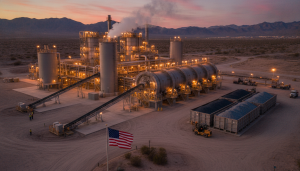
Glencore’s takeover of Li-Cycle is a calculated acceleration into the battery recycling value chain, positioning the company as a formidable player in the burgeoning market for sustainable battery materials. Li-Cycle, despite its innovative “spoke and hub” technology designed to recover critical materials like lithium, nickel, and cobalt from spent batteries and manufacturing scrap, had been grappling with significant financial challenges. These struggles, including escalating costs and construction delays for its flagship Rochester plant, ultimately led to a search for a buyer and a filing for creditor protection in May. Glencore, already a creditor and partner, seized the opportunity, making an initial stalking horse bid of at least $40 million and ultimately securing the entire operation. This acquisition brings into Glencore’s fold a sophisticated process where spoke facilities mechanically shred batteries into “black mass,” which is then hydrometallurgically refined at hub facilities. The Magdeburg facility, now under Glencore’s ownership, instantly becomes one of Europe’s largest battery recycling plants, granting the Swiss powerhouse a critical strategic foothold in a region aggressively pursuing electrification and circular economy initiatives. This move is not merely an opportunistic distressed asset purchase; it’s a foundational step towards integrating raw material supply with end-of-life processing, creating a more robust and resilient supply chain for the automotive, battery, and energy generation sectors.
Navigating Market Headwinds: Why Now for Diversification?
This significant acquisition by Glencore takes place against a backdrop of considerable turbulence in traditional energy markets, providing a compelling rationale for diversification. As of today, Brent crude trades at $90.38 per barrel, marking a sharp 9.07% decline within the day, with prices fluctuating between $86.08 and $98.97. Similarly, WTI crude is at $82.59, down 9.41% today, experiencing a daily range of $78.97 to $90.34. This daily dip compounds an already challenging two weeks for crude benchmarks; Brent, for instance, has shed a substantial $20.91, or 18.5%, from $112.78 on March 30th to $91.87 just yesterday. The price of gasoline has also followed suit, currently at $2.93, down 5.18% today. This pronounced bearish sentiment across the hydrocarbon complex underscores the inherent volatility and cyclical nature of traditional energy commodities. For a diversified commodities giant like Glencore, such market conditions amplify the strategic imperative to invest in sectors with long-term growth drivers decoupled from short-term oil price swings. By strengthening its battery recycling division, Glencore is actively hedging against the fluctuations of its legacy businesses while positioning itself for the undeniable growth trajectory of electric vehicles and renewable energy storage, which demand a sustainable supply of critical minerals.
Investor Focus: What This Means for the Energy Landscape
Investors are increasingly scrutinizing the long-term resilience and diversification strategies of major energy and commodity players. Questions about the future performance of integrated companies like Repsol in April 2026, or predictions for the price of oil per barrel by the end of 2026, highlight a pervasive desire for clarity on how companies are adapting to a changing energy paradigm. Glencore’s acquisition of Li-Cycle directly addresses this investor concern by demonstrating a tangible commitment to future-proofing its portfolio. The ability to reclaim valuable materials from spent batteries not only creates a new revenue stream but also mitigates supply chain risks associated with primary mining, a factor that resonates deeply with long-term investors. By integrating Li-Cycle’s advanced processing capabilities, Glencore is not just buying assets; it is acquiring critical intellectual property and expertise that enhances its position in the rapidly expanding battery ecosystem. This vertical integration — from mining raw materials to trading commodities and now to recycling them — offers a compelling investment thesis for those looking for exposure to the energy transition without abandoning the stability of established commodity markets. It’s a strategy that aims to deliver value regardless of whether oil breaches the $100 mark or dips further, by building a robust foundation in a secular growth industry.
Forward Outlook: Battery Recycling’s Future Amidst Oil Market Dynamics
Looking ahead, the next two weeks hold critical catalysts for the broader energy market, potentially amplifying the rationale behind such strategic diversifications. Investors will closely watch the upcoming OPEC+ Joint Ministerial Monitoring Committee (JMMC) meeting on April 18th, followed by the full Ministerial meeting on April 19th. Any shifts in production quotas from these gatherings could introduce further volatility or stability to crude benchmarks, directly impacting the profitability outlook for traditional oil and gas operations globally. Alongside this, the API Weekly Crude Inventory reports on April 21st and 28th, and the EIA Weekly Petroleum Status Reports on April 22nd and 29th, will offer crucial insights into demand trends and supply levels within the U.S. market. Furthermore, the Baker Hughes Rig Count reports on April 24th and May 1st will provide a real-time pulse on upstream activity. While these events directly influence hydrocarbon markets, their outcomes will indirectly reinforce the strategic imperative for commodity giants like Glencore to build robust, diversified portfolios that span both traditional and new energy value chains. The long-term growth trajectory of electric vehicles and renewable energy storage ensures a consistent and increasing demand for battery materials, making the efficient and sustainable recycling solutions offered by Li-Cycle a high-growth sector relatively insulated from short-term oil price fluctuations. Glencore’s move is a powerful statement about where capital is flowing for the next generation of energy investment.