Germany’s substantial financial commitment to Vulcan Energy’s lithium projects marks a pivotal moment for Europe’s nascent critical raw materials sector. With €103.6 million in funding from the German Federal Ministry for Economic Affairs and Energy (BMWE), alongside the states of Rhineland-Palatinate and Hesse, these initiatives are poised to significantly bolster domestic lithium production. For investors, this move underscores a deepening strategic imperative across the continent: securing a reliable, localized supply chain for the energy transition, particularly for electric vehicle (EV) battery manufacturing. This analysis delves into the implications of this backing, examining the project’s operational progress, its place within the broader energy market, and what this means for investment portfolios navigating the evolving landscape of global energy demands.
Germany’s Strategic Bet on Domestic Lithium Production
The German government’s decision to inject €103.6 million into Vulcan Energy’s lithium chloride extraction project in Landau and its subsequent processing facility in Frankfurt-Höchst is a clear signal of its commitment to raw material independence. This funding, covering a significant portion of the estimated €690 million total investment for both plants, directly addresses a critical vulnerability in Germany’s industrial supply chain. Currently, Europe relies heavily on external sources like China and South America for its lithium needs, a dependency that carries geopolitical and logistical risks. Vulcan Energy’s “Clean Lithium for Battery Cell Production” (Li4BAT) project aims to supply enough lithium for approximately 500,000 EV batteries annually, a transformative scale of domestic output. This initiative is not merely about production; it’s about establishing a resilient, sustainable, and affordable supply of a metal deemed crucial for the accelerating shift to electric mobility and the broader energy transition.
De-Risking the Future: Operational Milestones and Resource Potential
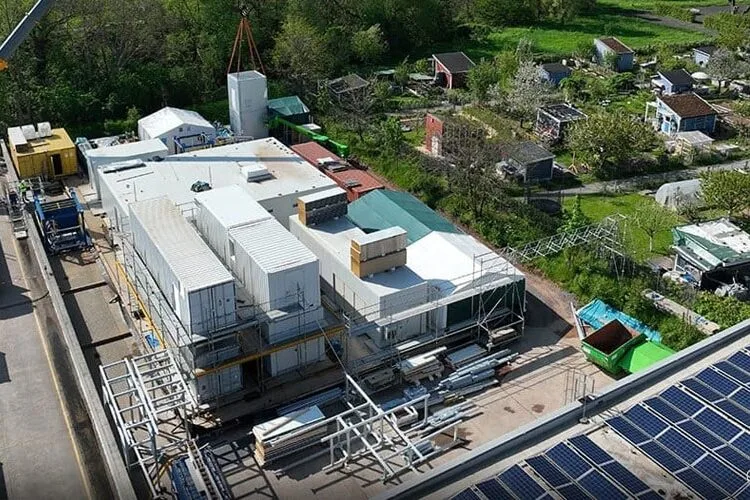
Vulcan Energy has already demonstrated the viability of its innovative extraction and processing methods, significantly de-risking the commercial scale-up for investors. In April 2024, the company successfully produced lithium chloride at its Lithium Extraction Optimisation Plant (LEOP) in Landau. This pilot facility, operating at a 1:50 scale compared to the planned commercial Lithium Extraction Plant (LEP), proved the efficacy of extracting lithium chloride from geothermal brine. Further progress was made in November 2024 at the Lithium Electrolysis Optimisation Plant (CLEOP) in Frankfurt-Höchst, where lithium chloride was successfully processed into lithium hydroxide monohydrate, the final product required for EV batteries. These milestones confirm the technical feasibility of the entire process within Germany. Furthermore, Vulcan Energy’s combined geothermal and lithium resource in Germany’s Upper Rhine Valley is recognized as the largest in Europe, a foundational asset that positions the company uniquely to meet the continent’s growing demand. The sub-project in Landau was even selected by the EU in March 2025 as one of 47 strategic projects under the Critical Raw Materials Act, highlighting its pan-European significance.
Navigating Energy Transition: Lithium’s Role Amidst Volatile Crude Markets
For many of our readers, the immediate focus remains on traditional energy markets, with questions often revolving around crude price forecasts for the coming quarter and the consensus 2026 Brent outlook. As of today, Brent crude trades at $94.72, showing a modest 0.22% decline on the day, oscillating within a tight range of $94.42-$94.91. This relative stability comes after a more significant downturn, with Brent having shed 12.4% from $108.01 on March 26 to $94.58 on April 15. While traditional oil and gas assets experience these cyclical swings driven by supply-demand dynamics and geopolitical factors, the investment thesis for critical minerals like lithium operates on a different trajectory. The German government’s backing of Vulcan Energy underscores a long-term structural shift, where the demand for raw materials essential for the energy transition remains robust, largely decoupled from short-term crude price volatility. Smart investors are increasingly diversifying their energy exposure, recognizing that while oil and gas will remain vital, the sustained growth lies in the foundational components of the new energy economy.
Upcoming Catalysts and the Long-Term Outlook for Critical Minerals
While the immediate horizon for traditional energy markets is punctuated by key events such as the OPEC+ JMMC meeting on April 18 and the full Ministerial meeting on April 20, where decisions on crude supply will undoubtedly influence short-term price movements, the long-term strategic investments in critical minerals offer a different kind of forward-looking analysis. The regular cadence of API and EIA weekly inventory reports on April 21/22 and April 28/29 will continue to provide snapshots of petroleum demand and supply, but these metrics do not capture the accelerating build-out of the EV supply chain. For Vulcan Energy, the critical catalysts lie in the ongoing construction and commissioning of its commercial-scale plants in Landau and Frankfurt-Höchst. Germany’s substantial funding not only de-risks these projects but also signals a strong governmental commitment that could attract further private investment. As European nations strive to meet their climate goals and reduce strategic dependencies, we anticipate similar initiatives across the continent, creating a robust, multi-decade demand profile for domestically sourced critical minerals. Investors should monitor project timelines, future off-take agreements, and potential expansions for Vulcan Energy, as well as policy developments under the EU Critical Raw Materials Act, which could further accelerate the development of Europe’s self-sufficient mineral supply chain.
Investment Takeaway: A Resilient Play in the Energy Transition
The German government’s significant investment in Vulcan Energy’s lithium projects presents a compelling case for investors seeking exposure to the resilient growth story of the energy transition. This move provides substantial financial backing and sovereign endorsement to a project that holds the key to unlocking Europe’s largest geothermal lithium resource. With pilot plants having successfully demonstrated the extraction and processing technology, the path to commercialization appears increasingly de-risked. For those looking beyond the inherent volatility of traditional oil and gas markets, this development highlights the growing investment opportunity in critical minerals. It’s a testament to the fact that while the energy landscape is shifting, the fundamental need for raw materials remains constant. Investing in companies like Vulcan Energy, with strong government support and proven technology, offers a strategic entry point into the foundational elements of the EV revolution and a diversified approach to navigating the future of energy.