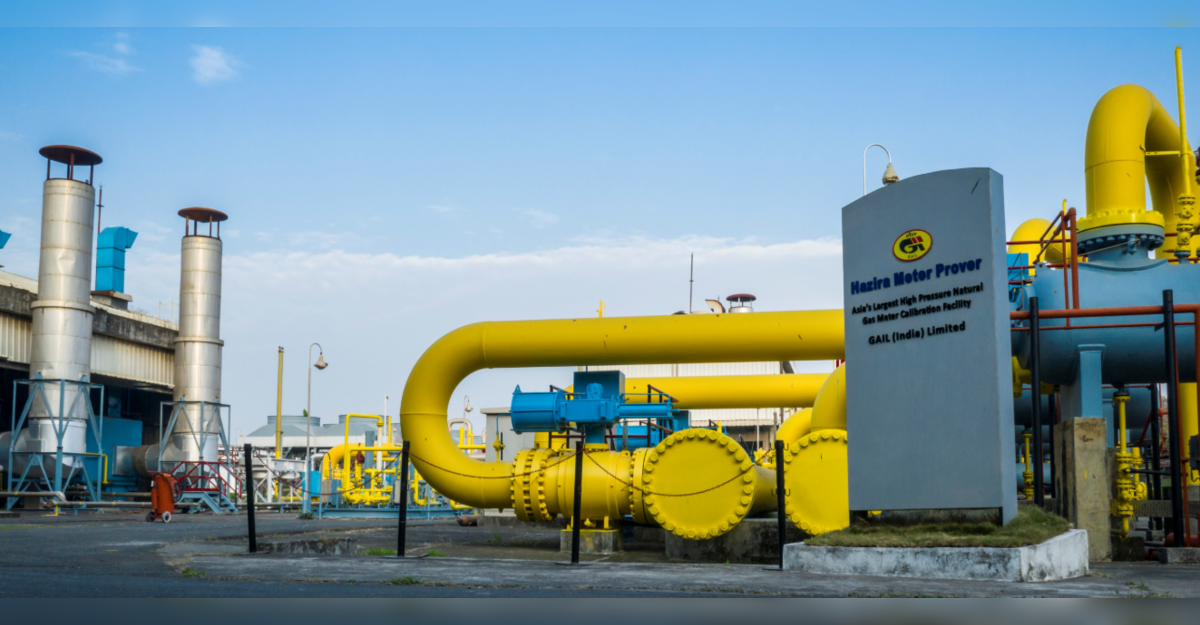
GAIL’s latest quarterly results present a nuanced picture for investors, revealing a 17% year-on-year decline in profit to ₹2,217 crore for the July-September period. This significant dip, despite a 6% rise in revenue from operations to ₹35,031 crore, underscores a critical challenge stemming predominantly from the petrochemicals segment. While shares of GAIL remained largely stable at ₹182.80, outpacing a broader market decline, the underlying pressures on profitability warrant a deeper dive for those evaluating the company’s long-term investment appeal amidst a fluctuating global energy landscape.
Petrochemicals: A Persistent Drag on Core Earnings
The primary catalyst for GAIL’s Q2 profit contraction was undoubtedly the petrochemicals business, which posted an operating loss of ₹299 crore. This stark reversal from an operating profit of ₹157 crore in the same quarter last year highlights significant operational and market headwinds. This segment’s vulnerability to input costs, particularly natural gas, and the competitive landscape for petrochemical products has consistently proven to be a swing factor in GAIL’s overall performance. While GAIL’s core gas marketing revenue demonstrated resilience, climbing 9% to ₹31,423 crore, and gas transmission operating profit edged up to ₹1,414 crore, these robust performances were not enough to offset the substantial losses from petrochemicals. The LPG and liquid hydrocarbons segment also witnessed a sharp 55% decline in profit to ₹112 crore, adding further pressure to diversified earnings streams.
Navigating Global Market Volatility and Strategic Resilience
The broader energy market context provides a challenging backdrop for all players, including GAIL. As of today, Brent Crude trades at $90.38, reflecting a notable 9.07% drop within the day, while WTI Crude mirrors this volatility at $82.59, down 9.41%. This immediate downturn follows a significant 14-day trend where Brent has fallen by nearly 20%, from $112.78 to its current level. Such pronounced shifts in crude prices often signal broader economic concerns or supply-demand imbalances, which can indirectly influence natural gas and petrochemical markets. Despite this macro-level turbulence, GAIL’s gas transmission segment continues to be a bedrock of profitability, delivering the highest share of operating profit. Its regulated nature and essential service provision offer a degree of insulation from the extreme price swings seen in crude markets, showcasing the inherent stability of its core infrastructure assets. However, even the gas marketing business saw its operating profit narrow slightly to ₹1,304 crore, indicating that even its stronger segments are not entirely immune to the prevailing market dynamics.
Strategic Capex: Betting on Future Growth Amidst Current Headwinds
GAIL’s capital expenditure strategy offers a glimpse into its long-term vision, even as it grapples with immediate profitability challenges. The company incurred ₹1,662 crore in capital expenditure during the July-September quarter, bringing its total H1 FY capex to ₹4,838 crore. Crucially, these investments are primarily directed towards pipelines and petrochemical projects. The continued commitment to petrochemicals, despite current losses, suggests a strategic belief in the segment’s eventual recovery and long-term growth potential, likely driven by domestic demand and backward integration efforts. Simultaneously, investments in pipeline infrastructure are vital for expanding India’s natural gas grid, supporting the nation’s energy transition goals, and reinforcing GAIL’s dominant position as a gas transporter. Investors should monitor how these investments translate into future revenue and profit growth, particularly as new projects come online and potentially improve the cost efficiency of the petrochemical operations.
Investor Focus: Addressing Uncertainty and Upcoming Catalysts
Our proprietary reader intent data reveals a keen focus on market stability and future price predictions, with many investors asking ‘what do you predict the price of oil per barrel will be by end of 2026?’ and ‘What are OPEC+ current production quotas?’ These questions underscore the uncertainty currently permeating the energy sector, directly impacting how investors view diversified entities like GAIL. For investors eyeing GAIL, understanding the interplay between global market dynamics and the company’s specific segment performance is paramount.
Looking ahead, the upcoming OPEC+ Joint Ministerial Monitoring Committee (JMMC) Meeting on April 19th, followed by the full Ministerial Meeting on April 20th, will be critical in shaping global supply sentiment and, consequently, crude prices. Investors will also closely monitor the API and EIA weekly inventory reports on April 21st/22nd and April 28th/29th, respectively, for demand signals that could sway both crude and natural gas markets. While GAIL’s primary business is natural gas, significant shifts in crude prices and global economic sentiment often ripple into natural gas pricing and petrochemical feedstock costs, thereby impacting GAIL’s margins. Furthermore, the Baker Hughes Rig Count reports on April 24th and May 1st will offer insights into upstream activity, providing another piece of the supply puzzle. GAIL’s ability to navigate these macro headwinds while executing its strategic capex plan will be a key determinant of its future valuation. Investors should closely watch for management commentary on strategies to mitigate petrochemical losses, optimize gas marketing margins, and leverage its robust transmission network to capitalize on India’s growing energy demand.


