Farasis Solid-State Pilot: A Significant Long-Term Oil Demand Headwind Emerges
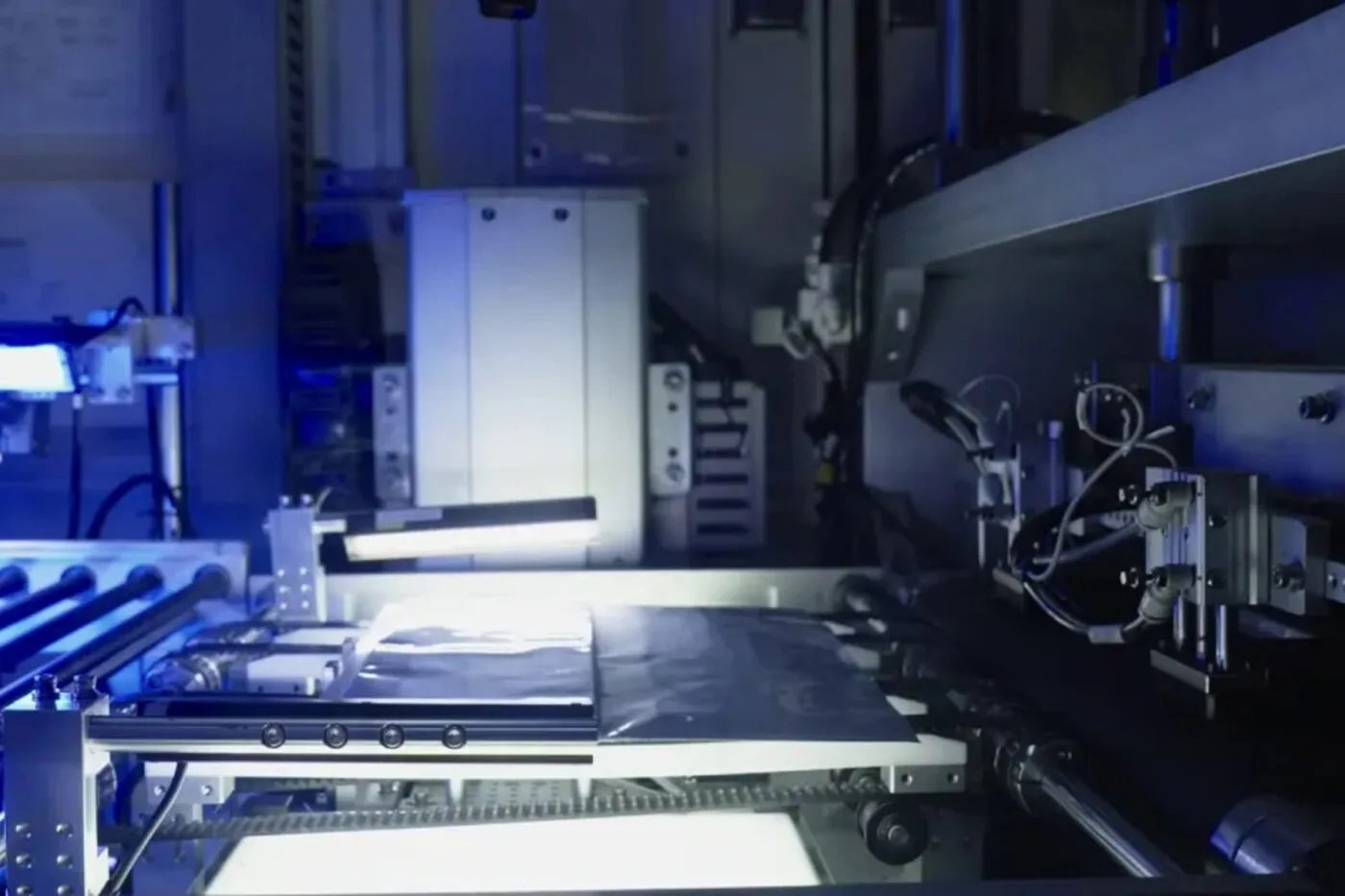
The global energy landscape is in constant flux, but every so often, a development emerges that casts a long shadow over traditional energy markets. The recent announcement from Farasis Energy, a key battery supplier backed by Mercedes-Benz, regarding its aggressive timeline for solid-state battery pilot production is precisely one such event. By the end of 2025, Farasis plans to complete construction of a 0.2 GWh pilot line for sulphide-based solid-state batteries, enabling the delivery of initial samples. This move, aiming for gigawatt-hour scale production as early as 2026, signals an accelerating threat to long-term oil demand, particularly in the transportation sector, and warrants serious consideration by oil and gas investors.
Accelerating the EV Revolution: The Solid-State Promise
Farasis’s commitment to sulphide-based solid-state batteries represents a critical step in overcoming the current limitations of lithium-ion technology. These next-generation batteries promise substantial advantages, most notably enhanced safety, significantly higher energy density (targeting over 400 Wh/kg initially, with a future oxide/polymer composite system aiming for 500 Wh/kg), and extended lifespan. The pilot line, slated for completion by late 2025, will produce 60 Ah solid-state battery samples for strategic partners such as Mercedes-Benz, Geely, and Togg. The company’s prior success in sending third-generation solid-state cells into practical testing, coupled with strong interest from existing and new vehicle manufacturers, underpins their ambitious plan to scale production to gigawatt-hour capacity by 2026. This rapid progression from pilot to scaled production within a year highlights the industry’s drive to commercialize these game-changing batteries, which could fundamentally alter the cost-benefit analysis for electric vehicles and accelerate their adoption far beyond current projections.
Navigating Immediate Market Volatility Amidst Long-Term Shifts
While the long-term implications of Farasis’s advancements are clear for future oil demand, current market dynamics continue to dictate immediate investment sentiment. As of today, Brent crude trades at $94.64, marking a modest daily dip of 0.31%, with WTI crude similarly down 0.43% at $90.90. This minor intraday movement comes against a backdrop of more significant recent volatility; Brent has shed over 12% in the past 14 days, falling from $108.01 to $94.58. These price fluctuations reflect a market grappling with geopolitical tensions, inventory shifts, and evolving economic outlooks. Interestingly, gasoline prices are also seeing a slight downturn today, trading at $2.99, down 0.67%. Our proprietary reader intent data reveals that many investors are keenly focused on these immediate price trends, with frequent inquiries about building a base-case Brent price forecast for the next quarter and understanding the consensus 2026 Brent outlook. The market’s immediate focus remains firmly on supply-demand fundamentals and macroeconomic indicators, demonstrating a short-term tunnel vision that often overlooks the profound, yet slower-moving, structural changes heralded by breakthroughs like Farasis’s solid-state battery timeline.
Upcoming Catalysts and The Dual Imperative for Investors
For the astute investor, the challenge lies in balancing the immediate, tangible catalysts with the profound, distant headwinds. The next 14 days offer a barrage of critical events that will undoubtedly shape near-term oil price action, far more than any battery announcement. We anticipate significant market reactions to the upcoming OPEC+ Joint Ministerial Monitoring Committee (JMMC) meeting on April 18th, followed by the Full Ministerial meeting on April 20th. Any signals regarding production quotas or compliance levels from these gatherings will exert immediate pressure on crude benchmarks. Furthermore, the regular cadence of inventory reports, including the API Weekly Crude Inventory on April 21st and 28th, and the EIA Weekly Petroleum Status Report on April 22nd and 29th, will provide crucial insights into immediate supply-demand balances in the world’s largest consumer. Our readers are also actively monitoring Chinese tea-pot refinery runs, an indicator that ties directly into these short-term supply dynamics. These events underscore the operational reality that while Farasis is planting seeds for a future energy system, the immediate profitability of oil and gas assets will be determined by these traditional market forces and decisions made in Vienna and Washington.
Strategic Positioning in a Transforming Energy Landscape
The Farasis solid-state battery development, with its clear roadmap for pilot production by late 2025 and gigawatt-hour scaling by 2026, reinforces the long-term imperative for oil and gas investors to adapt their portfolios. While the “not yet market-ready” caveat remains, the speed of progress – including multiple generations of solid-state cells under development (sulphide-based, and a future oxide/polymer composite system) – suggests commercial viability is closer than many might assume. The core technology, featuring high-nickel ternary cathodes, soft pack designs, stacked cell architecture, and high silicon/lithium-metal anodes, points to a future where EVs offer compelling advantages over internal combustion engine vehicles across performance, range, and potentially cost. For oil and gas investors, this means a dual strategy is increasingly essential: maintaining exposure to low-cost, high-margin conventional producers to capitalize on sustained demand in the near to medium term, while simultaneously exploring strategic diversification into sectors that will benefit from this accelerating energy transition. This includes not only direct EV manufacturers but also critical mineral suppliers, battery material refiners, and advanced energy storage developers. Ignoring the growing strength of these long-term headwinds would be a perilous oversight for any investor focused on sustainable returns in the evolving energy market.


