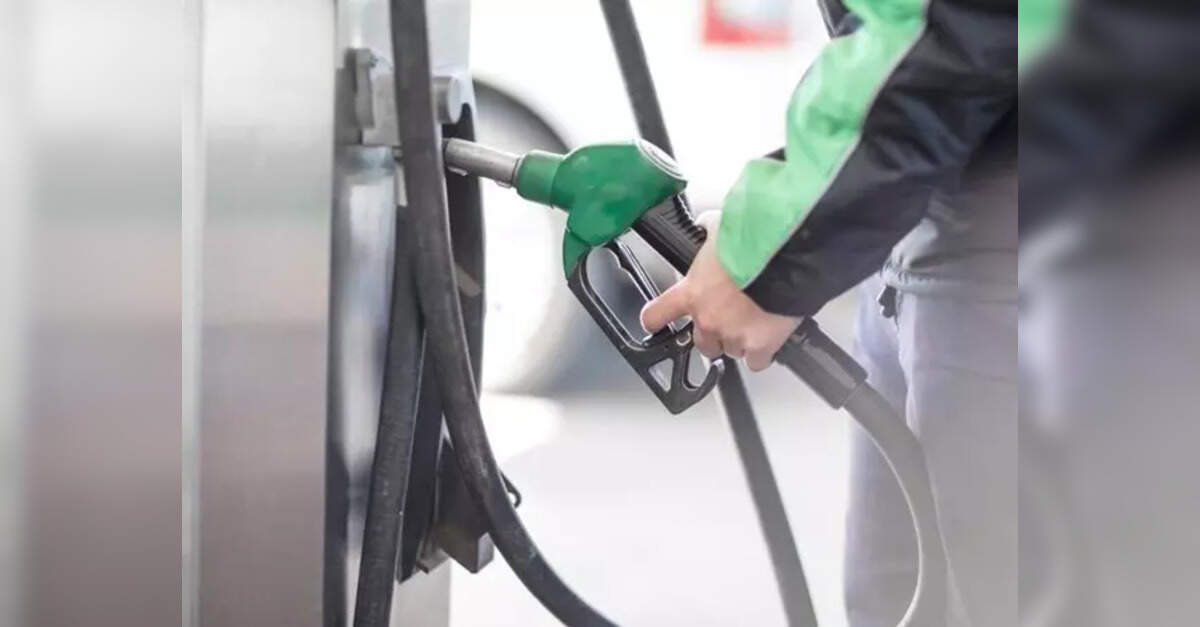
The global energy landscape continually presents complex interplays between policy, technology, and market dynamics. A recent development, the increasing adoption of 20 per cent ethanol-blended petrol (E20) in vehicles, initially driven by environmental goals and agricultural support, is now revealing a surprising and potentially significant implication for fuel demand. While the intent behind E20 is commendable—aiming to reduce emissions and boost farmer incomes—automotive experts are pointing to a consistent drop in fuel efficiency, ranging from 2-5 per cent depending on the vehicle type. For astute investors, this isn’t just a consumer inconvenience; it’s a structural change that could inadvertently bolster petroleum demand in key markets, acting as an unexpected counter-force to bearish sentiment and warranting close attention amidst ongoing market volatility.
The E20 Efficiency Conundrum: A Hidden Demand Driver
The core of the E20 narrative for investors lies in its impact on fuel consumption. Experts across the automotive industry consistently highlight that the lower calorific value of ethanol compared to conventional petrol directly translates to reduced mileage. This means that for vehicles using E20, a greater volume of fuel is required to travel the same distance. While the Oil Ministry previously suggested a “marginal” decrease, its own August 2025 communication on X indicated a 1-2 per cent drop for E10-calibrated, E20-compatible four-wheelers, and a more substantial 3-6 per cent for others. This range of 2-5 per cent, as corroborated by independent automotive engineers, implies a non-discretionary increase in overall fuel demand in markets where E20 is prevalent. For every liter of E20 consumed, a higher volume is needed to achieve the same travel objective, effectively increasing the baseline demand for the fuel mixture, and by extension, for the underlying petroleum component.
This efficiency hit is not a one-off event; it’s a persistent operational characteristic for vehicles running on E20. As blending mandates expand and E20 becomes the standard, this seemingly small percentage drop accumulates into a significant aggregate demand increase. For oil and gas companies, particularly those involved in refining and distribution in these regions, this translates to a potentially higher throughput simply to maintain existing transportation levels. While governments push for biofuels to diversify energy sources, the caloric reality of ethanol ensures that the overall energy required from the fuel system remains constant, leading to higher volumetric consumption. This creates a fascinating paradox where environmental policy inadvertently creates a bullish undercurrent for traditional fuel demand.
Market Snapshot: Volatility Amidst Emerging Demand Signals
Against the backdrop of E20’s potential to subtly inflate fuel demand, the broader crude market has shown considerable volatility. As of today, Brent Crude trades at $90.38 per barrel, marking a significant 9.07% decline within the day, with its range fluctuating between $86.08 and $98.97. Similarly, WTI Crude has fallen to $82.59, down 9.41% today, experiencing a daily range of $78.97 to $90.34. Gasoline prices have also seen a dip, currently at $2.93, a 5.18% decrease. This recent downturn is part of a more pronounced trend; our proprietary data reveals Brent Crude has shed over $20 per barrel, plummeting from $112.78 on March 30, 2026, to $91.87 just yesterday, representing an 18.5% erosion in value over the past two weeks.
This environment of falling prices and heightened volatility underscores the importance of understanding all demand-side factors. While macroeconomic concerns and supply dynamics often dominate headlines, the E20 efficiency drop presents a structural, albeit localized, demand catalyst that could offset some of the recent bearish pressures. A 2-5% increase in fuel consumption for a substantial vehicle fleet represents millions of additional barrels of oil equivalent over time. Investors tracking the current market recognize that even seemingly minor shifts in fundamental demand can have outsized impacts when the market is finely balanced, making this E20-induced demand uplift a crucial, often overlooked, element in the global supply-demand equation.
Investor Focus: Navigating Supply Dynamics and Future Pricing
Investors are consistently seeking clarity on future oil price trajectories, with a common question emerging from our reader intent data this week being: “what do you predict the price of oil per barrel will be by end of 2026?” Answering this requires a holistic view, integrating both supply-side maneuvers and nuanced demand shifts like those introduced by E20. The efficiency drop from ethanol blending adds a layer of complexity to demand forecasts, creating a baseline increase in fuel consumption that will interact directly with global supply decisions.
The upcoming calendar is packed with critical events that will further shape the market. This weekend, the OPEC+ Joint Ministerial Monitoring Committee (JMMC) meets on April 18th, followed by the Full Ministerial Meeting on April 19th. These gatherings are pivotal, as any decisions on production quotas will directly impact global supply. Our analysis suggests that if OPEC+ maintains or even tightens supply amidst this subtly increasing demand from E20 adoption in large consumer markets, it could provide significant support for crude prices, potentially counteracting the recent downward trend and influencing year-end price predictions. Furthermore, investors will be closely watching the API Weekly Crude Inventory reports on April 21st and 28th, and the EIA Weekly Petroleum Status Reports on April 22nd and 29th. Persistent demand from E20 usage could contribute to unexpected drawdowns or softer builds in inventories, providing bullish signals that might otherwise be masked by broader market sentiment or existing supply commitments.
Long-Term Implications: Vehicle Compatibility and Infrastructure Challenges
Beyond the immediate demand impact, E20 blending introduces long-term considerations for vehicle fleets and infrastructure. Automotive experts warn that older vehicles, not originally designed for E20 compatibility, face risks of long-term erosion to critical components such as gaskets, fuel rubber hoses, and pipes. While not an immediate threat, this poses a substantial maintenance burden for vehicle owners and could accelerate replacement cycles. For manufacturers like Tata Motors, who confirm their vehicles are E20 compliant, this distinction is crucial. However, the vast fleet of legacy vehicles means that a significant portion of the market will either incur higher maintenance costs or contribute to a faster turnover of vehicles, both of which have implications for the automotive and energy sectors.
This dynamic ensures that even as new, E20-tuned vehicles might offer better acceleration and mitigate some efficiency losses (as suggested by the ministry), the sheer volume of non-compliant vehicles guarantees a continued, if not amplified, demand for fuel. This also has implications for the refining sector, which must adapt to varying blend requirements, and for the ethanol industry, which sees a guaranteed market for its product. From an investment perspective, this structural shift in fuel consumption patterns, coupled with the ongoing need for vehicle maintenance and replacement, underpins a robust demand floor for both petroleum products and the infrastructure supporting their distribution. Investors should monitor national E20 rollout plans, vehicle fleet demographics, and the consequent shifts in regional fuel consumption patterns to fully grasp the long-term investment opportunities and risks.


