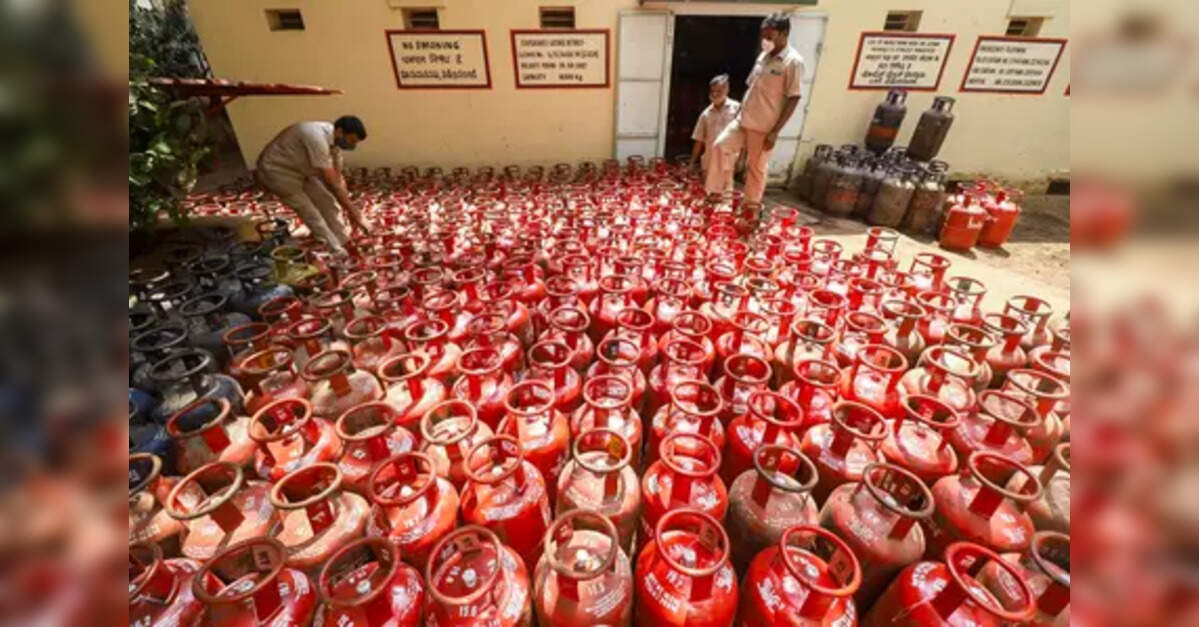
The recent reduction in the price of commercial Liquefied Petroleum Gas (LPG) cylinders in India offers a timely reprieve for businesses grappling with operational costs. Effective September 1st, oil marketing companies have implemented a notable ₹51.50 cut on 19 kg commercial LPG cylinders, bringing the retail price in Delhi down to ₹1580. This move marks the latest in a series of downward revisions, providing a welcome tailwind for the commercial, industrial, and automotive sectors that rely on this critical energy input. While the domestic 14.2 kg cylinder prices remain unchanged, this commercial adjustment reflects broader shifts in global energy markets and warrants a deeper dive for investors tracking the downstream sector.
Commercial LPG Price Dynamics and Business Impact
The latest price reduction of ₹51.50 for 19 kg commercial LPG cylinders is not an isolated event but rather a continuation of a trend observed over recent months. Businesses have seen their fuel costs steadily decline, with previous cuts including ₹33.50 on August 1st and a more substantial ₹58.50 on July 1st. These adjustments follow a ₹24 reduction in June, which set the rate at ₹1,723.50, and a preceding price of ₹1,762 in April. While February saw a modest ₹7 decrease, March briefly reversed the trend with a ₹6 increase. This consistent softening in commercial LPG prices provides considerable relief, directly impacting the bottom line for restaurants, small industrial units, and other commercial enterprises. It is crucial for investors to understand that while commercial prices demonstrate volatility, domestic cylinder prices, which account for roughly 90% of India’s total LPG consumption and have seen connections double to around 33 crore by April 2025, often remain stable, insulating households from immediate market fluctuations. This bifurcation highlights the nuanced pricing strategies employed by oil marketing companies (OMCs) and the distinct market drivers for each segment.
Global Crude Softening Fuels Downstream Relief
The ability of OMCs to continuously reduce commercial LPG prices is directly linked to the prevailing dynamics in the global crude oil market. As of today, our proprietary data indicates Brent crude trades at $98.38, reflecting a 1.02% decline within the day’s range of $98.11-$98.38. Similarly, WTI crude is priced at $89.96, down 1.33%, oscillating between $89.57 and $90.09. This recent stability, or even slight softening, provides the necessary margin for OMCs to pass on benefits to commercial consumers. Looking at a broader timeframe, our 14-day Brent trend analysis reveals a more significant retreat: Brent crude has dropped substantially from $108.01 on March 26th to $94.58 by April 15th, representing a notable 12.4% correction. This sustained downward pressure on crude benchmarks is the primary driver enabling the series of commercial LPG price cuts. For investors, this trend suggests a potential easing of input costs for refiners and marketers, which could influence their profitability in the downstream segment, provided global demand does not surge unexpectedly to push crude prices back up.
Navigating Future Volatility: Key Market Events on the Horizon
While current market conditions favor lower LPG prices, the landscape remains highly susceptible to upcoming events. Investors must maintain vigilance as several critical energy calendar events are scheduled in the next two weeks that could reshape market sentiment and crude trajectories. On April 18th, the OPEC+ Joint Ministerial Monitoring Committee (JMMC) convenes, followed by the full OPEC+ Ministerial Meeting on April 20th. These gatherings are pivotal, as any decisions regarding production quotas will directly impact global supply and, consequently, crude oil prices and their derivatives like LPG. Furthermore, the weekly API Crude Inventory report (April 21st, 28th) and the EIA Weekly Petroleum Status Report (April 22nd, 29th) will provide crucial insights into U.S. demand and supply balances. Unexpected builds or drawdowns in inventories can trigger significant price movements. Adding to this, the Baker Hughes Rig Count on April 17th and April 24th will offer a forward-looking perspective on future drilling activity and potential supply growth. For investors in OMCs and the broader energy sector, closely monitoring these dates is essential for anticipating potential shifts in crude oil pricing, which will inevitably filter down to commercial LPG costs and overall market profitability.
Investor Focus: Demystifying Market Drivers and Data Transparency
Our proprietary reader intent data from this week highlights a consistent theme among energy investors: a strong desire for clarity on market fundamentals and the reliability of pricing models. Questions such as “What are OPEC+ current production quotas?” and “What is the current Brent crude price and what model powers this response?” underscore the need for transparent, real-time data in making informed investment decisions. The volatility inherent in the oil and gas sector, demonstrated by the recent crude price swings and their subsequent impact on commercial LPG, necessitates robust analytical tools. Investors are actively seeking to understand the intricate interplay between geopolitical factors, supply-side decisions by cartels like OPEC+, and demand indicators. The ability to access and interpret granular data on crude benchmarks, inventory levels, and forward-looking production signals is paramount. For those invested in companies exposed to commodity price movements, grasping the underlying drivers and having confidence in the data sources that inform price predictions is not just an advantage, but a necessity for strategic positioning and risk management in a dynamic global energy market.


