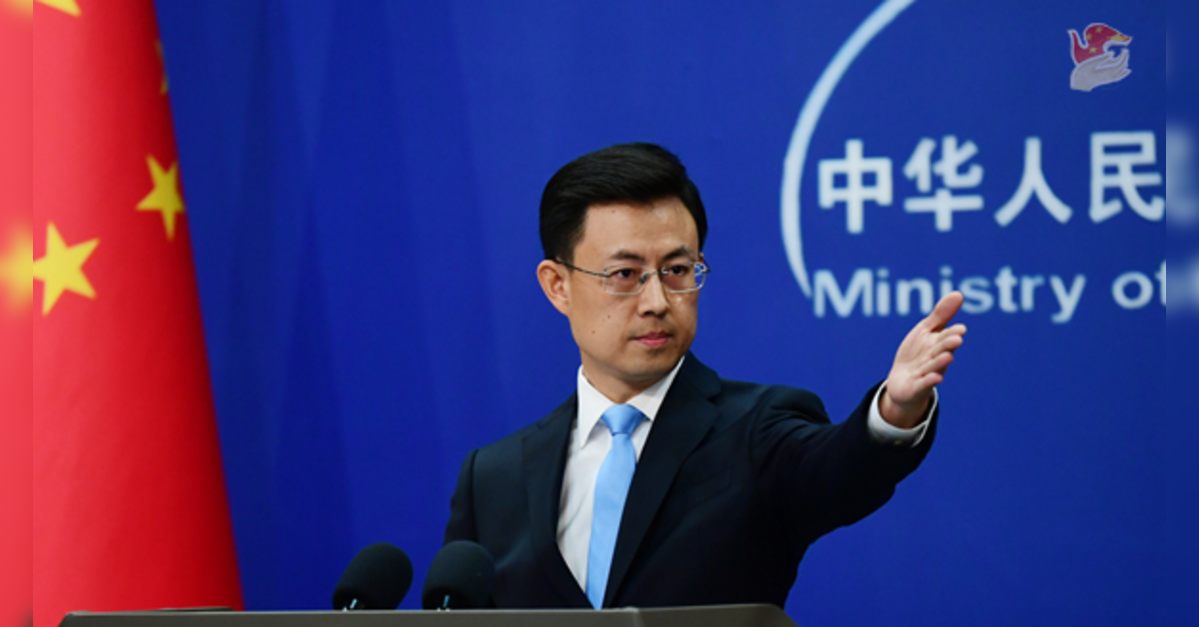
China’s unwavering commitment to its energy trade with Russia continues to shape global oil market dynamics, presenting a complex picture for investors navigating geopolitical tensions and fluctuating crude prices. Despite pointed criticism from figures like former US President Donald Trump, Beijing maintains its stance that these “normal exchanges and cooperation” are consistent with WTO rules and market principles, threatening countermeasures against any US actions that would disrupt this trade. This steadfast approach, reiterated by Chinese Foreign Ministry spokesperson Guo Jiakun, not only underpins a significant portion of Russia’s crude exports but also influences global supply flows at a time when energy markets are exhibiting notable volatility.
China’s Steadfast Demand: A Geopolitical Anchor in Volatile Markets
Beijing’s resolute position on its energy trade with Moscow represents more than just commercial transactions; it’s a clear geopolitical statement. While former US President Donald Trump accused China and India of being “primary funders” of the Ukraine conflict through their oil purchases, China’s spokesperson Guo Jiakun dismissed these criticisms, highlighting that the US and European nations themselves continue to maintain trade relations with Russia. This includes critical imports for the US, such as uranium hexafluoride for its nuclear industry, palladium for its EV sector, fertilizers, and chemicals. Similarly, the EU continues to import Russian energy, fertilizers, mining products, chemicals, iron and steel, and machinery and transport equipment, as noted by India’s Ministry of External Affairs. China’s continued, high-volume absorption of Russian crude, often at discounted prices, plays a crucial role in redistributing global supply. This persistent demand from the world’s largest energy consumer provides a significant outlet for Russian oil, underpinning its production and indirectly influencing global benchmark prices by ensuring a steady flow of crude to the market, albeit through alternative channels. For investors, this creates a bifurcated market where geopolitical alignment dictates access to specific crude streams, with implications for shipping, refining margins, and overall supply security.
Crude Under Pressure: Market Realities Amidst Geopolitical Jousting
Against the backdrop of China’s unwavering buying strategy, global crude markets are currently experiencing significant downward pressure. As of today, Brent crude trades at $90.38 per barrel, reflecting a substantial 9.07% decline in a single trading session, with its daily range spanning from $86.08 to $98.97. Similarly, WTI crude has fallen to $82.59, down 9.41%, trading within a day range of $78.97 to $90.34. This sharp daily drop extends a broader bearish trend; Brent crude has shed over 18% in just the last 14 days, falling from $112.78 on March 30, 2026, to $91.87 on April 17, and now further to its current level. Gasoline prices are also feeling the pinch, trading at $2.93, down 5.18% today. This market weakness is largely driven by macroeconomic concerns, including fears of slowing global demand and persistent inflationary pressures in key economies. While China’s sustained purchases of Russian oil provide a floor for that specific crude stream, the overall market sentiment is clearly bearish. The availability of discounted Russian crude in significant volumes, absorbed by nations like China and India, contributes to the overall global oil supply, potentially exacerbating the downward pressure on international benchmarks when demand signals weaken.
OPEC+’s Pivotal Role: Anticipating Supply-Side Adjustments
The pronounced decline in crude prices places considerable pressure on the OPEC+ alliance, whose upcoming meetings are now under intense scrutiny from global investors. With the Joint Ministerial Monitoring Committee (JMMC) scheduled for April 18 and the full Ministerial Meeting on April 19, market participants are keenly awaiting signals regarding potential production policy adjustments. Many investors are asking about OPEC+’s current production quotas and how the group might respond to the recent price erosion, especially given Brent’s significant 18.5% drop in just two weeks. Historically, OPEC+ has demonstrated a willingness to intervene to stabilize markets when prices fall substantially. The critical question facing the alliance is whether the current market weakness warrants further production cuts, or if they will opt to maintain existing quotas, banking on a demand recovery later in the year. Any decision will have profound implications for global supply. If OPEC+ decides to cut production, it could provide a much-needed boost to prices, but it would also tighten an already complex supply picture, potentially increasing the relative importance of non-OPEC+ supply, including the consistent flow of Russian oil to buyers like China. Conversely, maintaining current output levels amid weakening demand signals could see prices continue their downward trajectory.
Navigating the Investment Landscape: What Investors Are Asking
In this volatile environment, investors are grappling with complex questions about the future trajectory of oil markets. A top query on our platform this week is, “What do you predict the price of oil per barrel will be by the end of 2026?” Answering this requires a holistic view, integrating geopolitical developments, OPEC+ strategies, and demand fundamentals. China’s steadfast commitment to Russian oil, despite international pressure and tariffs imposed on India by the US, will remain a critical factor. The continued trade between the US and EU with Russia, encompassing a range of products from uranium and palladium to energy and industrial goods, underscores the difficulty of a complete economic decoupling and its implications for global supply chains. Looking forward, the outcomes of the upcoming OPEC+ meetings will set the immediate tone for supply. Beyond this, weekly data points, such as the API Weekly Crude Inventory (due April 21 and April 28), the EIA Weekly Petroleum Status Report (April 22 and April 29), and the Baker Hughes Rig Count (April 24 and May 1), will offer crucial insights into supply-demand balances and drilling activity in North America. For 2026, the interplay between sustained demand from Asian powerhouses, the elasticity of OPEC+ supply, and the broader global economic recovery will largely dictate price direction, keeping investors keenly focused on every market signal.


