China’s Stance on Russian Oil Heats Up Geopolitical Tensions for Energy Investors
The geopolitical landscape for energy investors has grown increasingly complex following China’s assertive defense of its oil imports from Russia. Beijing has firmly pushed back against potential unilateral sanctions from the United States, warning of “firm countermeasures” should its interests be harmed. This escalating rhetoric injects a significant layer of uncertainty into global energy markets, forcing investors to re-evaluate supply chain stability, demand projections, and the potential for a more fractured global trade system. As the world’s largest energy consumer and a critical player in the geopolitical arena, China’s actions and declarations carry substantial weight, directly impacting the risk premium assigned to oil and gas assets.
Beijing’s Red Line: Defending “Legitimate” Russian Oil Imports
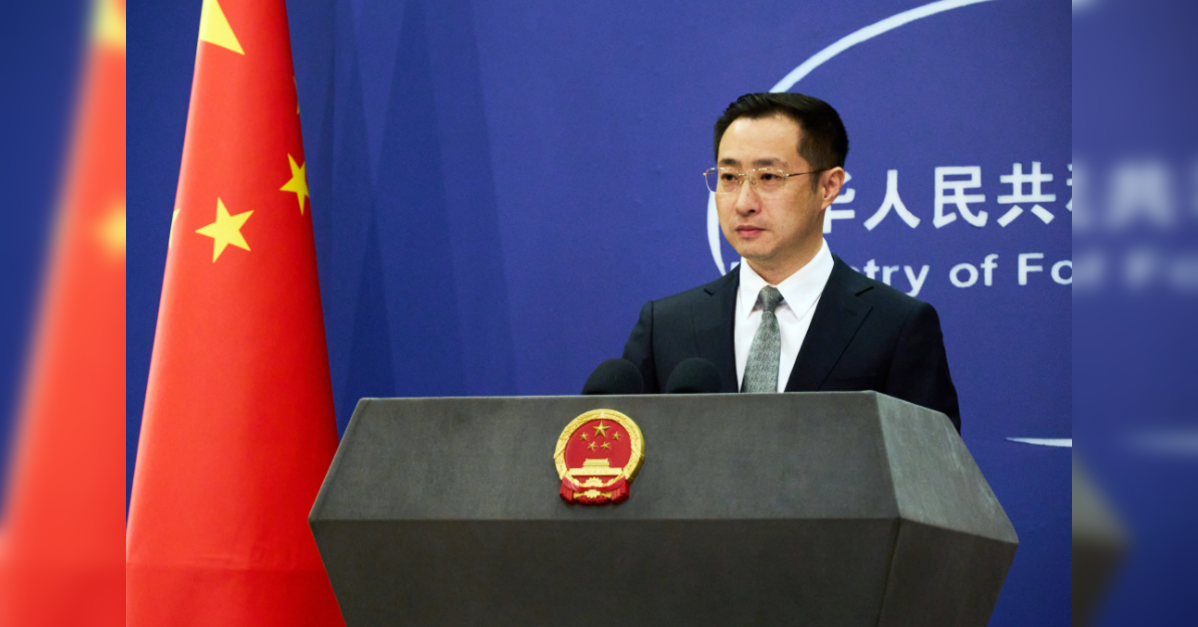
China’s Foreign Ministry has unequivocally stated its “objective and fair stance” on the Ukraine crisis, asserting that its policy is transparent and lawful. This includes its continued import of oil from Russia, which Beijing deems legitimate. The strong warning to the United States against imposing unilateral sanctions on entities dealing with Russian oil underscores China’s deep-seated opposition to what it perceives as “unilateral bullying and economic coercion.” Such actions, Beijing argues, severely undermine international trade rules and threaten the security and stability of global industrial and supply chains. For energy investors, this direct confrontation signals a potential for further trade friction and a hardening of geopolitical lines, which could lead to disruptions in established energy flows and increased volatility in commodity prices. The commitment to “firm countermeasures” should China’s legitimate rights be harmed suggests a tit-for-tat dynamic that could spill over into other sectors, impacting investor confidence in global market stability.
Market Response: Volatility Amidst Geopolitical Headwinds
The intensifying geopolitical rhetoric from Beijing comes at a time when energy markets are already grappling with significant volatility. As of today, Brent crude trades at $90.38, marking a significant 9.07% decline from yesterday’s close, with an intraday range spanning $86.08 to $98.97. WTI crude mirrors this volatility, currently at $82.59, down 9.41% for the day and trading within a range of $78.97 to $90.34. This sharp correction follows a broader downturn, with Brent having shed nearly 20% from its March 30th high of $112.78. While multiple factors contribute to daily price swings, the persistent geopolitical tension surrounding major energy producers and consumers undoubtedly adds to the risk premium and investor anxiety. The prospect of renewed trade disputes or sanctions impacting China, a critical demand center, introduces a bearish sentiment that weighs heavily on crude benchmarks. Gasoline prices have also seen a downturn, currently at $2.93, down 5.18%, reflecting broader market sentiment and potential demand concerns.
Investor Focus: Navigating Supply Chain Risks and Future Oil Prices
Our proprietary reader intent data reveals that investors are keenly focused on two critical areas: the future trajectory of oil prices and the resilience of global supply chains. Questions such as “what do you predict the price of oil per barrel will be by end of 2026?” highlight the pervasive uncertainty. This concern is amplified by China’s broader strategy regarding critical resources. Beijing’s recent rare earth export controls, which it defends as consistent with international norms, are perceived by some US officials as a “global supply-chain power grab.” While China asserts these controls are not intended to create “unnecessary misunderstanding and panic,” they underscore the increasing weaponization of trade and resources. For oil and gas investors, this signals a need to assess not only the direct impact of energy-related sanctions but also the cascading effects across industrial and technological supply chains. Any disruption in the supply of critical components could impact upstream or downstream energy projects, adding another layer of risk to investment decisions. Furthermore, investor queries about “OPEC+ current production quotas” indicate a desire to understand how major producers are balancing market stability against these evolving geopolitical dynamics.
Upcoming Catalysts: OPEC+, Inventories, and the Geopolitical Chessboard
The coming fortnight presents a series of critical energy events that will unfold against this backdrop of heightened geopolitical tension between the US and China. Investors should closely monitor the OPEC+ Joint Ministerial Monitoring Committee (JMMC) meeting on April 19th, swiftly followed by the full OPEC+ Ministerial Meeting on April 20th. These meetings are paramount, as the cartel will assess global supply-demand balances and potentially adjust production quotas. China’s defense of Russian oil imports, coupled with the threat of US countermeasures, could influence OPEC+’s projections for global demand, especially if trade frictions impact economic growth. Beyond OPEC+, weekly inventory reports from the API (April 21st, 28th) and EIA (April 22nd, 29th) will offer crucial real-time insights into crude and product stocks, providing an immediate gauge of market tightness or looseness. The Baker Hughes Rig Count on April 24th and May 1st will further inform the market about North American supply trends. Each of these events, while fundamental, will be interpreted through the lens of escalating US-China geopolitical risks, potentially amplifying market reactions and demanding agile responses from investors.


