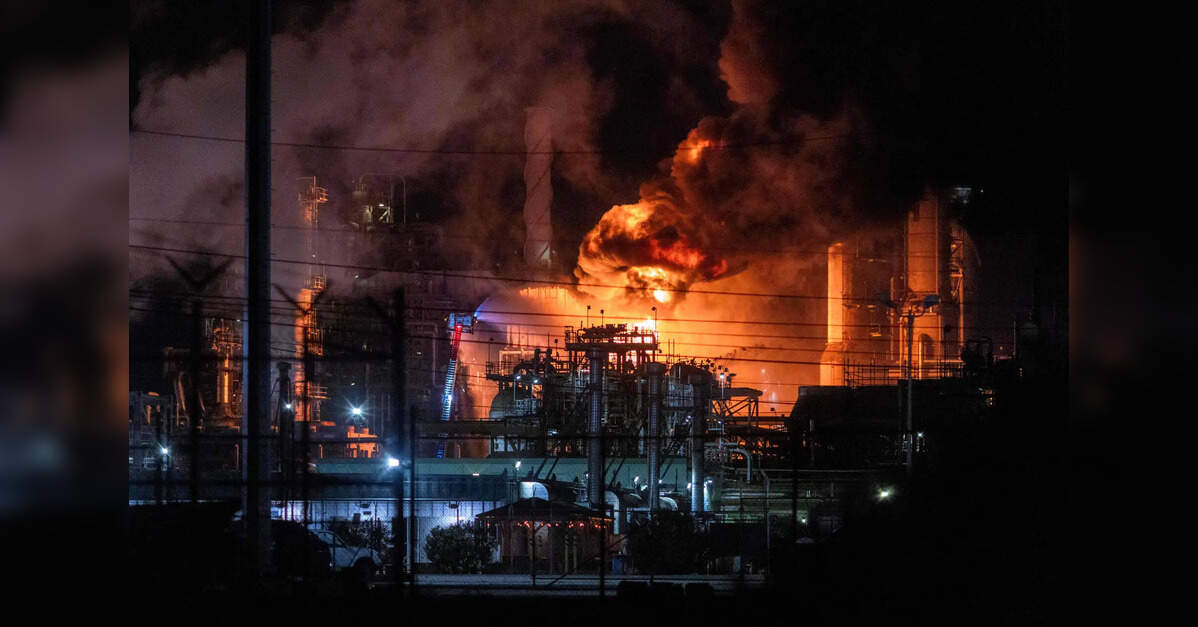
The recent fire at Chevron’s 285,000-barrel-per-day El Segundo refinery in Southern California presents a critical case study for energy investors, highlighting the fragility of regional supply chains and the immediate impact of operational disruptions. As the second-largest refinery in California and a cornerstone of the state’s energy supply, providing a fifth of its motor fuels and a staggering 40% of Southern California’s jet fuel, the incident immediately raised concerns about localized product shortages. While the fire in the jet fuel production unit has been extinguished and no injuries reported, the taking offline of multiple key units, including the Isomax 7 unit, a 60,000 bpd catalytic reformer, a 45,000 bpd hydrocracker, and a 73,000 bpd fluid catalytic cracker, underscores the potential for sustained market ripples in an already isolated energy market. Investors must look beyond the initial headlines to assess the broader implications for refining margins, regional pricing dynamics, and the strategic importance of such facilities in a volatile global energy landscape.
California’s Jet Fuel Crunch: A Deep Dive into Supply Disruption
The immediate and most pronounced impact of the El Segundo refinery incident falls squarely on Southern California’s jet fuel market. The fire specifically targeted the Isomax 7 unit, which is crucial for converting mid-distillate fuel oil into aviation-grade fuel. With 40% of the region’s jet fuel supply typically originating from El Segundo, the disruption creates an immediate deficit, particularly affecting major hubs like Los Angeles International Airport (LAX). While initial reports from Mayor Karen Bass indicated no known impact on LAX, the underlying supply dynamics are undeniably strained. This localized shock is exacerbated by California’s unique energy market, which operates with limited pipeline connectivity to other major refining centers, making it heavily reliant on its internal refining capacity or costly seaborne imports. The loss of output from such a significant facility, even if temporary, means that airlines serving Southern California will likely face higher input costs as the market scrambles for alternative supplies, potentially from distant Asian refiners in South Korea, Taiwan, and Japan. This translates directly into increased operational expenses for carriers and could influence regional air travel pricing, presenting a nuanced challenge for investors with exposure to the aviation sector.
Navigating Volatility: Current Market Snapshot and Broader Crude Trends
While the El Segundo incident creates acute regional pressure, the broader crude oil market has been signaling a different trend. As of today, Brent crude trades at $90.38 per barrel, marking a significant 9.07% decline within the day, with its range fluctuating between $86.08 and $98.97. Similarly, WTI crude has seen a substantial drop, currently at $82.59 per barrel, down 9.41% and trading within a daily range of $78.97 to $90.34. This notable downward pressure on benchmark crude prices contrasts sharply with the localized supply concerns in California. Our proprietary data shows Brent crude has experienced a substantial downturn over the past two weeks, moving from $112.78 on March 30th to today’s $90.38, representing a nearly 20% depreciation. This broader bearish sentiment, driven by global demand fears or potential oversupply, acts as a significant counter-signal to regional product price hikes. Nationally, gasoline prices reflect this overarching trend, currently at $2.93 per gallon, a 5.18% decrease, despite reports of a potential 5-15 cents per gallon rise in California’s already high gasoline market. For investors, this divergence highlights the importance of distinguishing between global crude price movements and the isolated, product-specific impacts of refining outages. While jet fuel prices in Southern California surged by 33 cents a gallon immediately after the incident, the decline in crude feedstock costs could, over time, offer some buffer to refiners’ margins, even as product price volatility persists.
Investor Sentiment and the Refining Sector’s Outlook
Our proprietary reader intent data reveals a keen investor focus on the future trajectory of crude oil prices and the health of the refining sector. Questions such as “what do you predict the price of oil per barrel will be by end of 2026?” are frequently surfacing, indicating a long-term strategic view. While the El Segundo incident is specific to Chevron, the interest in companies like Repsol and their potential performance by April 2026 underscores a broader concern about refining margins and the resilience of integrated energy companies. A localized supply disruption like this can temporarily boost margins for unaffected regional refiners capable of meeting the deficit or those with agile import capabilities, but sustained profitability depends heavily on the crack spread – the difference between crude oil and refined product prices. Given the recent substantial decline in crude benchmarks, refiners could see an improvement in their feedstock costs, potentially offsetting some of the market anxiety. However, the unique regulatory and environmental landscape of California, coupled with its geographical isolation, means that the El Segundo outage could lead to more pronounced and persistent price increases for specific products like jet fuel within the state, even if national and global crude prices remain subdued. This creates a complex arbitrage opportunity and risk profile for investors looking at the refining segment, requiring a granular understanding of regional market dynamics and logistical capabilities.
Forward-Looking Catalysts: Upcoming Events and Global Supply Dynamics
Looking ahead, several key energy events will shape the investment landscape, influencing both crude prices and the broader refining environment. The upcoming OPEC+ Ministerial Meeting on April 19th is a critical juncture. Investors are keenly asking about “OPEC+ current production quotas,” recognizing that any adjustments to supply targets will have a direct and immediate impact on global crude benchmarks. A decision to maintain or increase cuts could lend support to crude prices, potentially counteracting some of the recent declines. Following this, the API Weekly Crude Inventory reports on April 21st and 28th, alongside the EIA Weekly Petroleum Status Reports on April 22nd and 29th, will provide crucial real-time insights into U.S. inventory levels, refinery utilization, and demand indicators. These reports will be particularly scrutinized to gauge the ripple effects of the El Segundo outage on overall product inventories and refining throughput in a national context. Furthermore, the Baker Hughes Rig Count on April 24th and May 1st will offer a forward-looking perspective on domestic production activity, especially in response to the recent crude price volatility. For Southern California’s jet fuel market, these global and national data points will intersect with the practical challenge of securing increased imports, potentially requiring an additional cargo beyond the recent 45,000-50,000 bpd of jet fuel imports. The interplay of OPEC+ decisions, U.S. inventory trends, and the operational status of key refining assets like El Segundo will define the market’s trajectory in the coming weeks and months.
Strategic Implications for Energy Investors
The Chevron El Segundo fire serves as a stark reminder of the inherent risks in the energy sector’s infrastructure and the outsized impact a single event can have on localized markets. For investors, this incident underscores the importance of diversifying exposure within the energy complex, considering both upstream (crude production) and downstream (refining and distribution) segments. While the incident points to potential short-term gains for other refiners or product importers into California, the broader trend of declining crude prices suggests a challenging environment for pure-play upstream producers unless OPEC+ intervenes decisively. The isolation of the California market means that refining assets within the state, despite their operational risks, hold strategic value due to high barriers to entry and unique supply constraints. Companies with robust logistical networks and flexible import/export capabilities may be better positioned to navigate such disruptions. Ultimately, the market will balance the immediate, acute supply shock of the El Segundo outage with the broader macroeconomic forces influencing global crude demand and supply. Astute investors will monitor not only the repair progress at the El Segundo facility but also the outcomes of upcoming OPEC+ meetings and inventory reports to gain a comprehensive understanding of evolving market dynamics.


