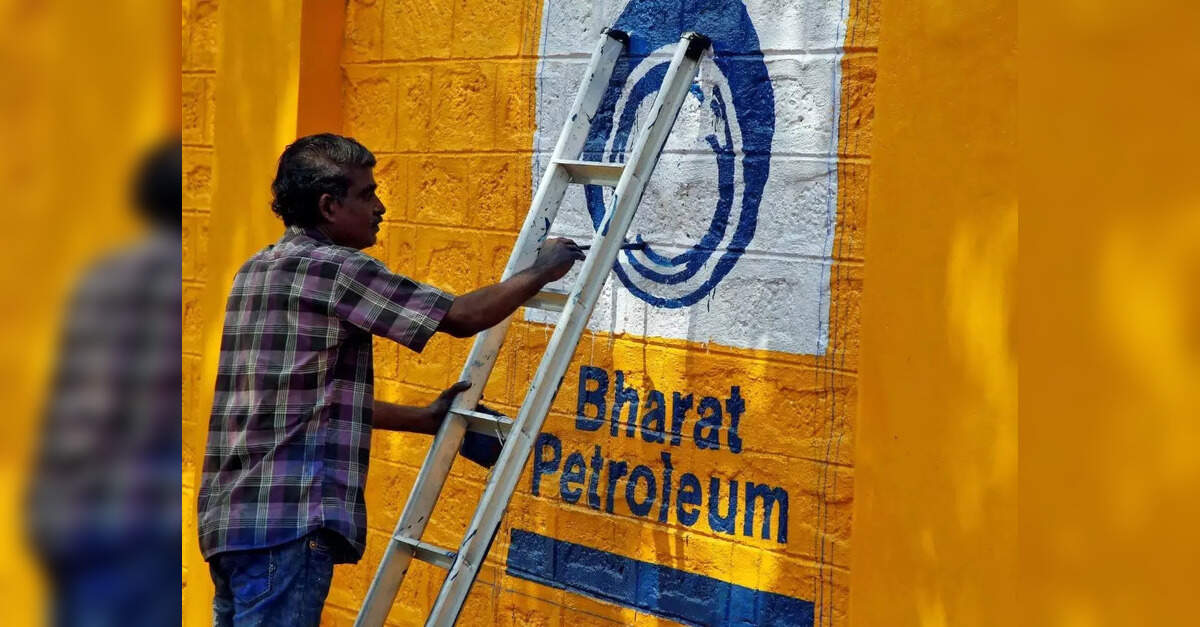
India’s energy landscape is undergoing a monumental transformation, with state-owned behemoths aggressively expanding their footprint to meet burgeoning domestic demand and solidify the nation’s position on the global energy stage. Bharat Petroleum Corp (BPCL) exemplifies this ambition with its recent commitment to invest a staggering ₹95,000 crore into a new greenfield oil refinery and petrochemical complex. This significant capital allocation, earmarked for a facility near the Ramayapatnam Port in Andhra Pradesh, signals a robust long-term growth strategy that astute investors must carefully evaluate. This analysis delves into the strategic rationale behind BPCL’s massive undertaking, its implications amidst current market volatility, and how it aligns with India’s broader energy transition goals, all while considering the pressing questions on investors’ minds.
BPCL’s Strategic Vision: Fueling India’s Future Growth
BPCL’s proposed greenfield refinery-cum-petrochemical complex represents a cornerstone of its “Project Aspire,” a comprehensive initiative designed to strengthen its core in refining, marketing, and upstream operations while aggressively diversifying into future-facing segments. The facility, projected to have an annual crude oil refining capacity of 9 million tonnes, will be strategically co-located with a state-of-the-art petrochemical complex. This integration is crucial; it not only aims to provide a natural hedge against the inherent volatility of petroleum product prices but also aligns directly with India’s declared ambition of becoming a global refining and petrochemical hub. Chairman and Managing Director Sanjay Khanna highlighted this dual benefit, emphasizing the expansion of BPCL’s petrochemical portfolio. The underlying demand justification is undeniable: BPCL’s marketing performance saw retail sales volumes climb 2.6% to 33.5 MMT during the last fiscal year, with petrol sales surging 6.4% to 10.7 MMT, even as diesel sales remained broadly flat. This robust domestic consumption provides a compelling backdrop for such a substantial capacity addition, reinforcing the long-term demand narrative within India.
Navigating Market Volatility: A Timely Investment Amidst Price Swings
The timing of such a massive capital expenditure inevitably prompts scrutiny, especially against a backdrop of significant market volatility. As of today, Brent crude trades at $90.38, reflecting a substantial 9.07% drop within the day’s range of $86.08-$98.97. Similarly, WTI crude has seen a sharp decline to $82.59, down 9.41% from its daily high, while gasoline prices stand at $2.93, a 5.18% decrease. This daily volatility follows a broader trend; over the past two weeks, Brent crude has shed $20.91, declining by 18.5% from $112.78 on March 30th to $91.87 on April 17th. These drastic price movements highlight the precarious nature of the crude market. For BPCL, committing ₹95,000 crore to a new refinery during such a period underscores a long-term conviction in demand, particularly for value-added petrochemical products. The integrated petrochemical complex is a strategic de-risking move, as petrochemical margins often exhibit different cyclicality compared to traditional fuel refining, offering a more stable revenue stream and enhanced profitability, crucial during periods of crude price turbulence.
Upcoming Catalysts and Forward-Looking Analysis
Investors are keenly observing a series of upcoming energy events that could significantly influence the crude price environment and, by extension, the economic viability of BPCL’s new venture. The immediate focus is on the OPEC+ Joint Ministerial Monitoring Committee (JMMC) meeting on April 18th, followed by the full Ministerial Meeting on April 19th. These gatherings are critical as they will determine the alliance’s production policy, directly impacting global supply and price stability. Any decision to adjust quotas, whether to cut or increase output, will send ripples through the market. Following closely are the API Weekly Crude Inventory report on April 21st and the EIA Weekly Petroleum Status Report on April 22nd, both offering vital insights into U.S. supply and demand dynamics. These reports, along with the Baker Hughes Rig Count on April 24th, provide granular data points that can sway short-term trading sentiment and inform longer-term supply projections. For BPCL, a sustained period of elevated crude prices could increase project costs and feedstock expenses, while a significant downturn might compress refining margins. The forward-looking analysis of these events is therefore crucial for assessing the macro environment in which this multi-year project will unfold.
Addressing Investor Questions and the Long-Term Outlook
Our proprietary reader intent data reveals that investors are deeply concerned with the future trajectory of crude prices, with a recurring question being, “What do you predict the price of oil per barrel will be by end of 2026?” This sentiment underscores the inherent uncertainty in the market. Another common query revolves around “What are OPEC+ current production quotas?”, highlighting the influence of cartel decisions on global supply. BPCL’s massive investment, spanning several years, implicitly hedges against short-term price fluctuations by banking on India’s long-term energy demand growth and the structural shift towards petrochemicals. While the outlook for crude prices remains contentious, particularly by late 2026, India’s economic expansion and increasing urbanization are undeniable drivers for both fuels and petrochemicals. Furthermore, BPCL’s strategic diversification into renewables, green hydrogen, and biofuels, as part of “Project Aspire,” positions it to navigate the global energy transition. This multi-pronged approach demonstrates an understanding that while traditional fuels remain critical for the foreseeable future in India, a resilient energy company must also embrace cleaner alternatives and higher-value products like petrochemicals to ensure sustained growth and stakeholder value in the decades to come.


