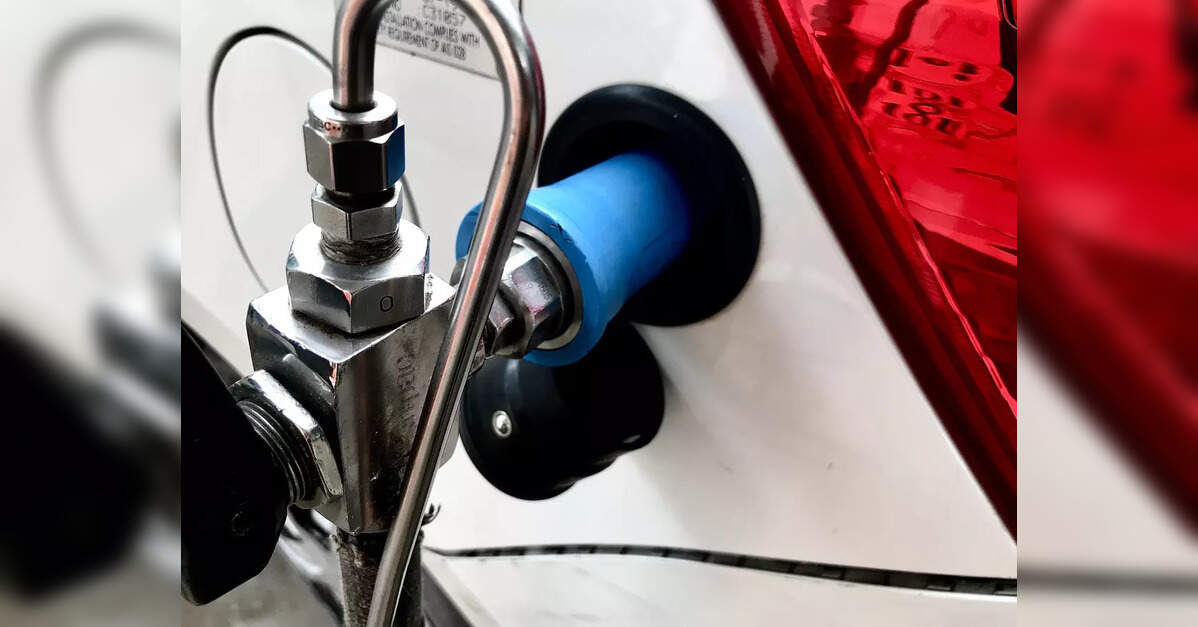
India’s ambitious energy transition presents significant opportunities for investors, particularly as the nation targets a substantial increase in natural gas consumption. A recent strategic collaboration between state-run Bharat Petroleum Corporation (BPCL) and Reliance BP Mobility (RBML), an equal joint venture between BP Plc and Reliance Industries, is set to accelerate this shift. This partnership, focused on city gas distribution (CGD) and compressed natural gas (CNG) sales, not only underscores a shared commitment to cleaner fuel alternatives but also highlights a critical pathway for investors seeking long-term growth in a dynamic energy landscape. As global crude markets grapple with volatility, India’s push towards a gas-based economy offers a compelling diversification strategy, driven by robust domestic demand and strategic alliances.
Strategic Alliance Drives India’s Gas Ambition
The collaboration between BPCL and RBML is a pivotal step in realizing India’s strategic vision to elevate natural gas’s share in its energy mix. Currently standing at approximately 6%, the Indian government aims to nearly triple this to 15% by 2030. This aggressive target necessitates broad-based infrastructure development and expanded distribution networks, areas where the BPCL-RBML partnership is poised to make significant inroads. Rahul Tandon, BPCL’s business head for gas, emphasized the importance of delivering the “molecule” to the end customer, a sentiment echoed by RBML CEO Akshay Wadhwa, who noted that RBML outlets attract higher footfall, thereby boosting CNG sales. This synergy between BPCL’s extensive reach and RBML’s strong consumer engagement is designed to enhance access to cleaner and more affordable fuel alternatives across India’s burgeoning urban centers. For investors, this alliance represents a robust commitment from two major players to unlock a high-growth sector, supported by clear national policy objectives and a rapidly expanding consumer base.
Navigating Crude Volatility with Gas Investments
The timing of this significant investment in India’s gas infrastructure comes amidst a period of notable volatility in global crude markets, a factor keenly observed by our investor community. As of today, Brent crude trades at $90.38, reflecting a sharp 9.07% decline within a single day. Similarly, WTI crude has experienced a substantial drop, now priced at $82.59, down 9.41%. This immediate market reaction follows a broader trend; Brent crude has depreciated by nearly 20% over the past two weeks, falling from $112.78 on March 30th to its current level. Such dramatic price swings underscore the inherent risks associated with an over-reliance on crude, prompting investors to seek more stable and predictable long-term opportunities. The shift towards a gas-based economy in India offers precisely this kind of diversification. By investing in city gas distribution and CNG infrastructure, companies like BPCL and RBML are building resilient revenue streams less directly exposed to the day-to-day fluctuations of international oil benchmarks. This strategic move aligns with a broader macroeconomic imperative for energy security and price stability, making Indian gas infrastructure a compelling proposition for capital looking to mitigate crude market exposure.
Upcoming Events and Policy Tailwinds for Gas Expansion
Forward-looking investors are not just observing current market conditions but are actively anticipating how upcoming global energy events could shape the investment landscape. The next two weeks are packed with critical developments, including the OPEC+ JMMC Meeting on April 19th and the subsequent OPEC+ Ministerial Meeting on April 20th. Decisions made during these gatherings regarding production quotas will undoubtedly influence global crude supply and, consequently, price stability. A tightening of supply could further exacerbate price volatility, potentially accelerating the transition to alternative fuels in major consuming nations like India. Furthermore, regular updates such as the API Weekly Crude Inventory (April 21st, April 28th) and the EIA Weekly Petroleum Status Report (April 22nd, April 29th) will provide crucial insights into short-term supply-demand dynamics in the U.S., impacting global sentiment. Each Baker Hughes Rig Count report (April 24th, May 1st) also offers a pulse check on future drilling activity. While these events primarily focus on crude, their ripple effects are significant for gas markets. Sustained crude price uncertainty or upward pressure could strengthen the economic case for natural gas, bolstering the investment thesis for projects like the BPCL-RBML collaboration. India’s government commitment, explicitly aiming to raise gas’s share to 15% by 2030, provides a robust policy tailwind, offering a degree of regulatory certainty that is highly attractive to long-term infrastructure investors.
Investor Sentiment and Growth Drivers in India’s Gas Sector
Our proprietary reader intent data reveals a consistent focus among investors on future energy price predictions and the stability of global supply. Questions such as “what do you predict the price of oil per barrel will be by end of 2026?” highlight the prevailing uncertainty and the search for reliable growth avenues. Similarly, inquiries about “OPEC+ current production quotas” underscore the preoccupation with geopolitical factors influencing supply. Against this backdrop of global oil market unpredictability, the Indian city gas distribution sector, propelled by the BPCL-RBML partnership, emerges as a strategic answer for investors. This collaboration directly addresses the growing demand for cleaner, more affordable energy, tapping into India’s vast and expanding consumer base. The partnership’s focus on enhancing access to CNG, leveraging RBML’s high-footfall outlets, promises accelerated sales and market penetration. This isn’t merely an infrastructure play; it’s an investment in India’s socio-economic development and environmental sustainability. For investors, the long-term growth potential in a regulated, government-supported sector, spearheaded by established players like BPCL and Reliance, offers a compelling blend of stability and substantial upside, effectively de-risking capital deployment in a vital energy transition segment.
Operational Synergies and Long-Term Market Impact
The operational synergies inherent in the BPCL-RBML collaboration are critical to its projected success and long-term market impact. BPCL brings a deep understanding of India’s energy landscape and an extensive network of distribution channels, honed by years as a state-run enterprise. RBML, as a joint venture between BP Plc and Reliance Industries, combines global expertise in mobility and energy retail with Reliance’s formidable domestic industrial and consumer footprint. This blend of public and private sector strengths creates a powerful engine for expanding CGD and CNG infrastructure. By pooling resources and leveraging existing assets, the partnership can achieve economies of scale and accelerate market penetration, especially in new geographic areas. The “higher footfall” at RBML outlets is not just a marketing advantage; it’s a strategic asset for rapidly scaling CNG sales, converting existing fuel consumers to cleaner alternatives. Beyond immediate sales, this collaboration contributes significantly to India’s energy security by diversifying its fuel mix and reducing reliance on imported crude. For investors, this translates into a resilient growth story, underpinned by strong domestic demand, strategic operational integration, and alignment with national energy policy goals, positioning India’s gas sector as a key investment theme for the coming decade.


