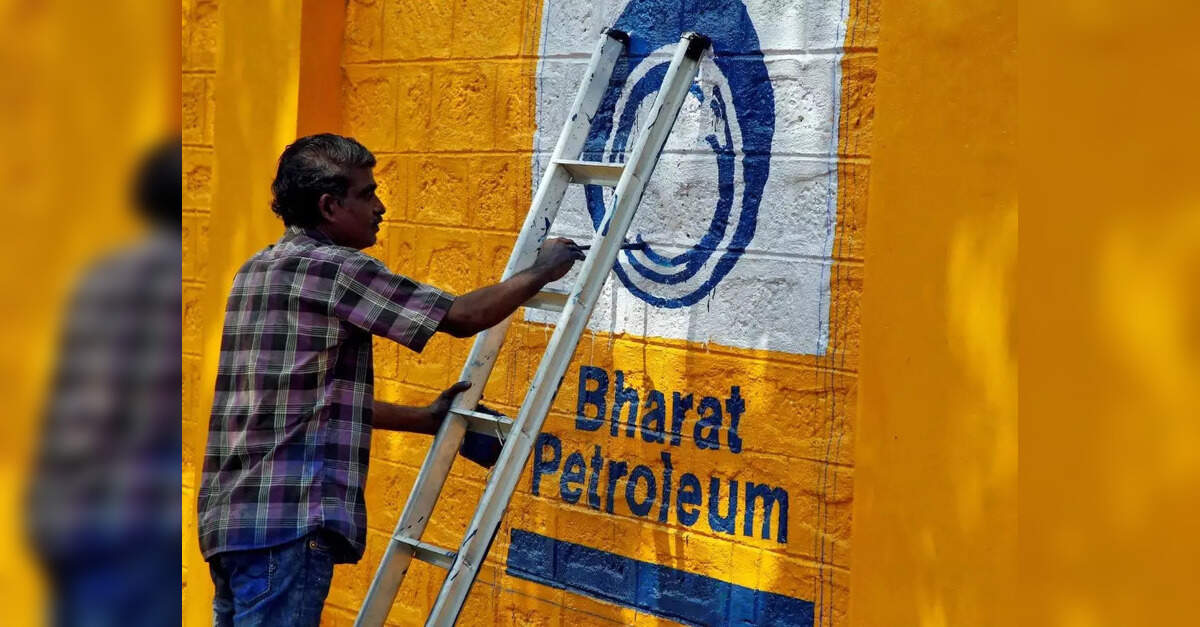
India’s public sector oil marketing companies (OMCs) delivered a robust performance in the first quarter of fiscal year 2026 (April-June), collectively reporting a combined profit of ₹16,184 crore. This significant financial uplift, more than two-and-a-half times higher year-on-year, signals a strong recovery and strategic resilience within the sector. While all three major players – Indian Oil Corporation (IOC), Bharat Petroleum Corporation Ltd (BPCL), and Hindustan Petroleum Corporation Ltd (HPCL) – posted impressive figures, BPCL distinguished itself with superior operational efficiency and profit generation, challenging the traditional hierarchy in the Indian fuel retail landscape. For investors, understanding the drivers behind this performance, particularly BPCL’s unique advantages, is crucial for navigating future opportunities in this critical energy segment.
BPCL’s Strategic Edge: Operational Excellence Drives Outperformance
BPCL emerged as the frontrunner in Q1 FY26, posting a net profit of ₹6,124 crore, remarkably surpassing IOC’s ₹5,689 crore despite IOC being nearly twice its size. HPCL also contributed significantly with a ₹4,371 crore profit. BPCL’s impressive showing was not merely a revenue story but a testament to its operational prowess. The company achieved a gross refining margin (GRM) of USD 4.88 per barrel, significantly higher than IOC’s USD 2.15 and HPCL’s USD 3.08. This superior refining capability was further underscored by an exceptional refinery run rate of 118% of installed capacity, outpacing IOC’s 107% and HPCL’s 10.9%. Beyond refining, BPCL demonstrated remarkable efficiency in its retail network, selling an average of 153 kiloliters of fuel per pump each month, compared to IOC’s 130 kiloliters per retail outlet. These metrics highlight BPCL’s ability to maximize throughput and extract higher value from every barrel of crude, a critical factor for investors evaluating long-term profitability and asset utilization in the refining and marketing space.
Navigating Volatility: Stable Retail Prices and Inventory Dynamics
A key factor in the bumper Q1 earnings across all three OMCs was the stability in retail fuel prices amidst a significant decline in input costs. Despite a 21% drop in crude oil prices and a 16-18% reduction in benchmark international fuel rates, retail prices for petrol and diesel remained largely unchanged. This strategic freeze allowed retailers to earn estimated marketing margins of ₹10.3 per litre on petrol sales and ₹8.2 per litre on diesel, substantially higher than the previous year. This robust marketing margin proved essential in offsetting considerable inventory losses incurred as crude prices fell between procurement and sale. For instance, IOC booked an inventory loss of ₹6,465 crore, while HPCL faced approximately ₹2,000 crore in losses. Investors frequently inquire about how energy companies manage profitability in the face of volatile input costs, and this quarter offers a clear example: sustained retail margins can act as a crucial buffer. As of today, Brent crude trades at $90.38, down 9.07% on the day, with a 14-day trend showing a significant drop of over 18% from $112.78 on March 30. This current volatility underscores the ongoing challenge of inventory management, where a sudden price drop can erode refining profits if not compensated by marketing gains or efficient hedging strategies.
The LPG Subsidy Conundrum and Future Profitability Levers
Despite the strong overall performance, the OMCs continued to grapple with losses from selling cooking gas (LPG) below cost. IOC reported LPG losses of ₹3,719 crore, BPCL ₹2,076 crore, and HPCL ₹2,148 crore. While the government has announced a ₹30,000 crore subsidy to cover these losses, the modalities and timing of these payments remain unannounced. This uncertainty represents a notable contingent liability for investors, as the actual realization of these funds will impact future balance sheets and cash flows. Beyond government interventions, the long-term profitability of these OMCs will increasingly depend on strategic investments in refining upgrades, diversification into petrochemicals, and expanding their retail footprint. These initiatives aim to enhance product realization, reduce operational costs, and create more resilient revenue streams, mitigating reliance on potentially volatile marketing margins and government subsidies. Investors are keenly watching for clarity on subsidy payments, as well as the progress of these companies’ capital expenditure plans, which will shape their competitive position in a dynamic market.
Upcoming Catalysts and the Global Crude Outlook for Investors
The global oil market remains a primary driver for the financial health of Indian OMCs, and investors are actively seeking clarity on crude price trajectories. Our proprietary investor intent data shows a strong focus on questions like “what do you predict the price of oil per barrel will be by end of 2026?” and inquiries into OPEC+ production quotas. The current market snapshot, with Brent at $90.38 and WTI at $82.59, reflects ongoing price sensitivity. Crucial upcoming events on the energy calendar will provide significant market signals. The OPEC+ Joint Ministerial Monitoring Committee (JMMC) and full Ministerial meetings scheduled for April 18th and 19th are paramount. These gatherings will determine future production policies, directly influencing global supply and, consequently, crude oil prices. Any decisions regarding current quotas will send ripples through the market, impacting inventory values and refining margins for OMCs globally. Furthermore, the API Weekly Crude Inventory (April 21st, 28th) and EIA Weekly Petroleum Status Reports (April 22nd, 29th) will offer critical insights into U.S. demand and supply dynamics, while the Baker Hughes Rig Count (April 24th, May 1st) will signal future drilling activity. Investors must closely monitor these events, as they will shape the crude price environment that directly dictates the profitability landscape for Indian OMCs in the coming quarters.


