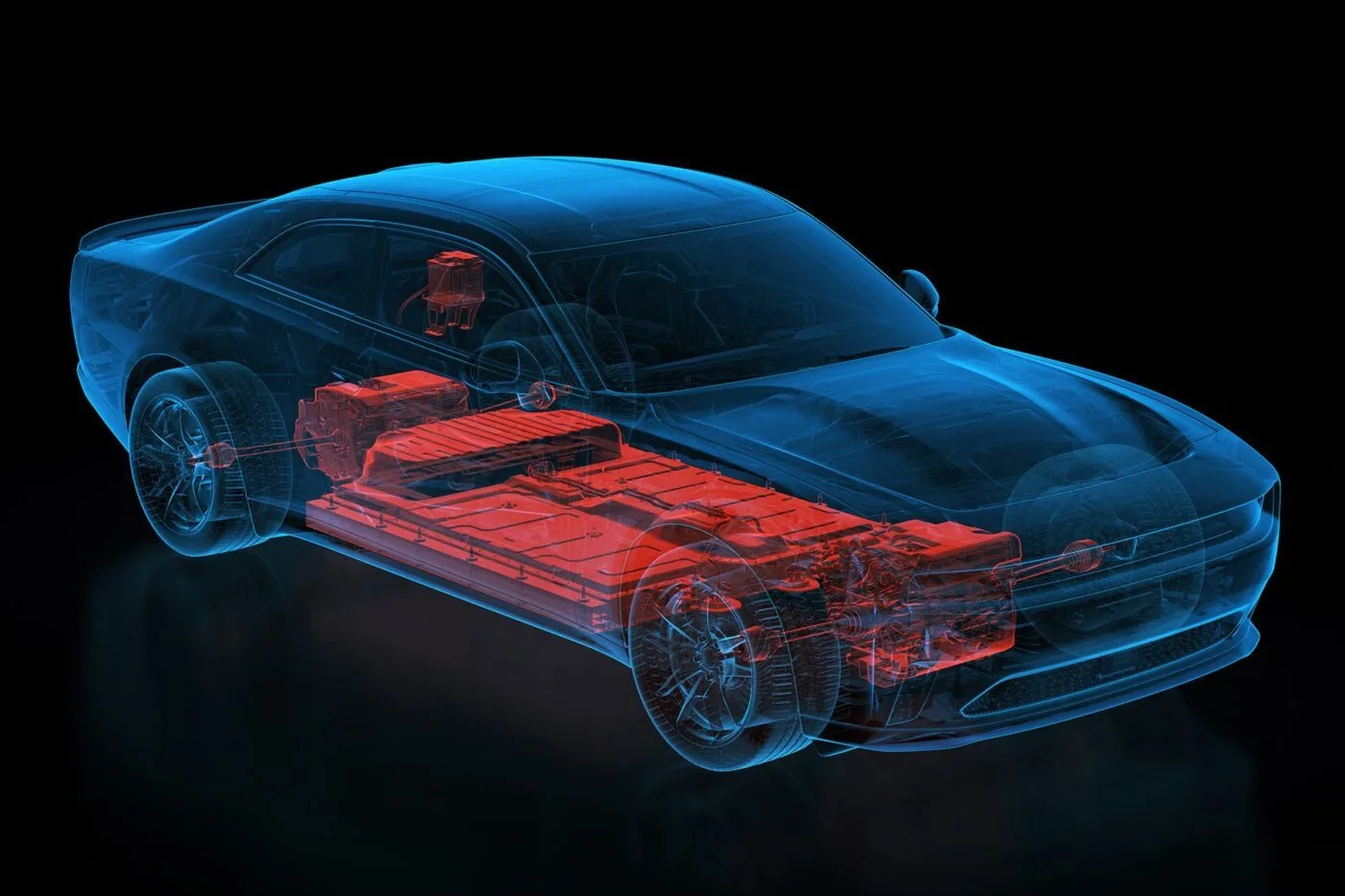
Recalibrating EV Battery Expectations: A Critical Correction for the Energy Market
The electric vehicle (EV) narrative, a significant long-term variable in global oil demand forecasts, has seen a subtle but important recalibration. Recently, a prominent battery testing company took a firm stance against what it deemed a misleading interpretation of a Stanford study. This initial misreading suggested that dynamic driving, or “sprinting,” could extend EV battery life. The battery diagnostics provider, however, clarified that this conclusion was “technically incorrect and unsupported by real-world data,” emphasizing that the study actually focused on lab testing efficiency, not real-world battery preservation through aggressive driving. This correction is not merely a technical footnote; it carries significant implications for investor perception of EV longevity, total cost of ownership, and ultimately, the pace of the energy transition.
The True Cost of Aggression: Implications for EV Adoption and Fuel Demand
The core of the correction lies in clarifying that more intense use of an electric drive system accelerates battery degradation. This directly contradicts the earlier, popular interpretation. Instead, the battery testing company now explicitly recommends “efficient, not aggressively” driving to best preserve an EV’s battery. This means adopting a smoother, more anticipatory, and energy-efficient driving style. Crucially, their own analysis indicates that “moderate driving behavior reduces energy consumption by 10% over the battery’s lifecycle,” effectively extending a vehicle’s useful range by 10,000 kilometers over a 100,000-kilometer span when compared to aggressive driving.
This revised understanding impacts investment theses across the energy sector. If EV batteries degrade faster under typical, non-optimized driving conditions, or if consumers must actively adopt less spirited driving styles to achieve expected longevity, it could subtly dampen the fervor for rapid EV adoption. For oil and gas investors, this translates into potentially longer runway for conventional fuels. Expectations of battery lifespan directly influence resale values, replacement costs, and thus, the overall attractiveness of EVs against internal combustion engine (ICE) vehicles. A perception of higher long-term operating costs or shorter effective lifespans for EV batteries could slow the rate at which ICE vehicles are retired, preserving gasoline and diesel demand for a longer period than previously modelled under optimistic EV scenarios.
Market Dynamics and the Persistent Pull of Crude
Against this backdrop of evolving long-term demand drivers, the immediate market remains acutely sensitive to supply-side fundamentals. As of today, Brent crude trades robustly at $99.46, marking a significant 4.77% increase over the day, with its range spanning $94.42 to $99.65. WTI crude also saw a substantial gain, reaching $91.23, up 3.52%. This sharp rebound follows a notable period of weakness; Brent had declined by $13.43, or 12.4%, from $108.01 on March 26th to $94.58 yesterday, April 15th. Gasoline prices, currently at $3.08 per gallon, are also up 2.66% today.
This daily surge suggests an underlying bullish sentiment, perhaps driven by geopolitical tensions or tightening supply expectations, contrasting with the recent bearish trend. While the long-term EV narrative provides a crucial demand ceiling, short-term market movements are still dominated by immediate supply and demand imbalances, inventory levels, and geopolitical risk premiums. The clarification on EV battery longevity, while not an immediate market mover like an OPEC+ decision, subtly reinforces the resilience of traditional fuel demand by raising questions about the pace and ease of the EV transition. Investors must weigh these nuanced long-term shifts against the volatile near-term market catalysts.
Navigating Investor Queries and Upcoming Catalysts
Our first-party intent data reveals significant investor interest in building a base-case Brent price forecast for the next quarter, and the consensus 2026 Brent forecast. This focus on forward pricing directly intersects with the revised EV outlook. If EV battery life requires more conscientious driving or proves shorter than initially advertised, the demand destruction from EV penetration could be less aggressive, providing a stronger floor for crude prices in the mid-term. Investors are also keen on understanding “how Chinese tea-pot refineries are running this quarter” and “what’s driving Asian LNG spot prices,” underscoring the critical role of Asian demand in the global energy balance. A slower EV transition in key markets like China would further bolster crude demand.
Looking ahead, the energy calendar is packed with events that will shape short-term market dynamics. The upcoming OPEC+ Joint Ministerial Monitoring Committee (JMMC) meeting on April 18th, followed by the Full Ministerial Meeting on April 20th, will be pivotal for supply-side policy. Any signals regarding production adjustments will significantly impact crude prices. Furthermore, the API Weekly Crude Inventory (April 21st, 28th) and the EIA Weekly Petroleum Status Report (April 22nd, 29th) will offer critical insights into immediate supply-demand balances in the crucial U.S. market. The Baker Hughes Rig Count reports on April 17th and 24th will provide a pulse on North American production activity. These short-term supply-side decisions and inventory data points will interact with the evolving long-term demand picture, where even subtle shifts in EV battery expectations can extend the demand horizon for crude and refined products. Investors should closely monitor these events, understanding that every piece of data, from EV battery research to OPEC+ rhetoric, contributes to the complex mosaic of global energy market forecasting.