The Strategic Imperative: Aramco’s Vision Beyond the Barrel
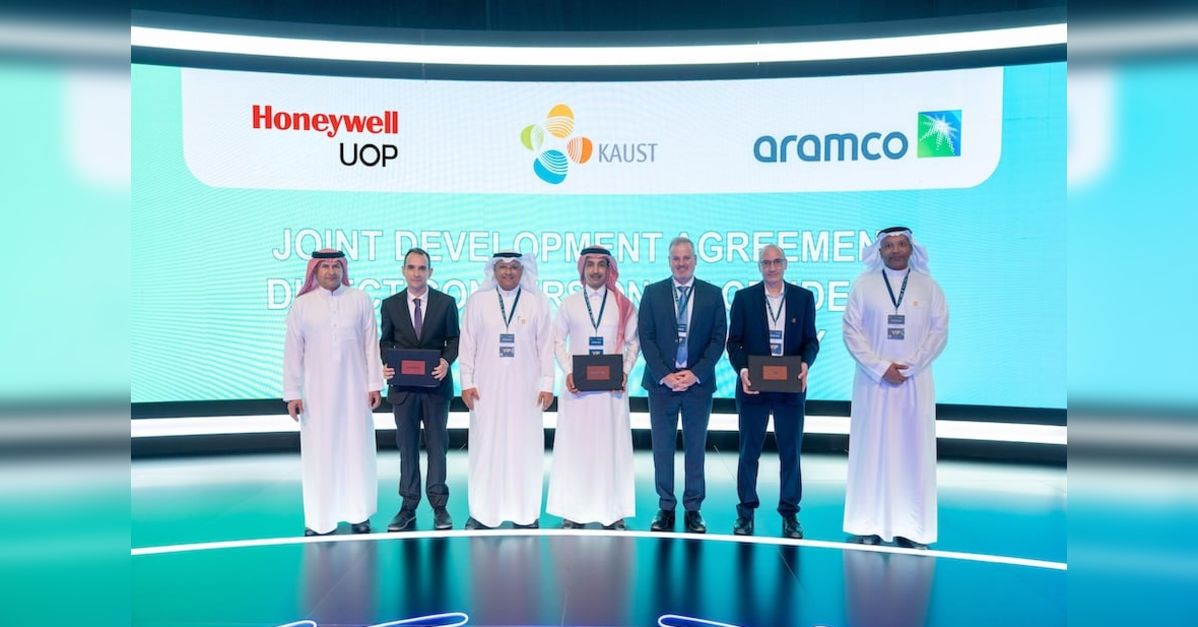
In a landscape increasingly defined by energy transition pressures and commodity price volatility, Saudi Aramco’s latest Joint Development Agreement (JDA) with Honeywell and King Abdullah University of Science and Technology (KAUST) stands out as a critical strategic maneuver. This collaboration aims to co-develop a next-generation Direct Crude-to-Chemicals (CTC) technology, fundamentally shifting the paradigm of value extraction from crude oil. The core objective is clear: to convert crude directly into high-demand chemicals like light olefins, bypassing traditional refining steps. This not only promises to significantly reduce capital and operating costs but also to enhance energy efficiency, lower emissions, and unlock considerably greater value from Saudi Arabia’s vast hydrocarbon resources. For investors, this initiative represents a proactive approach to de-risk future earnings and diversify revenue streams, aligning perfectly with Saudi Arabia’s ambitious Vision 2030 for economic transformation and strengthening its petrochemicals industry.
Navigating a Volatile Crude Market: The Need for Value Maximization
The urgency behind such value-added initiatives is underscored by the current market conditions. As of today, Brent Crude trades at $90.38, reflecting a significant 9.07% decline within the day, with its range fluctuating between $86.08 and $98.97. Similarly, WTI Crude has seen a sharp drop to $82.59, down 9.41%. This bearish sentiment is not an isolated event; our proprietary data reveals a steep 14-day Brent trend, plummeting from $112.78 on March 30th to today’s $90.38 – a $22.4 or nearly 20% contraction. Such rapid shifts highlight the inherent volatility of the crude market, intensifying the pressure on major producers to find more stable and lucrative avenues for their resources. Investors are keenly asking about the price outlook for the end of 2026, and this price decline serves as a stark reminder that relying solely on crude exports exposes companies to substantial market risk. Projects like CTC directly address this by maximizing the value per barrel, effectively insulating a portion of future revenues from the whims of the global oil price cycle and creating a more resilient earnings profile.
Forward Momentum: Upcoming Events and Long-Term Strategic Hedging
Looking ahead, the immediate horizon holds several pivotal events that could further shape the energy market. Tomorrow, April 19, 2026, the OPEC+ Ministerial Meeting is scheduled to convene. This gathering will be closely watched for any adjustments to production quotas, a topic frequently raised by our readers who inquire about current OPEC+ policies. Any decision to alter supply could have a material impact on crude prices in the short to medium term. Beyond OPEC+, the upcoming API and EIA Weekly Petroleum Status Reports on April 21st, 22nd, 28th, and 29th, alongside the Baker Hughes Rig Count on April 24th and May 1st, will provide crucial insights into supply-demand dynamics in key markets. In this context of ongoing market uncertainty and potential supply adjustments, Aramco’s investment in CTC technology acts as a strategic hedge. By converting crude into higher-value petrochemical products, Aramco is positioning itself to capture demand in less volatile downstream markets, future-proofing its revenue streams against potential OPEC+ cuts or shifts in global energy consumption patterns away from traditional fuels. This long-term vision offers a compelling counter-narrative to short-term market fluctuations, promising sustained growth and reduced exposure to the commodity price rollercoaster.
Investor Takeaways: Diversification and De-risking through Innovation
For investors, the Aramco, Honeywell, and KAUST collaboration presents a clear signal of strategic intent and a blueprint for future growth in the energy sector. This partnership leverages Aramco’s industrial scale, Honeywell UOP’s proven catalytic process design capabilities, and KAUST’s cutting-edge research to accelerate the CTC process from laboratory validation to commercial deployment. The implications are multifaceted: it diversifies Aramco’s revenue away from purely upstream activities, enhances its competitive edge in the rapidly expanding petrochemicals market, and positions Saudi Arabia as a leader in advanced chemical technology. For those invested in energy majors, this move demonstrates a commitment to innovation and resilience in the face of evolving market dynamics. It’s not merely about producing more oil, but about extracting maximum value from every barrel, thereby de-risking the investment thesis for a company like Aramco and setting a precedent for other national oil companies to follow in their pursuit of economic diversification and sustainable value creation.


