Wildfire Surge: Assessing the Unfolding Risks for Global Energy Investments
As unprecedented heatwaves scorch southern Europe, driving tens of thousands from their homes, and formidable infernos engulf vast swathes of Canada and the United States, choking major urban centers with dense smoke, the global investment community must critically evaluate the escalating impact of wildfires. These widespread environmental catastrophes are not merely local tragedies; they represent a growing systemic risk that affects supply chains, infrastructure, public health, and ultimately, the profitability and operational resilience of diverse industries, including the vital oil and gas sector.
The Hidden Costs: Beyond Direct Fire Damage
While the immediate devastation of wildfires is stark, the direct human casualty count, typically hundreds annually, often pales in comparison to other natural disasters like floods, which claim thousands, or heatwaves, responsible for hundreds of thousands of deaths. However, an investor’s perspective must encompass the far broader and more insidious impact of wildfire smoke. Current research indicates that air pollution emanating from these blazes tragically results in an estimated 1.5 million premature deaths each year globally. This staggering figure highlights not just a humanitarian crisis but a significant public health burden with massive economic implications, including healthcare expenditures, lost productivity, and diminished quality of life across affected regions.
The geographical reach of this toxic air is astonishing. Plumes of smoke from Australian bushfires have been detected menacing South America, while smoke originating from Canadian wildfires routinely suffocates cities across the US and has even contaminated the air in Europe. A significant study from the previous year attributed 22,000 early deaths in Europe in 2023 directly to Canadian wildfire smoke, contributing to a total of 82,000 smoke-related fatalities in the continent. For businesses with international operations, particularly those involved in energy logistics and distribution, understanding and mitigating the health impacts on their workforce and potential disruptions to operations due to poor air quality becomes an essential component of risk management and capital deployment strategy.
Understanding the Ignition: Triggers and Accelerants
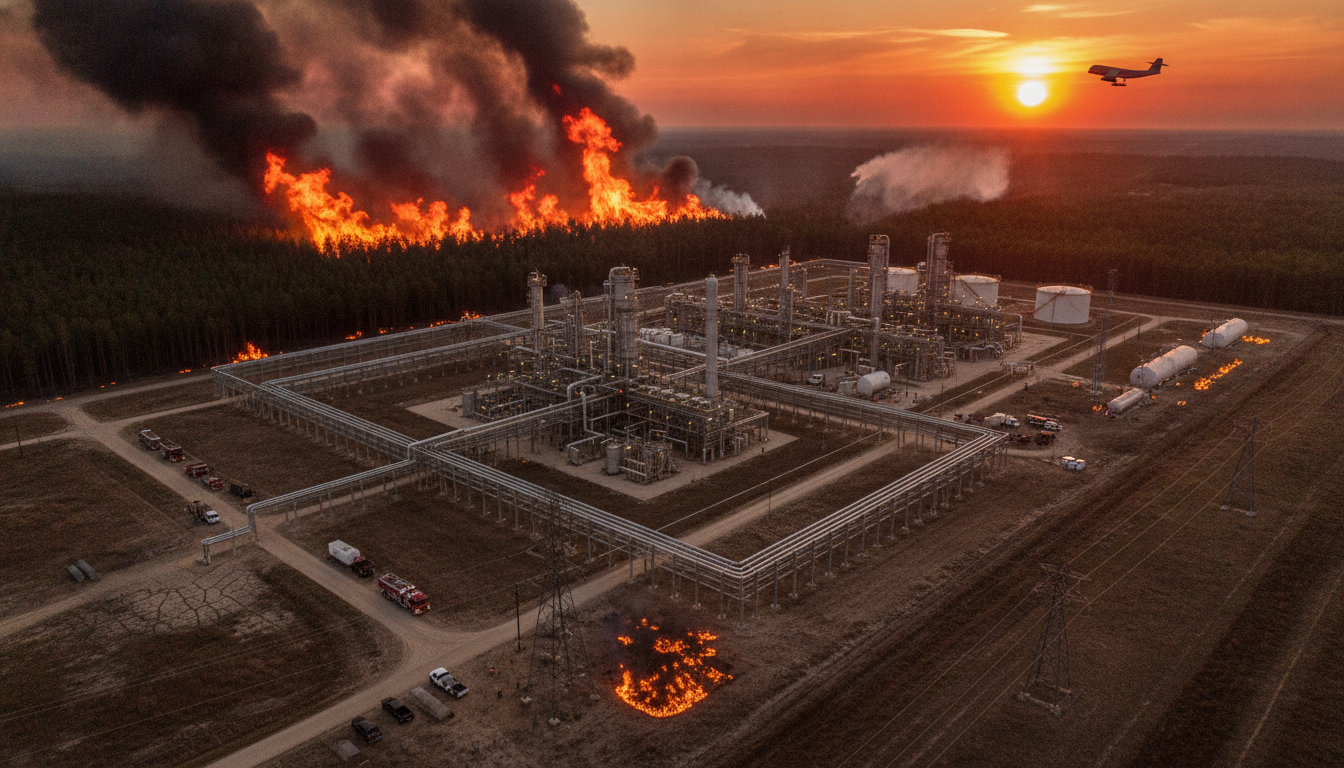
Wildfires can ignite from a variety of sources: natural phenomena such as lightning strikes, infrastructure failures like downed power lines, or irresponsible human actions including discarded cigarette butts, unattended campfires, and even intentional arson. While these initial sparks are critical, it is the prevailing weather conditions that dictate whether a minor ignition escalates into a catastrophic inferno. Fires thrive on hot, dry fuel, and their spread is dramatically amplified by strong winds. For oil and gas companies operating extensive pipeline networks, remote exploration sites, or processing facilities, the risk of ignition from their own infrastructure or by external factors in a volatile environment necessitates robust safety protocols and significant capital investment in fire prevention and rapid response capabilities.
Climate Dynamics and Intensified Fire Risks
The global energy sector, particularly its historical reliance on fossil fuels, is directly implicated in the broader climate dynamics contributing to increased wildfire severity. The planet has already warmed by approximately 1.3 degrees Celsius due to this pollution, a shift that significantly elevates the probability of prolonged heatwaves. These conditions transform forests and grasslands into highly combustible tinderboxes. Moreover, in specific regions such as the Mediterranean, global heating exacerbates droughts, further desiccating lush vegetation and making it more susceptible to ignition and rapid spread. Scientific investigations have established a clear link between these climatic shifts and recent major wildfire events in critical economic zones like California, South Korea, and Australia, in some instances doubling the likelihood of the extreme weather conditions that fuel such fires. Investors must weigh these intensifying climate-related risks when evaluating long-term asset values and operational continuity in vulnerable regions.
The Evolving Landscape of Burned Areas
Intriguingly, despite the heightened awareness of climate-driven fire risks, the total land area consumed by fires has, on aggregate, experienced a slight decline. This counter-intuitive trend is largely attributable to human intervention: the conversion of naturally fire-prone landscapes into agricultural land or urban developments, primarily observed in Africa, which inadvertently creates barriers to the unimpeded spread of flames. Models indicate that land use changes and other anthropogenic factors have collectively reduced the burned area by 19.1% since 1900. However, this positive impact is largely offset by a 15.8% increase attributed to climate change, resulting in a marginal net decline of 3.3% overall. This complex interplay underscores the localized and nuanced nature of wildfire risk; while the global aggregate might appear stable, specific, economically vital regions can still face intensified and more frequent fire threats requiring targeted investment in resilience.
Future Projections: Escalating Threats and Investment Implications
Looking ahead, the outlook for wildfire conditions suggests a worsening trend as global temperatures continue their upward trajectory. Various fire weather indices consistently project a steady increase in the number of days categorized as having a high fire danger. A separate, comprehensive study forecasts that by the close of the century, the total burned area could surge by 40% even under an optimistic scenario for reducing carbon emissions. In a more pessimistic, business-as-usual scenario, this figure is projected to double. Such dire projections have significant implications for long-term capital allocation, property insurance markets, and the cost of doing business in increasingly fire-prone geographies. Energy investors should consider how these trends will influence infrastructure resilience, operational expenditures, and the overall risk profile of assets located in vulnerable regions.
Adapting to Wildfires: Strategic Mitigation and Resilience
Proactive land management offers tangible pathways to significantly reduce the danger wildfires pose to human populations and valuable assets. These strategies include establishing strategic fire breaks to impede an inferno’s advance, rigorously controlling new urban development in high-risk zones, and employing natural methods such as deploying herds of goats to graze away overgrown, flammable vegetation in abandoned farmlands. A growing trend, increasingly adopted by European fire experts, involves the intentional burning of land – a practice long utilized by Indigenous communities in Australia and North America. This controlled burning prevents the dangerous accumulation of fuel, thereby mitigating the risk of future catastrophic fires. Investments in these adaptation measures represent a crucial component of modern risk management for any enterprise with a physical footprint in susceptible areas, including energy transmission and production infrastructure.
Beyond Forest Management: A Systemic Challenge
While effective forest and land management are undoubtedly critical, they alone cannot entirely resolve the escalating wildfire problem. In regions like parts of the US and the Mediterranean, land abandonment and historical fire suppression policies have indeed contributed to a dangerous buildup of fuel, enabling fires to explode into mega-blazes. However, this is not a universal solution. For instance, in Canada’s vast boreal forests, which have historically remained largely unmanaged by humans, fires are being intensified primarily by rising global average temperatures that worsen severe fire weather conditions. This distinction highlights that while local management strategies are essential, the overarching threat of climate change, with its direct link to global energy consumption patterns, remains a dominant factor driving the intensification of wildfires worldwide. Investors must therefore consider both localized risk management and broader decarbonization strategies as integral parts of a resilient portfolio.
Investor and Operational Preparedness: Safeguarding Assets and Personnel
For individuals and entities operating in wildfire-prone areas, proactive planning is paramount. This includes developing a comprehensive emergency strategy encompassing identified safe evacuation routes, designated shelters, and a fully provisioned emergency kit. Property owners and businesses are advised to establish defensible spaces around their assets by clearing away leaves and other flammable materials. Crucially, immediate evacuation orders from authorities must be heeded without delay, or even proactively if an asset or home appears at risk before an official directive. To protect personnel and ensure business continuity during smoke events, maintaining sealed environments, ensuring HVAC systems are properly filtered, and providing appropriate respirator masks are vital steps. For the energy sector, safeguarding critical infrastructure, ensuring employee welfare, and mitigating operational downtime during these increasingly frequent events are essential components of robust risk governance and long-term financial stability.