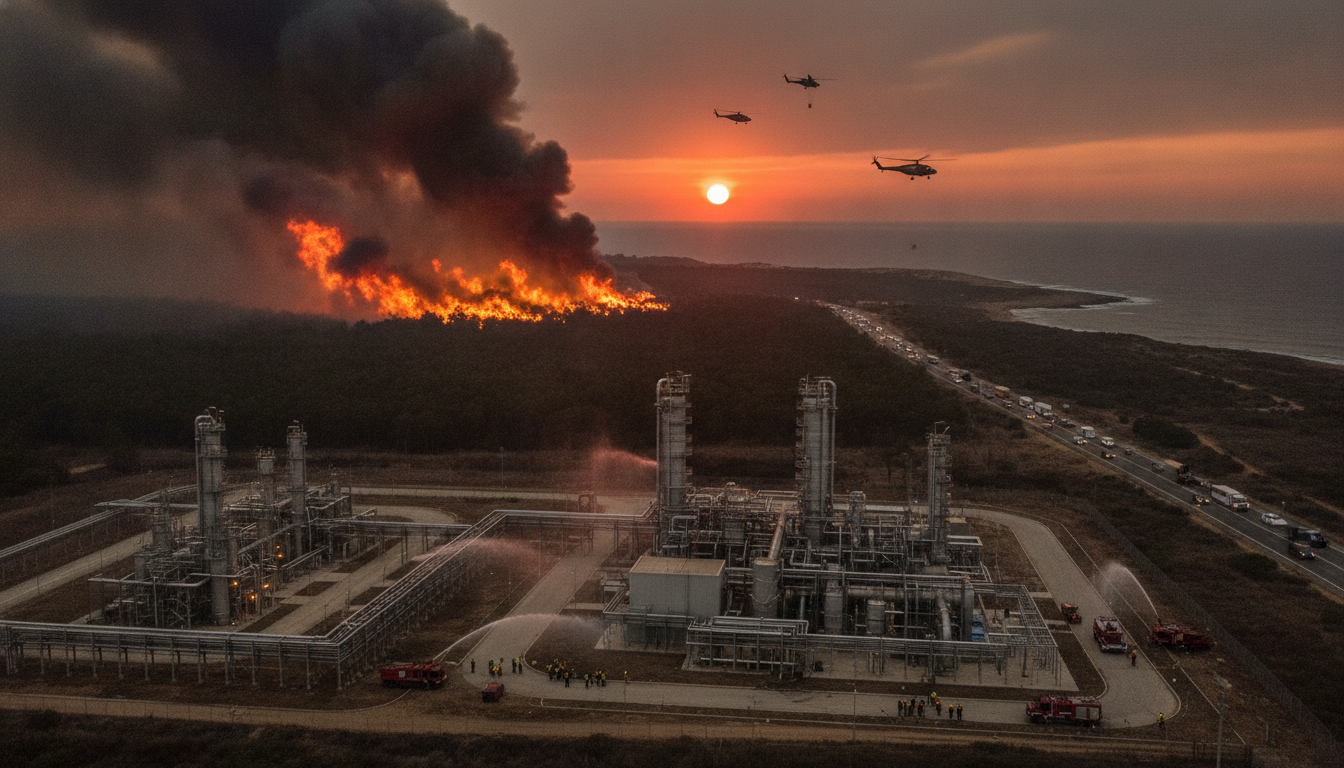
European Wildfires Ignite Energy Market Concerns: Investors Brace for Operational Disruptions and Shifting Demand
As Europe grapples with escalating wildfires across France and Spain, the immediate humanitarian crisis casts a long shadow over energy markets. The fires, particularly intense in south-west France’s Cap Ferret peninsula, Gironde, and Biscarrosse regions, as well as near Madrid and Avila in Spain, are more than just environmental catastrophes; they signal tangible threats and evolving risk profiles for energy assets, supply chains, and regional demand dynamics. The events unfolding on Friday, July 24, 2026, underscore a growing pattern of climate-induced volatility directly impacting operational continuity and energy market stability across the continent. Investors in oil and gas must recognize these intensifying events as critical indicators of future challenges and opportunities within the sector.
Infrastructure on the Front Lines: Assessing Physical Risks
Wildfires pose direct and immediate threats to crucial energy infrastructure. While no major oil refineries or gas processing plants have been specifically cited as directly within the Cap Ferret or Biscarrosse fire zones, the sheer scale of the blazes demands attention. Over 10,000 hectares have already been consumed by two concurrent fires in France, with flames crossing established firebreaks, indicating the ferocity and unpredictable spread. This magnitude of destruction raises significant concerns for energy infrastructure traversing these landscapes.
Extensive networks of crude oil and natural gas pipelines crisscross Europe. Their proximity to active fire zones, particularly across southwestern France and in central Spain near Madrid and Avila, escalates the risk of operational shutdowns, physical damage, or pressure fluctuations that could impact delivery. Furthermore, widespread power outages resulting from direct fire damage to electrical transmission lines or precautionary grid shutdowns can severely disrupt operations requiring a stable electricity supply. This includes vital pumping stations, storage facilities, and even downstream petrochemical operations. The deployment of over 1,000 firefighters in Gironde and more than 700 in Biscarrosse highlights the severity of the situation and the immense strain on resources, signaling that threats to surrounding energy infrastructure remain exceptionally high as these fires are definitively “not under control.”
Volatile Demand Shifts: A Microcosm of Energy Consumption
The mass evacuations triggered by these fires are fundamentally altering local energy demand patterns. Authorities ordered thousands to flee Cap Ferret, with over 40,000 people evacuated or actively being evacuated from the Gironde fire zone alone. An additional 20,000 people faced evacuation from Biscarrosse, and more than 10,000 in Spain near Madrid and Avila. Such significant population displacements lead to immediate, albeit localized, shifts in refined product consumption.
In the short term, we observe a reduction in gasoline and diesel consumption from routine residential commutes and tourism activities in the affected areas. However, this is partially offset by a surge in demand for emergency services. Fire suppression efforts, supported by France’s formal request for the EU’s Civil Protection Mechanism which yielded 3 water bomber aircraft, alongside extensive ground operations by numerous fire engines and other emergency vehicles, require substantial quantities of fuel. Demand for diesel generators also spikes, becoming critical for maintaining essential services and temporary shelters where grid power is compromised. Given that southwestern France and Spain are key European holiday destinations, prolonged closures and evacuation orders will severely curb tourism, directly impacting jet fuel demand at regional airports and broader transportation fuel consumption. These combined factors represent a significant, albeit concentrated, hit to refined product demand in these regions.
Supply Chain Resilience Under Scrutiny
The logistical challenges imposed by the wildfires put immediate pressure on energy supply chains. For instance, the Cap Ferret peninsula’s reliance on “the only road linking the area with the mainland” for evacuations vividly illustrates potential bottlenecks. Wildfires, through road closures and railway disruptions, inherently impede the efficient transport of vital refined petroleum products such as gasoline, diesel, and jet fuel to consumption centers and local storage depots. This can lead to localized fuel shortages, even if overall supply remains robust at a national or continental level.
Energy companies operating in or through these regions must activate emergency logistics plans, which often involve rerouting deliveries over longer distances and incurring higher operational costs. France’s interior minister, Laurent Nuñez, emphasized the “highly unfavourable” weather conditions and the continuous spread of the fires, implying that these logistical challenges will persist for the foreseeable future. Investors should closely monitor the capacity of energy firms to maintain delivery timelines and reliability in such dynamic and volatile environments, as these disruptions can impact quarterly earnings and operational efficiency.
Economic Ripples, Insurance Premiums, and Policy Responses
The widespread destruction of residential and commercial property, coupled with substantial losses in tourism revenue, will inflict a considerable economic toll on the affected regions. For energy companies holding assets in these and other fire-prone areas, this translates into potentially escalating insurance premiums. Furthermore, increased capital expenditures for enhanced fire suppression systems, preventative measures, and asset hardening become unavoidable. The fact that over 50,000 hectares have burned in France since the start of the year points to a worsening trend, compelling insurers to fundamentally re-evaluate risk models for energy sector assets, passing increased costs onto operators.
The activation of the EU Civil Protection Mechanism by France, securing essential aerial support, underscores a broader governmental recognition of climate risks and the imperative for coordinated, cross-border responses. This could foreshadow future policy shifts, potentially leading to more stringent regulations on energy infrastructure resilience and climate adaptation measures across the European Union. These regulatory changes, while aimed at mitigating future risks, will undoubtedly influence investment decisions and operational budgeting for oil and gas firms in the medium to long term.
Climate Volatility: A Permanent Fixture in Energy Investment Outlook
The 2026 European wildfire season, characterized by “very intense” situations across multiple nations, reinforces the undeniable impact of climate change on physical assets and operational environments for oil and gas firms. Investors are increasingly scrutinizing the Environmental, Social, and Governance (ESG) profiles of energy companies, with climate resilience now a critical metric. How effectively companies plan for, mitigate against, and respond to such extreme weather events will heavily influence their valuation and long-term viability in a rapidly changing global climate.
The ongoing narrative that “the fire continues to spread” is a stark reminder that while the immediate focus remains on containment and immediate relief, the underlying climate patterns driving these extreme events necessitate a strategic re-evaluation of investment portfolios, supply chain diversification, and infrastructure hardening. This extends beyond mere operational risk; it speaks to fundamental shifts in how energy is produced, transported, and consumed in a world increasingly shaped by environmental volatility. Forward-thinking investors will integrate these climate realities into their long-term capital allocation strategies, seeking out companies demonstrating robust resilience and adaptability.
Investment Outlook: Navigating a Fiery Landscape
The unfolding wildfire crisis across Europe serves as a potent and unequivocal reminder of climate risk’s tangible economic implications for the oil and gas sector. From immediate logistical hurdles and localized demand shifts to the long-term imperative for infrastructure resilience and comprehensive ESG integration, these events demand careful attention and proactive analysis from investors. The capacity of energy firms to adapt, safeguard their invaluable assets, and ensure supply chain integrity in the face of escalating climate volatility will undoubtedly be a defining factor in their future performance and market standing. Investors must remain vigilant, actively monitoring these evolving risks and recognizing that extreme weather events are transforming into a predictable, albeit inherently disruptive, element within the global energy landscape. Strategic foresight and robust climate resilience will increasingly separate market leaders from laggards.


