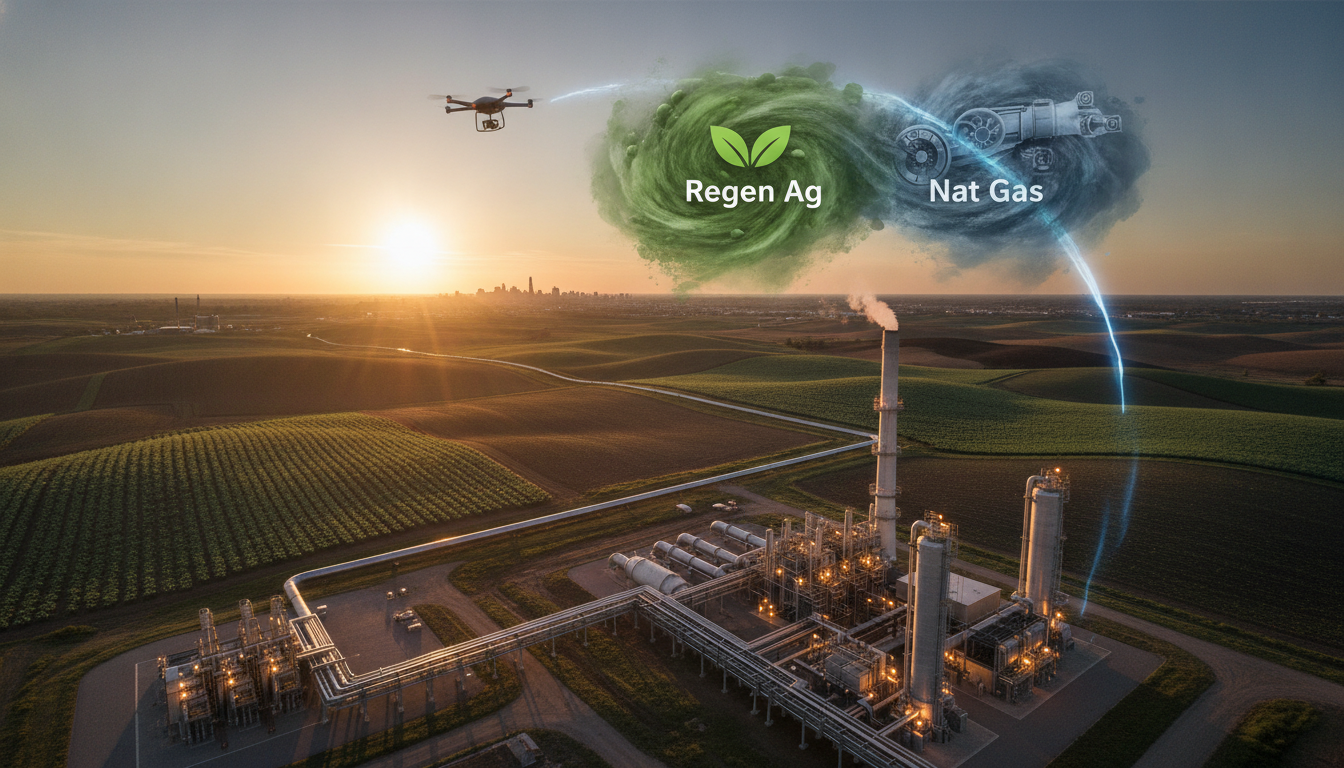
The Unseen Energy Cost of Declining Crop Nutrition: A New Paradigm for Oil & Gas Investors
The global food system, a colossal engine of human sustenance, operates with an often-overlooked and significant reliance on the oil and gas sector. As investors scrutinize long-term trends and emerging risks, a fundamental shift in agricultural output demands attention: the quantifiable decline in the nutritional density of staple crops. This isn’t merely an agronomic curiosity; it signals a potential paradigm shift in agricultural practices with direct implications for energy demand, petrochemical markets, and the burgeoning carbon economy.
For decades, agricultural output has prioritized volume and speed over nutrient integrity, driven by methods that are inherently energy-intensive. Data from the late 1990s, for instance, revealed staggering reductions: the vitamin C content in lemons had plummeted by nearly a third over 22 years, calcium in carrots—a vital source for many—had decreased by over a quarter, and vitamin A in bananas astonishingly fell by 57%. More broadly, the mineral content in wheat has seen a 20-30% reduction since the 1960s. These declines stem from practices designed to maximize yield, from breeding faster-growing varieties to the impact of elevated atmospheric carbon dioxide, which encourages plants to produce more sugars and starches at the expense of vital nutrients.
Regenerative Agriculture: A Potential Game Changer for Resource Efficiency
Amidst calls for genetically modified organisms (GMOs), synthetic soil amendments, or even costly underground farms, a growing body of research points towards a more foundational solution: regenerative agriculture. This approach pivots on enhancing soil health through building organic matter and fostering robust ecosystems beneath the surface. For oil and gas investors, this focus on natural biological processes inherently implies a reduced dependency on external, energy-intensive inputs.
Recent studies underscore the potential. Research conducted by Francesca Brkic in collaboration with the University of Lincoln meticulously analyzed produce from regenerative farms against conventionally grown counterparts. The findings are compelling: iron content in kale samples from regenerative systems was up to 22 times higher. Selenium, a critical antioxidant, in dried peas showed an eight-fold increase, while folate, essential for red blood cell production, in carrots registered an astounding 20,000 times greater presence. These regenerative farms achieved such results by employing cover crops and integrating grazing animals, critically abstaining from disruptive ploughing and the use of synthetic insecticides or pesticides. While “organic” sets a baseline by avoiding harmful practices, regenerative agriculture actively cultivates positive soil-building processes.
The genesis of this decline in nutrient density is intrinsically linked to modern industrial farming techniques. Extensive ploughing and the liberal application of chemicals—fertilizers derived from natural gas, and petrochemical-based herbicides and pesticides—disrupt and often destroy the complex mycorrhizal networks within the soil. These intricate fungal networks are now understood to be crucial conduits, enabling plants to efficiently draw nutrients from the earth. Dr. David Montgomery, a US geologist and co-author of What Your Food Ate, contends that these “degenerative” farming methods, while supporting a postwar population boom, simultaneously “wrecked soil health” by putting the soil’s “microbial truckers and miners” out of commission. His own 2022 study, though smaller in scale, also identified a correlation between regenerative practices and increased nutrient density in US crops.
Investment Horizon: Energy Demand, Petrochemicals, and Carbon Markets
The implications for the oil and gas sector are multi-faceted. Conventional agriculture is a voracious consumer of fossil fuels. The Haber-Bosch process for synthetic nitrogen fertilizers alone accounts for a significant portion of global natural gas demand. Pesticides and herbicides are derivatives of petrochemicals, while diesel powers the vast machinery required for ploughing, planting, and harvesting across millions of acres. A widespread shift towards regenerative practices, which inherently reduce reliance on these inputs, could lead to a long-term recalibration of demand within these critical segments.
Supporting evidence beyond Brkic’s work adds weight to this narrative. A substantial 2015 literature review by Newcastle University indicated that transitioning to organic fruit, vegetables, and cereals could deliver additional antioxidants equivalent to consuming an extra one to two portions daily. Furthermore, the Bionutrient Institute’s multi-year study, analyzing thousands of samples, pinpointed soil biological activity and overall soil health as the strongest positive correlation for high nutritional value. For energy investors, understanding this pivot towards soil health is critical for anticipating shifts in agricultural input markets.
Crucially, regenerative agriculture also offers a powerful mechanism for carbon sequestration. By increasing soil organic matter, these farming systems actively draw carbon dioxide from the atmosphere and store it in the earth. This potential for natural carbon capture represents a significant opportunity for the energy sector, which is increasingly exploring carbon credit markets and nature-based solutions to meet emissions targets and diversify revenue streams. Oil and gas companies looking to invest in carbon removal technologies or participate in offset markets should view regenerative agriculture as a compelling, scalable pathway.
Navigating Challenges and Opportunities for Energy Investors
However, the path to widespread adoption of regenerative agriculture is not without its challenges, which savvy energy investors must also consider. Critics highlight that these methods often require less mechanization and fewer agrochemicals, potentially increasing the need for human labor and thus impacting cost-effectiveness. This economic calculation remains a key hurdle for broader implementation. Furthermore, the burgeoning popularity of “regenerative” claims has unfortunately led to instances of “greenwashing,” requiring robust verification mechanisms, a point of concern for investors seeking genuine, sustainable impact.
Medical professionals, such as Dr. Naheed Ali, also raise concerns about “dietary displacement,” where consumers may over-attribute nutritional value to regeneratively produced foods due to their sustainable claims, potentially leading to inadequate overall micronutrient and macronutrient intake if portions are reduced. From a scalability perspective, some soil scientists, including Prof. Ken Giller, express skepticism that regenerative agriculture can reliably feed a global population projected to reach 8.3 billion, while simultaneously delivering environmental benefits.
Yet, proponents like Dr. Montgomery remain optimistic, asserting that regenerative agriculture’s scalability stems from its philosophical underpinnings—treating soil health as the ultimate goal—rather than strict adherence to specific practices or equipment. This focus on ecosystem health could unlock significant value, not only for biodiversity and nutrition but also for energy efficiency and carbon management.
For the astute oil and gas investor, monitoring the evolution of regenerative agriculture is imperative. It represents not just an agricultural trend but a potential driver of fundamental changes in demand for natural gas, petrochemicals, and diesel. Furthermore, its profound capacity for carbon sequestration opens new avenues for investment in environmental markets. As Francesca Brkic aptly suggests, even incremental shifts in agricultural practices to prioritize soil health could yield substantial, system-wide impacts that resonate across the entire economic landscape, including the energy sector.