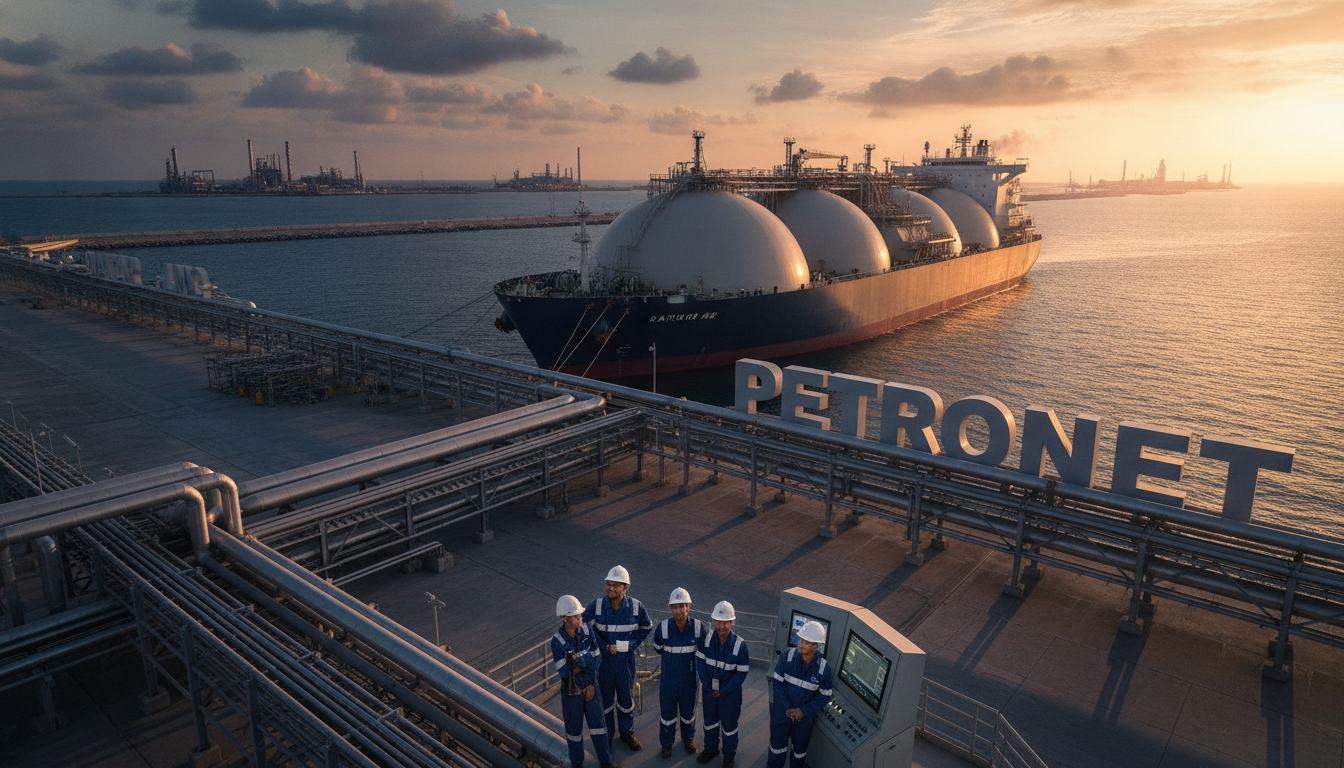
Petronet LNG Dispels Reports of QatarEnergy Force Majeure Extension, Market Remains Vigilant
Investors tracking the volatile global liquefied natural gas (LNG) markets received crucial clarification this week as Petronet LNG Ltd. unequivocally denied recent media speculation concerning a potential extension of QatarEnergy’s force majeure declaration. Reports had suggested QatarEnergy might prolong its force majeure through mid-October 2026, a development that would send significant ripples across international energy supply chains. However, Petronet LNG, India’s premier LNG importer, formally informed stock exchanges on Friday, July 24, 2026, that it possesses no knowledge of any such plan by the Qatari energy giant.
The denial arrived in response to specific inquiries from the National Stock Exchange (NSE) and Bombay Stock Exchange (BSE), underscoring the market’s heightened sensitivity to supply disruptions from major producers. Petronet’s official statement explicitly noted, “Till date, Petronet LNG is not aware that QatarEnergy is readying to extend Force Majeure through mid-October 2026.” This firm rebuttal offers a temporary calming effect, yet the underlying reasons for the existing force majeure continue to cast a shadow over energy security and pricing forecasts for the remainder of the year.
Geopolitical Tensions Drive Ongoing LNG Supply Uncertainty
The current state of force majeure, initially declared by QatarEnergy, remains active and, critically, stems directly from escalating hostilities across the region and the persistent blockage of the Strait of Hormuz. This vital maritime choke point, through which a significant portion of the world’s LNG and crude oil transits, represents a critical vulnerability in global energy logistics. Sustained geopolitical friction in the Middle East has profoundly impacted shipping routes, compelling energy companies to navigate an increasingly complex and hazardous operational landscape. For investors, this translates into elevated risk premiums on international energy commodities and a pressing need to assess the resilience of diversified energy portfolios against such external shocks.
Petronet LNG previously communicated the initial force majeure notice from QatarEnergy to the exchanges on March 5, 2026. Following this, Petronet itself issued force majeure declarations to its key Indian off-takers: GAIL (India) Ltd., Indian Oil Corporation Ltd., and Bharat Petroleum Corporation Ltd., under their respective long-term gas sale and purchase agreements. This contractual flow-through mechanism highlights the interconnectedness of the LNG value chain and how disruptions from a primary supplier can rapidly cascade down to end-users and impact national energy security agendas. The ripple effect extends beyond mere supply, influencing the financial stability and operational planning of multiple major public sector undertakings in India.
Financial Implications and Mitigation Strategies for Indian Energy Giants
At the time of its initial declaration, Petronet LNG had advised investors that it could not reliably estimate the full financial impact of the ongoing force majeure. This uncertainty persists, as the situation’s fluidity makes precise quantification challenging. For India’s energy majors, including Petronet and its off-takers, prolonged disruptions from QatarEnergy could necessitate increased reliance on the spot LNG market, where prices are typically far more volatile and often substantially higher than those secured under long-term contracts. Such a shift directly impacts procurement costs, potentially squeezing profit margins for gas marketers and refiners, and ultimately influencing energy prices for consumers across India.
In light of these challenges, Petronet LNG has proactively implemented a range of mitigation strategies designed to cushion the blow. The company confirms it is actively providing additional regasification capacity and optimizing slot allocations at its terminals. India’s extensive network of LNG import and regasification facilities, particularly Petronet’s Dahej terminal, plays a critical role in managing supply fluctuations. By enhancing operational flexibility and capacity utilization, Petronet aims to minimize the logistical bottlenecks and ensure a steady, albeit potentially re-sourced, flow of natural gas into the Indian market. These efforts are vital for maintaining domestic energy supplies and stabilizing an energy-intensive economy.
Investor Outlook: Navigating Geopolitical Risk in LNG Markets
For investors focused on the oil and gas sector, these developments underscore the enduring significance of geopolitical stability in energy markets. While Petronet’s denial regarding an extended QatarEnergy force majeure provides a measure of relief, the fact that the existing force majeure remains in effect due to regional hostilities cannot be overlooked. This ongoing uncertainty surrounding the Strait of Hormuz means that the global LNG supply landscape remains precarious, susceptible to rapid shifts driven by external events.
Companies with robust supply diversification strategies and resilient infrastructure, like Petronet LNG, are better positioned to navigate such turbulent waters. However, the broader implications for global LNG prices and long-term contract stability warrant continued vigilance. Investors should closely monitor diplomatic efforts in the Middle East, maritime security developments, and the operational updates from key players such as QatarEnergy and Petronet. The situation highlights the imperative for energy companies and nations alike to build resilience into their supply chains, recognizing that the era of predictable, uninterrupted energy flows from politically sensitive regions may be increasingly challenged. As India continues its rapid economic growth, ensuring reliable and affordable access to natural gas remains a paramount strategic and financial objective for the nation’s energy sector.


