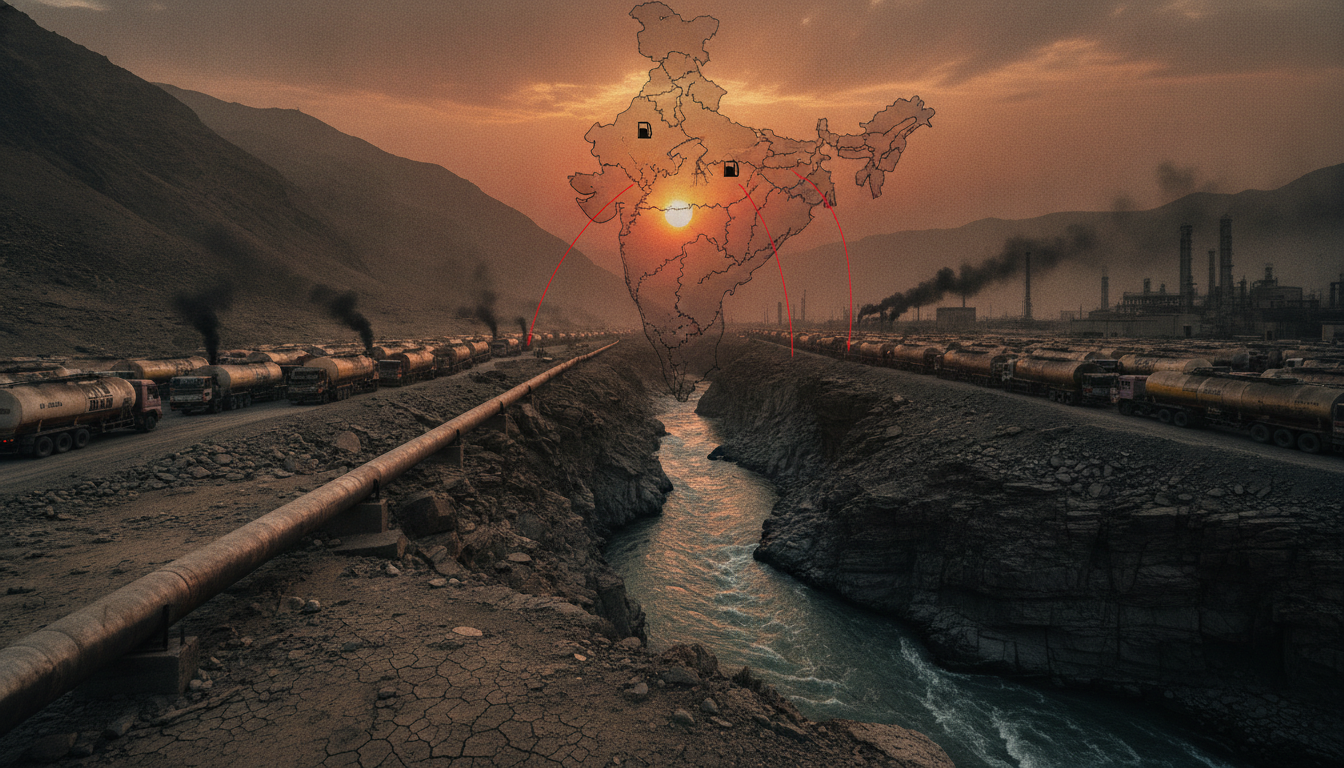
The intricate web of global oil supply faces an escalating threat as geopolitical tensions ignite critical maritime chokepoints, compelling investors to reassess energy security and market volatility. This week, the strategic Bab al-Mandeb Strait, a vital artery connecting the Red Sea to the Indian Ocean, effectively shut down for specific shipping, compounding existing disruptions in the Strait of Hormuz. The combined effect presents a formidable challenge to global energy flows, with immediate repercussions for major crude importers like India and China.
Red Sea Blockade Halts Saudi Crude Shipments
A significant escalation occurred this week when three Saudi-flagged oil tankers, identified as the Xin Long Yang, the Rodos, and the Amazon, were forced to execute U-turns in the Red Sea. These vessels, carrying crude destined for both India and China, reversed course following a stark declaration from Houthi forces. The Houthis announced a naval blockade specifically targeting Saudi Arabia, effectively opening a new, perilous front in the broader regional conflict involving the US and Iran.
Intelligence indicates that the Rodos and the Amazon were transporting crude specifically for Indian consumption. While non-Saudi tankers bound for India via Bab al-Mandeb have not yet reported direct disruptions, the Houthi’s explicit threat casts a long shadow over all commercial shipping in the region. This development has immediately elevated concerns regarding the stability and reliability of global energy supplies, particularly impacting Asian economies heavily reliant on Middle Eastern crude.
Houthi Warnings Intensify Maritime Risk
The gravity of the situation was underscored by an email dispatched by the Houthis to shipping companies globally. This communication explicitly warned against loading or discharging cargo at Saudi Arabian ports, stating that such activities could result in vessels being targeted “in any location.” This direct threat transforms the operational landscape for tankers and insurers alike, inevitably driving up war risk premiums and adding layers of complexity to shipping logistics. The Houthis maintain control over northern Yemen, including the strategically crucial coastline bordering the Bab al-Mandeb Strait, affording them direct leverage over this critical maritime pathway.
The Bab al-Mandeb, a narrow waterway, is indispensable for eastbound and westbound trade. Its closure, even partial or threatened, forces vessels to consider significantly longer and costlier alternative routes around Africa, impacting delivery times and operational expenses. For investors, this translates directly into potential upward pressure on crude oil prices, increased shipping costs, and a heightened demand for vessels capable of navigating diversified routes.
Dual Threat: Hormuz and Bab al-Mandeb
This Red Sea blockade does not exist in isolation; it exacerbates an already precarious situation in the Strait of Hormuz. The ongoing tensions between Iran and the US have led to persistent disruptions in Hormuz, including reports of mine plantings that complicate the safe passage of commercial vessels. This strait, linking the Persian Gulf with the open ocean, is arguably the world’s most critical oil chokepoint, through which a substantial portion of global seaborne oil supply transits daily.
Historically, Saudi Arabia’s Red Sea port of Yanbu has served as a primary alternative export route for West Asian oil, enabling the movement of millions of barrels a day when Hormuz faced challenges. However, the current Houthi blockade against Saudi shipping in the Red Sea directly compromises Yanbu’s viability as a secure alternative, trapping crude within the Gulf region and further limiting flexibility for producers and buyers alike. This dual threat to both the Strait of Hormuz and the Bab al-Mandeb creates an unprecedented scenario of vulnerability for the global oil market.
India’s Energy Security Under Scrutiny
As one of the world’s largest and fastest-growing energy consumers, India’s reliance on West Asian crude makes it particularly susceptible to these chokepoint disruptions. The potential for prolonged blockades in both Hormuz and Bab al-Mandeb poses a significant long-term risk to India’s energy security and economic stability. While India has demonstrated short-term resilience, including sourcing oil from alternative locations like the UAE’s Fujairah terminal, the sustained threat underscores the urgency for robust diversification strategies.
For investors focused on the Indian energy sector, these developments highlight critical supply chain vulnerabilities. Companies with significant reliance on Middle Eastern crude imports may face higher procurement costs, increased inventory holding periods, and greater operational risks. Conversely, investments in domestic energy production, strategic petroleum reserves, and renewable energy infrastructure could gain enhanced appeal as India seeks to insulate itself from such external shocks.
Investor Outlook: Navigating Increased Volatility
The recent escalation of maritime security threats demands immediate attention from oil and gas investors. These developments directly impact global crude markets, introducing substantial upward pressure on prices due to perceived supply risks and increased shipping costs. Tanker rates are likely to surge as vessels face longer routes and higher insurance premiums, benefiting shipping companies capable of adapting to these new realities. Furthermore, energy companies with significant exposure to Middle Eastern crude production or export routes may see their risk profiles elevated.
Investors should closely monitor crude futures, tanker rates, and the geopolitical landscape in the Red Sea and Persian Gulf. Diversification of energy portfolios, assessment of logistical resilience, and a keen understanding of geopolitical risk management are paramount. The long-term implications could include accelerated investment in non-OPEC production, a renewed focus on regional energy security pacts, and a fundamental reassessment of global supply chain robustness. This new era of chokepoint fragility underscores the dynamic and often unpredictable nature of energy geopolitics, challenging traditional investment paradigms and demanding agile strategic responses.


