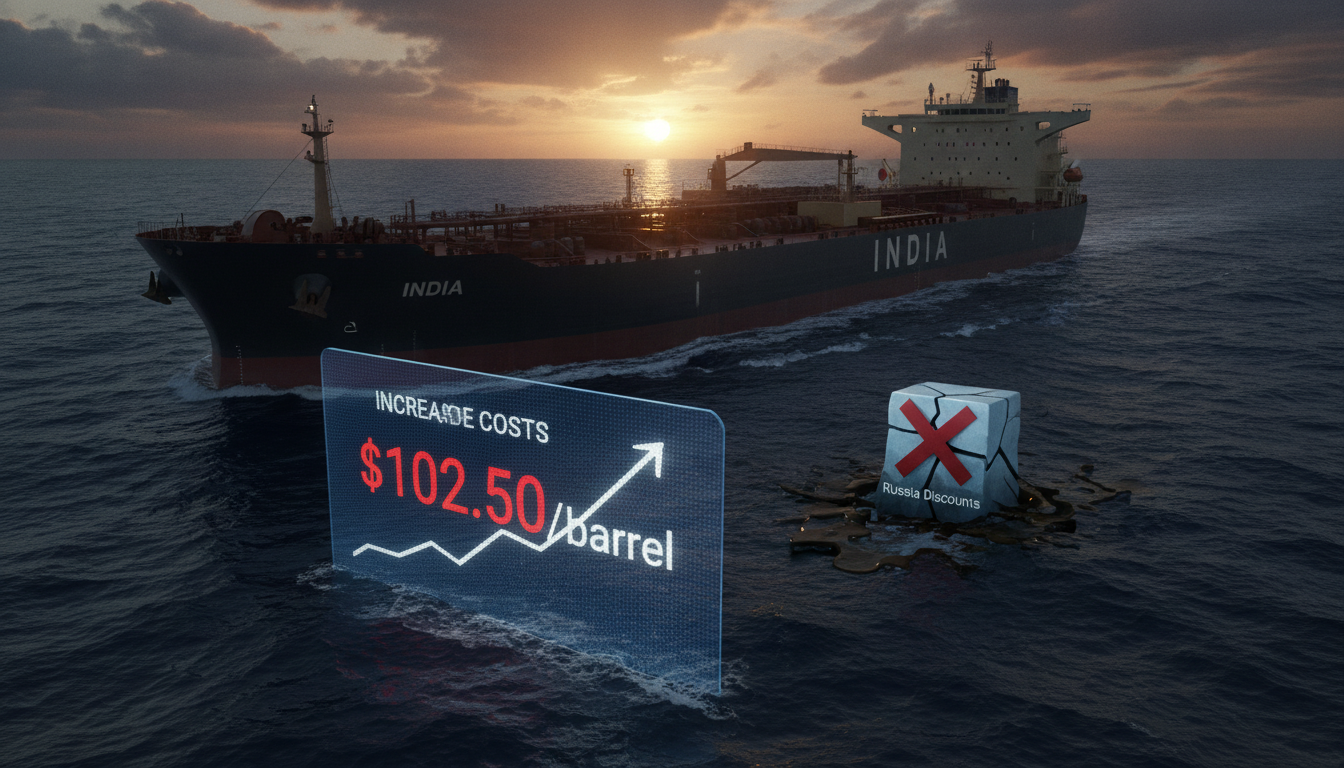
Russian Crude Discounts Vanish: A New Era for Global Oil Markets and Indian Refiners
In a significant shift impacting global energy trade, traders have ceased offering price concessions on Russian crude oil sold to India. This development, confirmed by the head of finance at Indian state refiner Bharat Petroleum Corp (BPCL) this week, underscores a tightening international oil market where geopolitical tensions are increasingly dictating pricing dynamics and supply security. The disappearance of these previously substantial discounts signals higher procurement costs for major importers like India and could recalibrate refining margins across the continent.
India, standing as the world’s third-largest oil importer and consumer, had significantly ramped up its purchases of Russian crude. This strategic pivot was largely driven by the attractive discounts offered on these grades, especially as traditional Middle Eastern suppliers faced their own set of disruptions. However, that era of preferential pricing appears to be concluding, forcing refiners to adapt quickly to a more competitive landscape for available barrels.
Vetsa Ramakrishna Gupta, BPCL’s finance chief, informed analysts during the company’s quarterly earnings call that while BPCL has successfully secured its crude requirements for August, the company is actively scouting for September delivery cargoes. He confirmed that while offers for Russian oil shipments for September are still being received, the critical element of a discount has evaporated. “Definitely, because of recent developments in crude markets, now no one is offering any discount for Russian crude,” Gupta stated, highlighting the rapid evolution of market conditions.
This stark reversal follows a period where Russian Urals crude, a staple for many Indian refiners, saw discounts widening to more than $10 per barrel below dated Brent benchmarks in Indian ports. Such an attractive pricing differential provided a crucial buffer for refiners, allowing them to optimize their feedstock costs. The current environment, however, has swiftly eroded this advantage, pointing to an immediate increase in crude acquisition expenses for these key players.
The catalysts for this dramatic shift are rooted in escalating geopolitical instability across critical shipping lanes. A primary driver has been the persistent attacks by Houthi militants on commercial shipping in the Red Sea, forcing many vessels to reroute around the Cape of Good Hope, thereby extending voyage times and increasing freight costs. Concurrently, renewed friction and an escalation in hostilities between the United States and Iran have amplified concerns regarding the security of oil flows through the Strait of Hormuz, a choke point through which a substantial portion of the world’s seaborne oil passes. These intertwined threats have ignited global oil prices, raising the cost basis for all refiners heavily reliant on imported crude.
Gupta underscored the volatility of the present market, noting, “Although markets witnessed a brief period of stability during June, the latest geopolitical development has reminded us how quickly it can reshape the operating landscape.” He further elaborated that suppliers may no longer be in a position to guarantee certain cargo deliveries via the Red Sea routes, compounding the logistical and financial challenges for importers.
For Indian state refiners, including BPCL and Hindustan Petroleum Corp, the disappearance of these crucial discounts, coupled with the overall surge in global crude prices, poses a significant threat to their profitability. These companies operate within a unique domestic market where they frequently sell refined fuels at subsidized rates, making them particularly vulnerable to increased input costs. The financial strain has already manifested, with both BPCL and Hindustan Petroleum Corp reporting net losses for the recent quarter, underscoring the immediate economic consequences of the current market volatility.
Investors closely monitoring the energy sector should note the implications of these developments. The erosion of preferential pricing structures for Russian crude, once a significant arbitrage opportunity for some refiners, signals a tightening global supply-demand balance. It suggests that alternative crude grades are now commanding premium pricing, reducing the ability of refiners to diversify their supply chains cost-effectively.
BPCL, a substantial player in the refining sector, processes over 800,000 barrels per day of crude oil. Critically, Gupta revealed that the company met 69 percent of its oil requirements through spot purchases during the June quarter. This high reliance on the spot market makes BPCL, and by extension other refiners with similar procurement strategies, exceptionally exposed to the immediate fluctuations and upward pricing pressures currently dominating the global crude market. The ability to secure favorable pricing on these spot cargoes will be paramount to their financial performance in the coming months.
As the international oil market continues to grapple with the unpredictable interplay of supply disruptions and geopolitical tensions, the days of significant discounts on Russian crude appear to be over, at least for the foreseeable future. This pivotal change demands a reassessment of investment strategies within the refining sector, emphasizing the resilience of companies in managing higher feedstock costs and navigating a persistently volatile global energy landscape.


