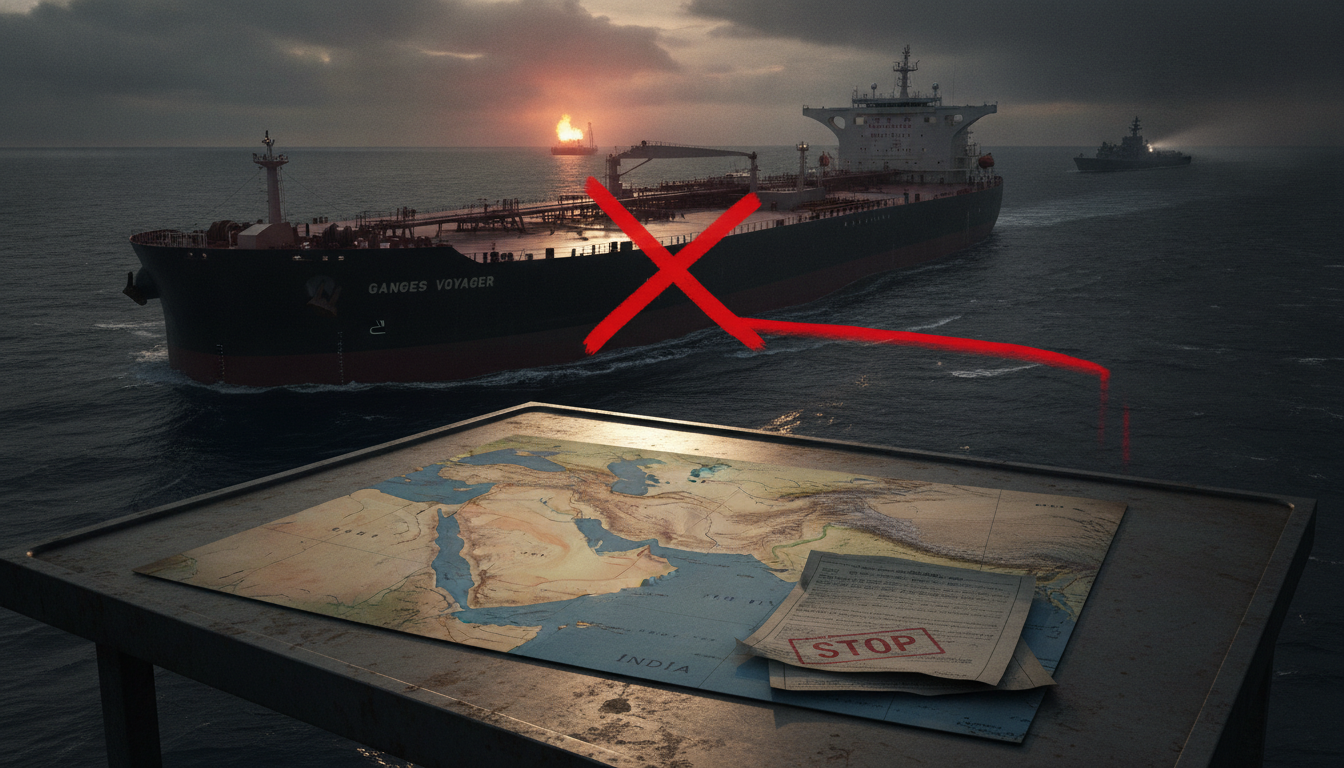
Strait of Hormuz Tensions Force Indian Refiners to Suspend Iraqi Crude Loadings, Rattle Global Oil Markets
The critical Strait of Hormuz is witnessing heightened security risks, compelling major Indian state-owned refiners to halt crude oil loadings from Iraq. This decisive move by significant players like Indian Oil Corporation (IOC) and Mangalore Refinery & Petrochemicals Ltd. (MRPL) underscores the escalating geopolitical tensions impacting global energy supply chains and operational logistics. Investors must closely monitor these developments, as they signal a potential disruption to crude flows and an increase in transit costs across the world’s most vital oil chokepoint.
Indian Oil Giants Reassess Risk Amidst Escalation
In a direct response to the deteriorating security landscape, Indian Oil Corporation, the nation’s leading refiner, has reportedly abandoned its plans to load the supertanker Lila Jamnagar. This vessel boasts an impressive capacity of up to 2 million barrels of crude oil, making its withdrawal a significant event. Sources close to the matter indicate that IOC concluded the risk of a fully laden tanker attempting a transit through Hormuz was simply too high, especially following a series of recent incidents where commercial freighters reportedly came under projectile attacks. The safety of maritime assets and personnel has become an immediate and paramount concern for energy companies operating in the region.
Similarly, Mangalore Refinery & Petrochemicals Ltd. (MRPL), a subsidiary of state-owned Oil and Natural Gas Corporation (ONGC), has also moved to suspend its crude liftings from Iraq. The decision from MRPL reinforces the collective apprehension among Indian energy majors regarding the deteriorating security situation. Both refiners are key players in India’s energy security strategy, making their operational adjustments a strong indicator of the perceived threat level in the region.
Broader Implications for Global Shipping and Energy Security
This operational pause by Indian refiners casts a stark light on the wider pullback in shipping activity traversing the Strait of Hormuz. The waterway, a narrow passage connecting the Persian Gulf to the open ocean, handles approximately one-fifth of the world’s total petroleum liquids consumption. Iran’s increased assertiveness, including targeting various oil tankers, has fundamentally altered the risk assessment for shipping companies globally. A particularly alarming trend involves attacks on vessels that had intentionally disabled their transponders to avoid detection, raising profound questions for shipowners about the viability of “sailing dark” and the inherent dangers involved.
The Strait’s volatile environment has translated directly into higher operational costs. Iraq’s Oil Ministry spokesman, Salim Al-Rikabi, acknowledged the gravity of the situation, stating that “the situation in the Strait of Hormuz and the escalating conflict in the region” have demonstrably increased transit risks and insurance premiums. This surge in costs has, in turn, led to some companies cancelling scheduled loading operations, corroborating the decisions made by Indian refiners. Investors should anticipate these elevated costs to potentially filter through to crude prices and refined product margins.
Contractual Obligations and Buyer’s Burden
Indian state refiners typically procure Iraqi crude through long-term contracts. A critical clause in these agreements often stipulates that the buyer is responsible for arranging the shipping logistics. This contractual structure places the current burden of navigating the heightened security risks squarely on the shoulders of the Indian companies. Their decision to suspend loadings highlights an unwillingness to absorb the escalating operational and insurance liabilities associated with securing safe passage through the Strait. This scenario forces buyers to either incur significantly higher costs for specialized security or to seek alternative, potentially more expensive, supply routes or sources.
Indian Government Prioritizes Seafarer Safety
Responding to the surge in attacks on commercial vessels, the Indian Shipping Ministry has issued a directive to shipowners, managers, and recruitment agencies. The advisory explicitly recommends refraining from deploying Indian seafarers on vessels transiting the Strait of Hormuz until further notice. This government intervention underscores the severity of the threat to human life and reinforces the operational challenges faced by shipping companies reliant on Indian maritime personnel, a significant global resource for the industry. The directive adds another layer of complexity to an already strained shipping environment.
Investor Outlook: Monitoring Supply Chain Resilience and Price Volatility
The cessation of Iraqi crude loadings by prominent Indian refiners is more than just an isolated incident; it’s a potent signal for global energy markets. Investors must consider several key implications. Firstly, the disruption could tighten crude supply, particularly if the situation in Hormuz deteriorates further or if other major buyers follow suit. This could exert upward pressure on benchmark crude prices, impacting refiner profitability and potentially broader economic stability.
Secondly, the increased shipping risks and insurance costs will inevitably lead to higher freight rates, affecting the economics of crude transportation worldwide. Companies with robust supply chain resilience, diverse sourcing strategies, or proprietary shipping fleets may be better positioned to weather this volatility. Conversely, those heavily reliant on specific routes or spot market shipping could face significant headwinds.
Finally, the long-term ramifications for energy security are paramount. Nations heavily dependent on Middle Eastern crude exports, especially those with buyer-arranged shipping contracts, will be compelled to reassess their strategic reserves and diversify their energy portfolios. This ongoing geopolitical tension highlights the fragility of global energy supply lines and the imperative for continuous monitoring by savvy energy investors. The events unfolding in the Strait of Hormuz represent a critical inflection point for the global oil and gas industry, demanding vigilance and adaptability from all market participants as of July 22, 2026.


