Russia’s Energy Outlook: Geopolitical Headwinds Meet Asian Demand Pivot
Investors closely monitoring the global energy landscape must consider the evolving dynamics within Russia’s vital oil and gas sector. Projections from Moscow indicate a period of relative stability for oil production in the immediate term, with only modest expansion anticipated over the next two years. This tempered outlook unfolds against a backdrop of intensifying drone attacks from Ukraine, which directly target critical energy infrastructure, introducing a significant layer of operational risk for global commodity markets.
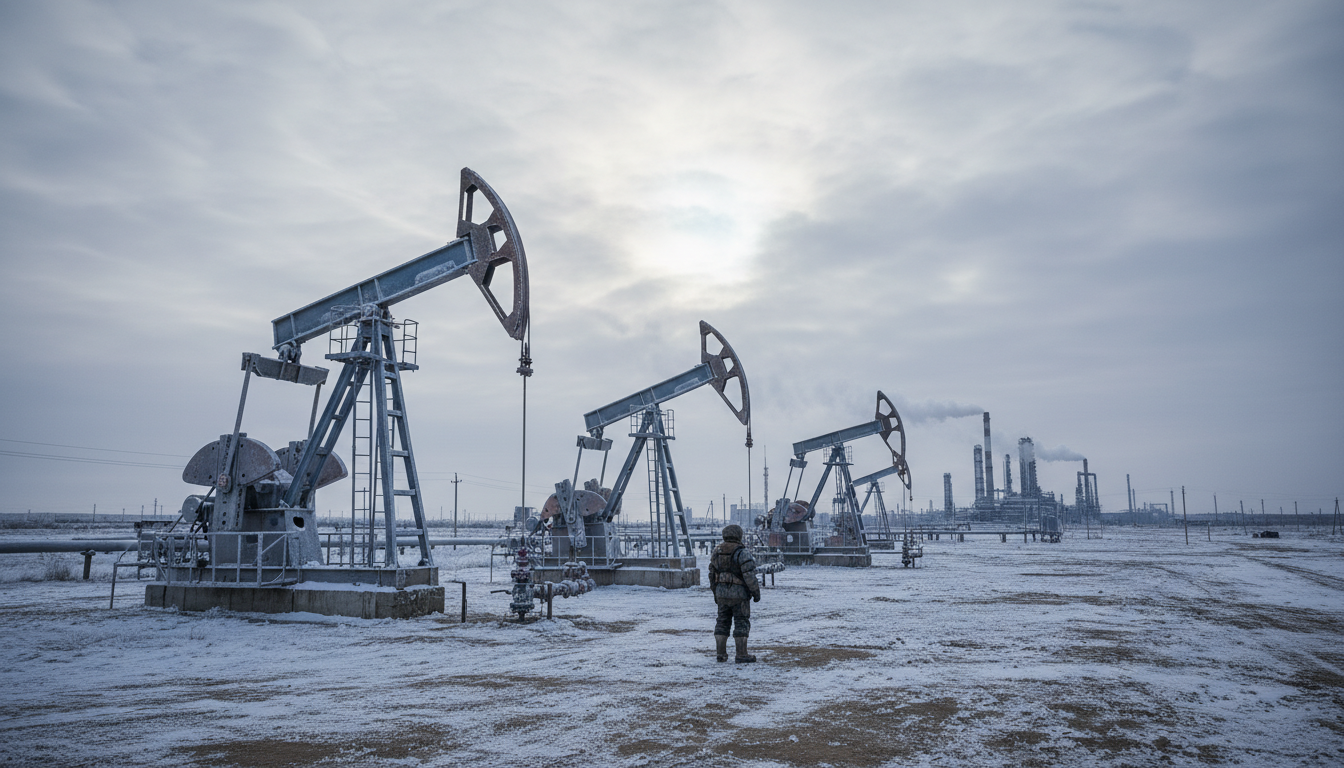
According to the latest base-case scenario from the Russian Economy Ministry, the nation’s oil producers are poised to extract approximately 511 million tons of crude oil and condensate during the current year, translating to an average daily output of roughly 10.26 million barrels. Looking ahead, forecasts suggest a slight uptick, with annual production reaching 516 million tons in 2027, followed by a plateau at 525 million tons for both 2028 and 2029. These figures underscore Russia’s immense significance as the world’s second-largest crude producer, surpassed only by the United States, especially after regional conflicts impacted Saudi Arabian supply flows.
Oil Production Under Pressure: Ukraine Strikes and Data Opacity
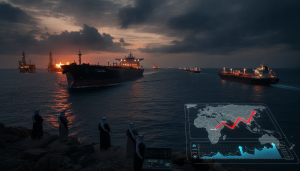
The Kremlin heavily relies on its vast oil and gas revenues, which constitute nearly one-fifth of the national budget, to finance its ongoing military efforts. In a strategic move to undermine this financial lifeline, Kyiv has escalated its drone campaign, targeting key Russian oil assets ranging from refining facilities to crucial seaborne export terminals. This recent surge in attacks has already caused disruptions to Russia’s oil refining capacity and its vital seaborne crude exports. Sustained or exacerbated issues with either refining operations or export logistics could compel Russia to implement production cuts, an eventuality that would send ripples through international oil prices.
For energy market analysts and investors, assessing Russia’s precise output remains a challenge. Moscow classified much of its oil industry data following the initiation of hostilities in early 2022, making independent verification difficult. However, data from the Organization of the Petroleum Exporting Countries (OPEC) provides some insight, indicating that Russia produced an average of 9.19 million barrels per day of crude oil during the first quarter of 2026. It is crucial to note that this figure excludes condensate, an ultra-light oil that historically represents around 10 percent of the country’s total liquid hydrocarbon output, offering a more complete picture for oil and gas investment analysis.
Navigating Oil Export Shifts
On the export front, Russia anticipates shipping more than 237 million tons of oil this year, equivalent to approximately 4.76 million barrels per day. However, the Economy Ministry’s outlook introduces an intriguing shift, forecasting a reduction in overseas flows to 227.4 million tons in the following year. The ministry did not provide a rationale for this projected decline, leaving investors to ponder potential factors such as sustained refining disruptions, evolving geopolitical trade patterns, or strategic internal market adjustments. This unexplained forecast variation warrants careful consideration by market participants.
Natural Gas: Gradual Expansion and Pivoting to Asia
Beyond crude, Russia’s natural gas sector projects a steady increase in production. The Ministry expects output to grow incrementally from 688.4 billion cubic meters (bcm) this year to a substantial 750.4 bcm by 2029. This growth trajectory is underpinned by anticipated expansions in both pipeline and seaborne gas exports, signifying Russia’s strategic pivot in its energy trade relationships and its focus on developing alternative markets amidst Western sanctions.
Pipeline Gas: Fortifying Asian Connections
Pipeline gas exports are expected to remain stable at 115.5 bcm for the current year, before experiencing an increase to 127.5 bcm by 2029. A significant catalyst for this growth is the planned inauguration of the Far Eastern gas route to China in 2027. This new pipeline is projected to commence supplies at 10 bcm annually, gradually scaling up to 12 bcm. Furthermore, Gazprom PJSC and China National Petroleum Corp. cemented a commercial agreement last year to boost deliveries via the existing Power of Siberia link by an additional 6 bcm per year, elevating its total capacity from the current 38 bcm. These developments solidify Russia’s strategy to reorient its massive gas resources towards the burgeoning Asian energy market.
LNG Exports: Ambitious Growth Amidst Sanction Hurdles
The most dramatic expansion within Russia’s gas portfolio is projected for liquefied natural gas (LNG) exports. This year, 40.3 million tons are slated for foreign markets, representing a significant one-third increase from 2025 levels. By 2029, this figure is forecast to reach 66.2 million tons. This impressive growth is largely driven by increased cargo loadings from the sanctioned Arctic LNG 2 project, primarily responding to robust demand from China. The rapid ramp-up of this project, despite international restrictions, highlights the resilience of certain energy infrastructure developments when backed by strong market pull from major consumers.
Despite this optimistic short-to-medium-term LNG outlook, it falls considerably short of Russia’s previously stated objective to produce as much as 100 million tons of LNG per year by the close of the decade. This ambitious target, frequently reiterated by President Vladimir Putin, has now been pushed back by several years, a direct consequence of the extensive Western sanctions imposed on Russia’s energy sector. Investors in the global LNG market should note this recalibration, as it reflects the tangible impact of geopolitical measures on long-term energy project timelines and supply availability.
Investment Implications: Balancing Risk and Opportunity
For energy investors, Russia’s evolving energy landscape presents a complex interplay of risk and opportunity. While geopolitical tensions and drone attacks introduce volatility and potential supply disruptions for crude oil, the nation’s strategic pivot towards Asian markets, particularly for natural gas and LNG, highlights new avenues for growth. The resilience of projects like Arctic LNG 2, fueled by Chinese demand, demonstrates the power of market fundamentals to overcome sanctions in some instances. However, the downward revision of long-term LNG targets serves as a stark reminder of the enduring challenges posed by international restrictions. Monitoring these developments closely will be paramount for informed decision-making in oil and gas investing.