U.S. Oil and Gas Extraction Workforce Dips to Lowest Levels Since Mid-2022, Signaling Shifting Dynamics
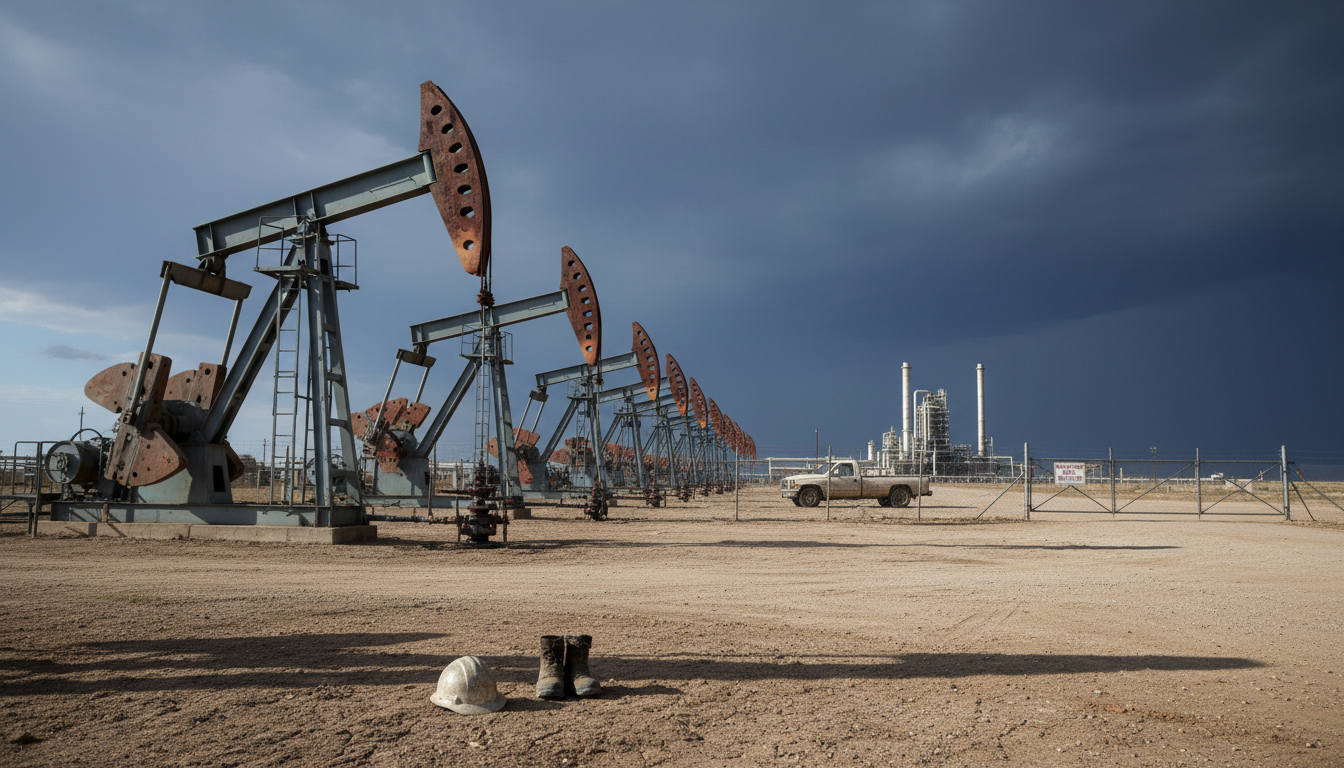
Recent labor statistics reveal a significant contraction in the United States oil and gas extraction sector workforce. The number of individuals employed in this crucial upstream segment has fallen to its lowest point since August 2022, presenting a critical data point for investors monitoring the domestic energy landscape and operational efficiency within the industry.
Preliminary figures released for April 2026 indicate that employment in the oil and gas extraction industry stood at 115,200. This marks a notable dip, echoing employment levels last observed nearly four years prior. The trend reflects a continued tightening of the workforce, which analysts believe could impact future production growth and operational agility for exploration and production (E&P) companies.
Recent Workforce Trends and Historical Context
Examining the immediate preceding months, the preliminary data shows 115,900 employees in March 2026, a slight reduction from the 116,200 recorded in February 2026, and 115,500 in January 2026. Revised figures for earlier periods further underscore this downward trajectory, with March employment originally reported at 116,100 and February at 116,300, indicating that the initial estimates themselves might be trending conservatively.
This decline is not an isolated incident; April 2026 marks the second consecutive year of an April-to-April workforce reduction. In April 2025, the sector employed 118,700 individuals, a decrease from 121,200 in April 2024. This consistent dip over successive years highlights a potential long-term trend in workforce management within the upstream oil and gas industry.
To provide broader context for investors, it’s crucial to look at historical employment figures over the past decade. The peak April employment for the sector within the 2016-2026 timeframe occurred in April 2016, with 178,500 workers. This contrasts sharply with the current environment. Other significant April figures include 145,000 in 2017, 142,700 in 2018, 144,200 in 2019, and 132,300 in 2020, demonstrating the volatility and cyclical nature of energy sector employment. Post-pandemic, the figures saw 113,300 in April 2021, 118,700 in April 2022, and 116,800 in April 2023, illustrating a period of recovery before the more recent declines.
Understanding the Data Source and Industry Scope
These critical labor statistics are derived from the national Current Employment Statistics (CES) survey, a comprehensive program that generates detailed estimates for nonfarm employment, hours, and earnings across various industries. The CES program meticulously collects data from approximately 119,000 businesses and government entities each month, representing around 622,000 individual worksites, ensuring a robust statistical foundation for its findings. The estimates cover national, state, and metropolitan area employment, offering granular insight into regional labor dynamics.
The oil and gas extraction subsector operates under the broader umbrella of “mining, quarrying, and oil and gas extraction.” Defined by the North American Industry Classification System (NAICS), this subsector encompasses a wide array of activities vital to crude petroleum and natural gas production. This includes exploration, drilling, well completion and equipping, operating essential field infrastructure like separators and gathering lines, and all preparatory stages leading up to product shipment from the producing property. The definition further extends to crude petroleum production, oil extraction from shale and oil sands, natural gas production, sulfur recovery from natural gas, and the recovery of hydrocarbon liquids.
Broader Energy Sector Employment: A National Overview
While the upstream oil and gas sector experiences specific workforce challenges, the wider energy industry paints a picture of substantial national employment. The 2025 United States Energy & Employment Report (USEER), a comprehensive analysis by the U.S. Department of Energy (DOE), indicates that the broader energy sector generated 8.5 million jobs in 2024. This figure represents a significant 5.4 percent of all jobs across the United States, underscoring energy’s pivotal role in the national economy.
Energy jobs are widely distributed, spanning all 50 states, Puerto Rico, and the U.S. Virgin Islands. Key hubs for energy employment in 2024 included Texas, California, and Michigan, which led in total energy jobs. When considering energy employment concentration relative to population, Wyoming, North Dakota, and West Virginia emerged as leaders, boasting the highest number of energy jobs per 100,000 workers. This geographical spread highlights diverse investment opportunities across different energy segments and regions.
The USEER report emphasizes that the energy sector fosters opportunities across numerous industries and a broad spectrum of occupations, accommodating American workers from all educational backgrounds. This adaptability and diversity are crucial for long-term labor market stability and growth.
Segmenting the Energy Workforce: Investment Implications
A closer look at the 2024 employment data within the energy sector reveals distinct segments with varying scales and median wages, offering insights for strategic investment. The Fuels sector, encompassing traditional oil, gas, and coal, employed 1,054,400 workers, with a median annual wage of $62,780. The Electric Power Generation sector, a growing area of focus for renewable and conventional power investors, accounted for 933,800 workers, commanding a higher median wage of $65,430.
Infrastructure-related employment in Transmission, Distribution, and Storage was substantial, engaging 1,463,700 workers at a median wage of $59,840. The Energy Efficiency sector stood out as a significant employer, with 2,381,700 workers and a median wage of $59,390, underscoring the increasing economic impact of sustainability initiatives. Finally, the Motor Vehicles & Component Parts sector employed the largest number of workers within the energy report’s scope, at 2,633,100, with a median wage of $53,620, reflecting the profound link between transportation and energy consumption.
The USEER, a definitive annual resource, meticulously integrates data from business surveys with existing statistics from key federal agencies. It provides unparalleled insights into the energy workforce, delivering critical employment metrics and intelligence across three primary energy production sectors (Fuels, Electric Power Generation, and Transmission, Distribution, and Storage) and two end-use sectors (Energy Efficiency and Motor Vehicles and Component Parts). For investors, this detailed data is invaluable for understanding the evolving labor landscape and identifying areas of growth and opportunity within the dynamic energy market.