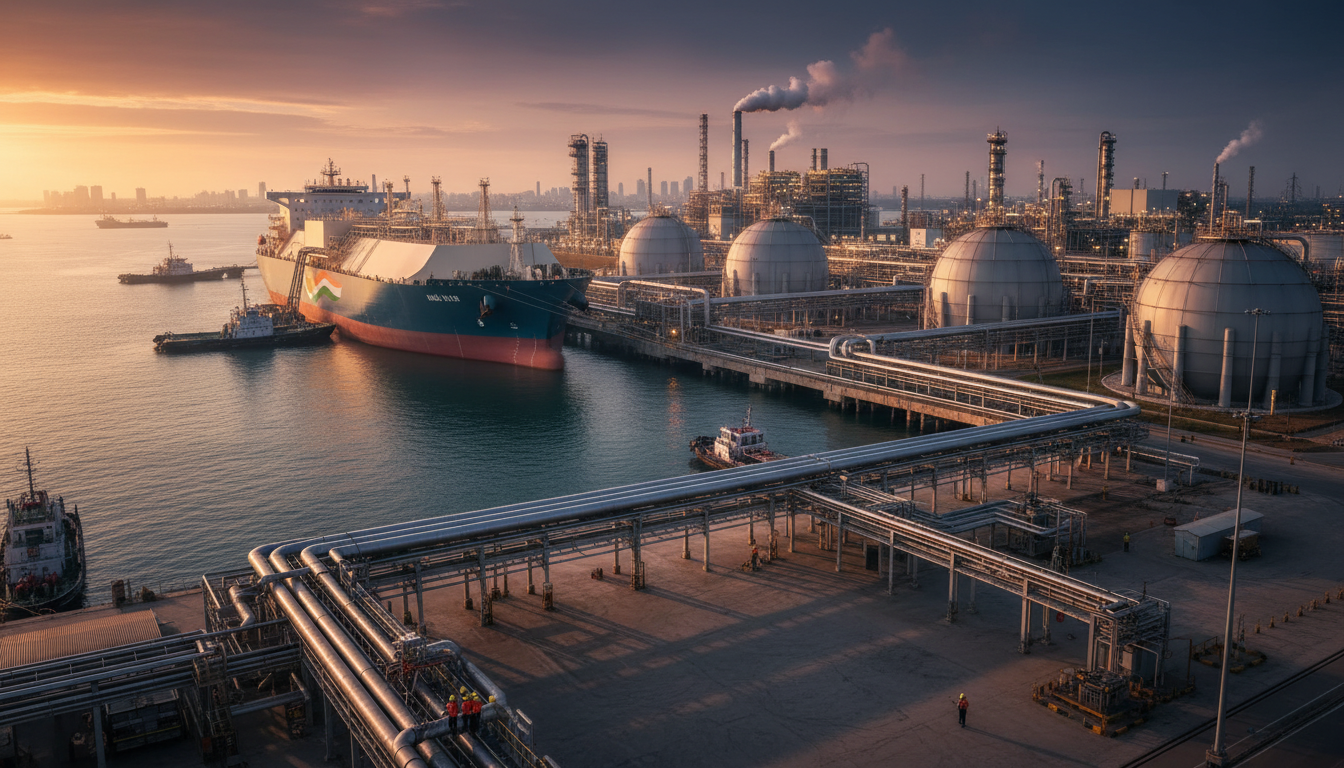
Investors in the global oil and gas sector are closely monitoring geopolitical developments in West Asia, as heightened tensions continue to introduce significant volatility into energy markets. India, a colossal energy importer, has swiftly moved to assure its domestic market and international partners of the resilience of its petroleum and LPG supply chains amidst the escalating conflict. This proactive stance by the Indian government is a critical signal for market stability and investor confidence in the region’s energy outlook.
Geopolitical Tensions Cast Shadow on Global Energy Supply
The conflict in West Asia, which intensified around February 28, 2026, has ignited fresh concerns over potential disruptions to vital energy arteries. Such geopolitical flashpoints historically send ripples through global crude oil prices and impact the intricate logistics of petroleum product distribution. As an energy-hungry nation of 1.4 billion, India’s policymakers are acutely aware of the economic ramifications of any supply instability, prompting a series of high-level interventions designed to safeguard national interests and reassure stakeholders.
Prime Minister Narendra Modi has convened a crucial meeting with Chief Ministers via video conference, directly addressing state preparedness and contingency plans in light of the West Asian situation. This top-down review underscores the gravity with which the nation’s leadership approaches energy security. Notably, Chief Ministers from states currently under the Model Code of Conduct were not present, adhering to electoral regulations, but the broader governmental machinery remains fully engaged. This follows an earlier all-party parliamentary discussion and a statement by the Prime Minister in both Houses of Parliament, demonstrating a unified national front in addressing the crisis. For investors, this level of governmental focus signals a robust and coordinated effort to mitigate external shocks.
India’s Energy Supply Chain: “Fully Secure and Under Control”
In a direct address to market anxieties, the Ministry of Petroleum and Natural Gas issued a definitive statement on Thursday, asserting that India’s petroleum and LPG supply situation is “fully secure and under control.” This official assurance is designed to quell speculation and maintain market equilibrium. The Ministry emphasized that all retail fuel outlets across the country possess ample stocks, and there are “no shortages of petrol, diesel, or LPG anywhere in the country.”
Such declarations are vital for investors, as they directly impact the operational stability of refiners, distributors, and ultimately, consumer demand. The Ministry further called upon citizens to disregard “a deliberately mischievous, coordinated campaign of misinformation that is being carried out to spread unjustified panic.” This public directive highlights the government’s commitment not only to physical supply management but also to protecting public and market sentiment from speculative attacks, which can exacerbate price volatility and create artificial demand surges. A stable domestic demand environment, free from panic, benefits the entire energy value chain.
Navigating Critical Maritime Routes: Diplomacy in Action
Ensuring the safe passage of energy shipments through contested waters is paramount for India’s energy strategy. The Ministry of External Affairs (MEA) spokesperson, Randhir Jaiswal, provided critical updates on Friday regarding India’s diplomatic efforts. He confirmed that India is in constant communication with all concerned nations to facilitate the safe transit of its vessels, essential for meeting the nation’s vast energy requirements.
A tangible sign of success in these diplomatic endeavors was the safe arrival of “4 ships laden with LPG” in India after successfully traversing the Strait of Hormuz. This detail, though seemingly minor, provides concrete evidence of effective risk mitigation and the operational continuity of critical supply lines. For investors, the Strait of Hormuz represents a chokepoint with immense geopolitical risk, and the successful transit of these vessels underscores India’s capability to navigate complex maritime security challenges, a key factor in assessing the stability of long-term energy investments.
India’s Strategic Imperatives for Energy Sourcing
Jaiswal elaborated on India’s overarching approach to energy sourcing, outlining a strategy anchored by three fundamental pillars: “the imperative to secure the needs of 1.4 billion people, the dynamics of the market, and the global situation.” This strategic framework offers valuable insights for investors assessing India’s energy resilience.
Securing the Needs of 1.4 Billion People
India’s demographic scale dictates an unparalleled focus on consistent and affordable energy access. This imperative drives substantial investments in diversified sourcing, strategic petroleum reserves, and robust distribution networks. Energy reliability is not just an economic necessity but a socio-political cornerstone, meaning the government will exhaust all avenues to ensure continuity, thereby creating a stable demand environment for energy companies. Investors can anticipate sustained government support and policy frameworks that prioritize supply security, benefiting domestic energy infrastructure and distribution companies.
Responding to Market Dynamics
India’s energy procurement strategy is highly responsive to global market dynamics. This includes leveraging spot markets for opportunistic purchases, maintaining a diversified portfolio of long-term contracts with various global suppliers, and adapting to price fluctuations and supply shifts. This agile approach minimizes over-reliance on any single region or supplier, providing a buffer against localized disruptions. For investors, this indicates a sophisticated buyer that actively manages risk through market intelligence and strategic purchasing, enhancing the overall stability of India’s energy ecosystem.
Navigating the Global Situation
The “global situation” encompasses the intricate web of international relations, geopolitical alliances, and evolving trade landscapes. India’s ability to maintain diplomatic ties across various geopolitical blocs allows it greater flexibility in sourcing energy, even amidst sanctions or regional conflicts. This pragmatic and multi-aligned foreign policy ensures access to a broader range of suppliers, cushioning the impact of concentrated risks. Investors should recognize India’s strategic autonomy as a significant asset in its quest for energy security, making its energy market a comparatively more robust and predictable environment for capital deployment despite external challenges.
Investor Outlook: Resilience Amidst Global Headwinds
While the West Asia conflict presents undeniable global challenges, India’s proactive and multi-faceted response offers a degree of confidence for energy investors. The immediate assurances from the Ministry of Petroleum and Natural Gas, coupled with the MEA’s successful diplomatic efforts to secure shipping lanes, demonstrate a strong governmental commitment to maintaining domestic energy stability.
For those looking at oil and gas investments, India represents a market where underlying demand remains robust, and governmental intervention actively mitigates external supply shocks. Companies involved in refining, gas distribution, and energy infrastructure within India may find a more insulated operating environment compared to regions more directly exposed to the conflict’s immediate effects. However, investors must remain vigilant regarding global crude price fluctuations, which will inevitably impact import bills and, consequently, the profitability of downstream companies not fully hedged. India’s strategic focus on diversification and supply chain resilience positions it to weather these storms, reinforcing its appeal as a long-term energy investment destination, even as geopolitical risks persist on the global stage.


