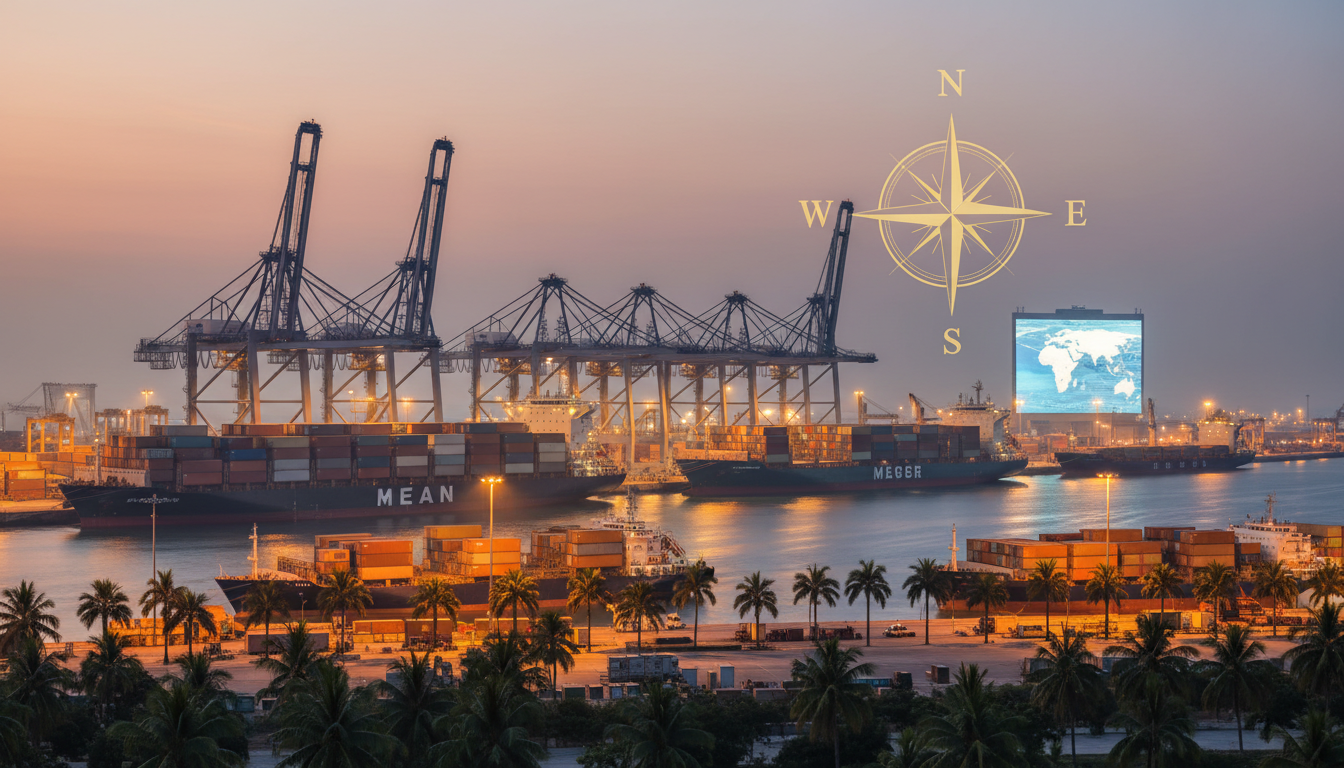
The global energy and commodity markets are once again grappling with the intricate dance between geopolitical volatility and supply chain resilience. India’s premier commercial port, Mundra Port, operated by Adani Ports and Special Economic Zone Ltd., has stepped into this fray with a significant strategic move: comprehensive waivers and rebates for containerized cargo bound for the Middle East. This proactive intervention, announced via a trade notice on March 26, 2026, is a direct response to persistent disruptions in West Asia, which have severely impacted established trade routes. For investors monitoring the intricate web of energy logistics and commodity flows, this development offers a crucial lens through which to assess the ongoing efforts to mitigate risk and stabilize global trade amidst an unpredictable geopolitical landscape.
Navigating Red Sea Turbulence: Price Implications and Port Resilience
The rationale behind Mundra Port’s financial concessions is deeply rooted in the ongoing instability in the Red Sea region. Houthi attacks on commercial shipping vessels have forced major shipping lines to abandon the efficient Suez Canal route, opting instead for the significantly longer and more expensive journey around the Cape of Good Hope. This rerouting adds weeks to transit times and dramatically increases operational costs, creating a ripple effect across global supply chains that ultimately influences commodity prices. By offering financial relief, Mundra aims to cushion the blow for Indian exporters, ensuring that critical trade with the Middle East continues to flow despite these external pressures.
The impact of such geopolitical headwinds is consistently reflected in energy markets. As of today, Brent Crude trades at $92.45, down 0.85% within a day range of $91.39-$94.21, while WTI Crude stands at $88.69, a 1.09% decline within its $87.64-$90.71 range. This recent daily dip follows a more pronounced trend, with Brent having fallen from $101.16 on April 1st to $94.09 on April 21st, representing a 7% decrease. While this decline might suggest some easing of immediate supply fears, the inherent geopolitical risk premium remains a critical factor. Mundra’s initiative, by attempting to stabilize one segment of the supply chain, acts as a micro-level effort to counteract macro-level disruptions, potentially preventing further upward pressure on prices by ensuring that goods, including those crucial for energy sector operations, can still move efficiently. For energy investors, understanding these localized mitigation efforts is key to assessing the true resilience of the global commodity ecosystem.
Detailed Waivers: A Lifeline for Shippers and Supply Chains
Mundra Port’s relief package is comprehensive, targeting several key pain points for exporters. At its core, the initiative grants 15 days of complimentary storage for export-laden containers destined for the Middle East. This applies to containers already within port terminals as of February 28, or those gated in up until 0700 hours on March 8. This provision is invaluable for shippers facing unpredictable vessel schedules and extended transit times. Furthermore, a substantial 80% waiver on reefer plug-in charges for 15 days will directly benefit refrigerated containers, which often carry high-value perishable goods and critical components, where delays can lead to rapid cost escalation and spoilage.
The port is also addressing unforeseen logistical complications with waivers for “back-to-town” containers. For cargo that must be withdrawn from the port and returned to its inland origin, Mundra Port will waive lift-on/lift-off, shut-out, and transportation charges, alongside an additional 15 days of free storage. These combined efforts signal a clear commitment to supporting customers through a period of elevated market volatility. For investors, these specific financial concessions translate into tangible cost savings for companies involved in exporting from India to the Middle East, potentially bolstering their profit margins and reducing the risk of supply chain interruptions that could otherwise impact their operations and, by extension, energy consumption or production processes.
Forward-Looking Implications: Integrating Port Actions with Market Events
The strategic moves by key logistical hubs like Mundra Port have far-reaching implications that investors should consider in conjunction with upcoming market data. As we look ahead, several crucial energy events are on the horizon. The EIA Weekly Petroleum Status Report, scheduled for release on April 22nd, April 29th, and May 6th, will provide critical insights into crude oil and product inventories. Similarly, the Baker Hughes Rig Count on April 24th and May 1st, along with API Weekly Crude Inventory reports on April 28th and May 5th, will offer snapshots of supply-side activity. Finally, the EIA Short-Term Energy Outlook on May 2nd will present a broader forecast for global energy markets.
Mundra’s efforts to stabilize trade routes, while geographically specific, contribute to the overall efficiency of global supply chains. If such initiatives prove effective in mitigating delays and costs, they could indirectly influence the demand side of the energy equation by ensuring consistent movement of goods, which requires fuel for transportation and power for industrial processes. A more stable trade environment could lead to more predictable inventory builds or draws, and potentially inform the EIA’s outlook on global demand. Conversely, if these measures are insufficient to fully offset Red Sea disruptions, the upcoming reports might show continued strain on logistics, higher shipping costs reflected in product prices, and persistent volatility in crude markets. Investors should watch for any mention of shipping costs or logistical challenges in these reports, as they can directly correlate with the effectiveness of port interventions like Mundra’s.
Addressing Investor Concerns: Stability in a Volatile World
Our proprietary reader intent data reveals a consistent theme among investors: a desire for clarity on market direction, particularly regarding crude oil prices. Questions such as “is WTI going up or down?” and “what do you predict the price of oil per barrel will be by end of 2026?” underscore the ongoing uncertainty in the market. While Mundra Port’s actions are not a silver bullet for global oil prices, they represent a tangible effort to inject stability into a crucial trade corridor, which indirectly supports the broader energy ecosystem.
By absorbing some of the financial shock from Red Sea disruptions, Mundra helps maintain the flow of goods, including those vital for industrial production and energy infrastructure. This stability can mitigate some of the upward pressure on commodity prices that would otherwise result from protracted supply chain bottlenecks. For investors concerned about the performance of energy-related companies, understanding these localized efforts is crucial. A company like Repsol, for instance, with its integrated energy operations and global footprint, would benefit from any measure that reduces shipping costs and ensures predictable trade flows, even if the direct impact from an Indian port’s fee waiver is indirect. Ultimately, such port initiatives contribute to a more resilient global trade environment, which in turn offers a degree of predictability that energy investors crave in these turbulent times, even as they continue to navigate the overarching geopolitical risks.


