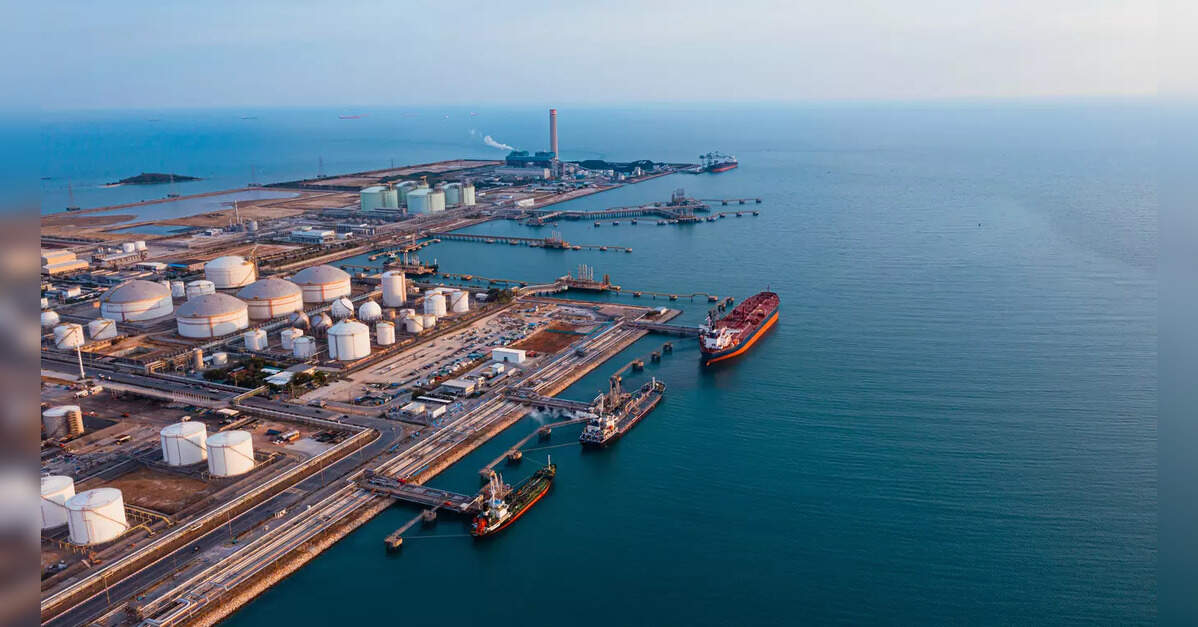
The recent GAIL pipeline damage, leading to significant CNG supply disruptions across Mumbai, Thane, and Navi Mumbai, serves as a potent reminder of the inherent vulnerabilities within critical energy infrastructure. While the incident is localized to India’s financial capital, its ripple effects extend beyond immediate inconvenience, offering a crucial lens through which investors should scrutinize operational risks in the burgeoning natural gas sector. This event underscores the delicate balance between supply chain efficiency and resilience, particularly in densely populated urban centers heavily reliant on gas for transport and industry. For investors navigating the complex landscape of global energy, understanding such micro-level disruptions is as critical as tracking macro commodity trends, as they directly impact regional economies and the performance of key energy distribution players like Mahanagar Gas (MGL).
Immediate Operational Fallout and Localized Energy Shock
The damage to GAIL’s main gas pipeline, situated within the Rashtriya Chemicals and Fertilisers (RCF) premises, triggered an immediate and significant supply stoppage to MGL’s City Gate Station (CGS) at Wadala. This bottleneck directly impacted CNG availability across MGL’s extensive network, which fuels a substantial portion of Mumbai’s transport sector, including countless autorickshaws, taxis, and public buses. The company’s swift prioritization of piped natural gas (PNG) for residential consumers, while commendable for social stability, inevitably meant that industrial and commercial users faced a mandate to switch to alternative fuels. This forced fuel-switching introduces immediate operational costs for businesses and highlights their exposure to gas supply interruptions. The absence of a specified timeline for resuming normal supply, coupled with undisclosed details regarding the cause of the damage, injects considerable uncertainty for affected industries and MGL’s short-term revenue outlook. This incident is a stark illustration of how a single point of failure in critical infrastructure can cascade into widespread economic disruption, compelling investors to assess the robustness of similar gas distribution networks.
Global Market Volatility Contrasts with Regional Supply Shock
As of today, Brent crude trades at $89.11, marking a significant 10.34% decline within a day’s range stretching from $86.08 to $98.97. Similarly, WTI crude has dipped to $81.73, down 10.35%, fluctuating between $78.97 and $90.34. Gasoline prices also reflect this bearish trend, currently at $2.91, a 5.82% drop from earlier highs today. This broader market volatility, which has seen Brent crude fall from $112.57 just three weeks ago on March 27th to $98.57 yesterday, and further to today’s levels, underscores a global energy landscape grappling with demand concerns, geopolitical shifts, and shifting supply narratives. In stark contrast to these global crude and refined product price dynamics, the Mumbai gas pipeline incident represents a hyper-localized supply shock with immediate, direct economic consequences for a specific region. While global crude prices are reacting to macro factors, the Mumbai disruption creates localized price pressures and demand spikes for alternative fuels (such as diesel or even electricity for transport) within the affected areas, irrespective of the downward trend in global benchmarks. This dichotomy highlights the dual nature of energy investing, where global commodity cycles intersect with critical regional infrastructure challenges.
Investor Sentiment and the Resilience of Natural Gas Infrastructure Plays
Our proprietary reader intent data reveals a strong focus among investors on both the performance of specific regional energy stocks and broader commodity price predictions. Queries ranging from “How well do you think Repsol will end in April 2026” to “What do you predict the price of oil per barrel will be by end of 2026?” underscore a dual investor mindset: tactical plays on specific companies and macro bets on global oil. The Mumbai pipeline disruption, though localized, serves as a potent reminder for investors to scrutinize the operational resilience and supply chain diversification of natural gas distributors, particularly those operating in rapidly urbanizing economies. Companies like MGL, despite their critical role, are exposed to ‘last mile’ risks in energy delivery. This incident highlights the often-underestimated impact of infrastructure integrity on regional economies and the consistent profitability of companies reliant on stable gas flows. Investors should conduct thorough due diligence on pipeline maintenance schedules, emergency response protocols, and the geographical diversification of supply sources for their natural gas holdings. The ability of a company to quickly restore service and minimize economic disruption following such an event will be a key differentiator in investor confidence and valuation.
Upcoming Market Catalysts and Forward-Looking Analysis
While Mumbai addresses its immediate gas supply challenges, the broader energy market remains poised for significant shifts driven by a series of upcoming events, which will influence the global backdrop against which such regional incidents occur. Investors will closely monitor the OPEC+ Joint Ministerial Monitoring Committee (JMMC) meeting tomorrow, April 17th, followed by the full Ministerial meeting on April 18th. These gatherings are crucial for understanding future production quotas and their potential impact on global crude prices and, by extension, the economic attractiveness of natural gas versus other fuels. Additionally, the API Weekly Crude Inventory report on April 21st and the EIA Weekly Petroleum Status Report on April 22nd will offer vital insights into U.S. supply-demand dynamics. Further into the future, the Baker Hughes Rig Count on April 24th and May 1st will provide leading indicators on future production capacity. Decisions from these global events could either exacerbate or mitigate the economic fallout from localized supply shocks by influencing global energy prices and the availability and cost of alternative fuels. For instance, a tightening crude market post-OPEC+ could make gas an even more critical, if vulnerable, resource in regions like Mumbai, underscoring the need for robust gas infrastructure investments. Conversely, a loosening market might offer more readily available, cheaper alternatives, lessening the immediate sting of a gas disruption.


