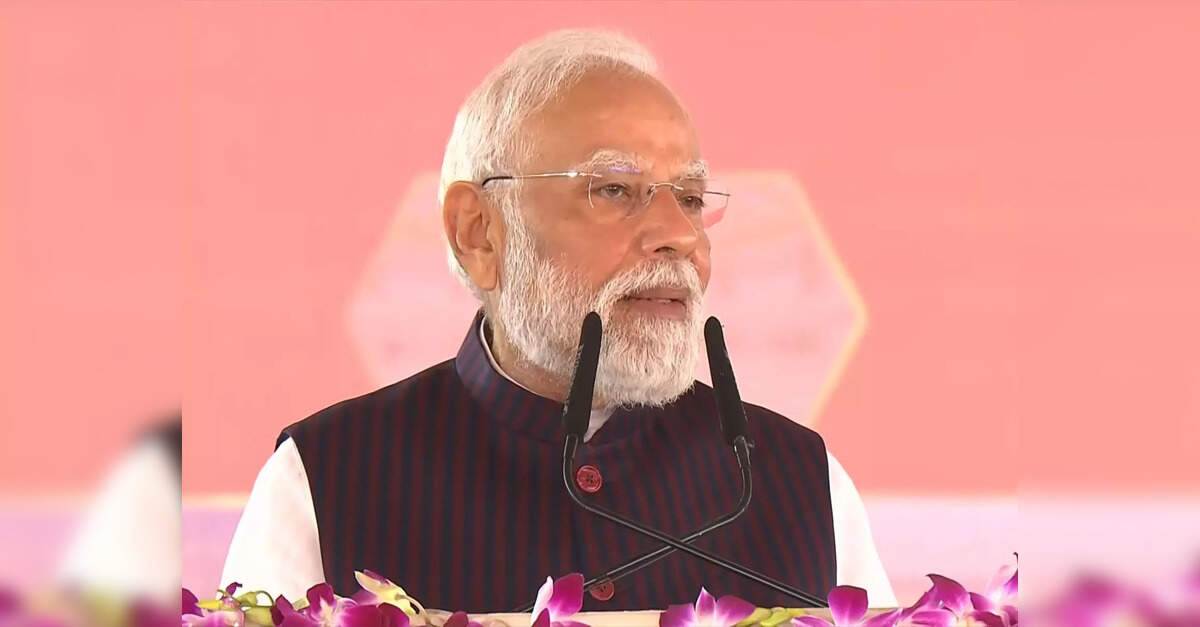
India’s burgeoning economy continues to be a significant driver of global energy demand, and recent government initiatives underscore the scale of this expansion. Prime Minister Narendra Modi’s inauguration and foundation stone laying for developmental projects valued at over ₹14,260 crore (approximately $1.7 billion USD) in Chhattisgarh exemplifies this trend. While these projects span various sectors from roads to healthcare, their profound implications for oil, gas, and power consumption cannot be overstated. For energy investors, understanding these localized demand catalysts is crucial, especially as global markets navigate volatile price dynamics and shifting supply narratives. This massive investment package signals robust long-term demand growth from the subcontinent, a factor that could increasingly influence global energy balances.
Indian Demand Acceleration Versus Global Price Volatility
The sheer scale of the ₹142.6 billion investment in Chhattisgarh points to a sustained push for economic development and improved living standards, both of which are inherently energy-intensive. Key energy-related infrastructure includes a new HPCL Petroleum Oil Depot in Raipur, boasting a storage capacity of 54,000 Kilolitres for petrol, diesel, and ethanol, with a dedicated 10,000 KL for the government’s Ethanol Blending Programme. This directly translates into increased demand for refined products and biofuels. Yet, this strong demand signal from India arrives at a time when global crude markets are experiencing significant downward pressure. As of today, Brent Crude trades at $90.38 per barrel, marking a sharp 9.07% decline from its previous close, with WTI Crude similarly affected at $82.59, down 9.41%. Our proprietary data shows Brent has fallen from $112.78 just two weeks ago to its current level, a significant 19.9% drop. Gasoline prices have also retreated, currently at $2.93 per gallon, down 5.18%. This divergence between robust, observable demand growth in key economies like India and the recent sharp decline in crude prices presents a complex picture for investors, prompting questions about whether current market sentiment is underestimating the long-term demand trajectory.
Expanding Natural Gas Reach and Diversifying India’s Energy Mix
A cornerstone of the Chhattisgarh development package is the dedication of the 489 km Nagpur–Jharsuguda Natural Gas Pipeline, built with an investment of ₹1,950 crore. This vital artery will connect 11 districts of Chhattisgarh to the National Gas Grid, significantly expanding the reach of natural gas in the region. For investors keen on India’s energy transition and diversification, this project signals a clear commitment to increasing natural gas penetration, displacing more carbon-intensive fuels in industrial and potentially residential sectors. The increased availability of natural gas offers a cleaner burning alternative for industries and power generation, supporting India’s environmental goals while meeting its growing energy needs. Furthermore, the substantial ethanol storage capacity at the new Raipur depot highlights the government’s aggressive push for ethanol blending. This initiative not only reduces reliance on crude imports but also provides a stable demand base for agricultural feedstocks. Investors are increasingly asking about the long-term price trajectory of oil and gas, and projects like these in India demonstrate foundational shifts in demand patterns that must be factored into any comprehensive market outlook.
Infrastructure Development Fuels Sustained Energy Demand
Beyond direct energy projects, the broader infrastructure development in Chhattisgarh lays the groundwork for sustained, higher energy consumption. The foundation stone for a four-lane Greenfield Highway from Pathalgaon–Kunkuri to the Chhattisgarh–Jharkhand Border, an investment of ₹3,150 crore, is particularly noteworthy. This corridor is specifically designed to connect key coal mines, industrial zones, and steel plants across a strategically important region. Improved connectivity means more efficient transportation of goods, raw materials, and finished products, inevitably leading to increased demand for diesel and other transportation fuels. Similarly, the inauguration of the Inter-Regional ER–WR Interconnection Project, enhancing inter-regional power transfer capacity by 1,600 MW, alongside other power sector projects worth ₹3,750 crore, directly addresses electricity demand growth. These power grid upgrades, including new lines, feeder bifurcations, and substations, are critical for improving rural and agricultural power supply, thereby driving industrialization and improving living standards – all of which are primary drivers for increased electricity consumption and, by extension, demand for the fuels used in power generation.
Navigating Volatility: Upcoming Events and Investor Outlook
While India’s long-term demand story remains compelling, the immediate future of global energy markets will be heavily influenced by key upcoming events. Investors are keenly watching OPEC+’s next moves, with the Joint Ministerial Monitoring Committee (JMMC) Meeting scheduled for April 19th and the full OPEC+ Ministerial Meeting on April 20th. These meetings are critical, especially given the current price weakness, as any decisions on production quotas could significantly impact market sentiment. Our proprietary reader intent data shows investors are particularly interested in OPEC+’s current production quotas and how they might evolve. Additionally, the weekly inventory reports from the API (April 21st, April 28th) and EIA (April 22nd, April 29th) will provide crucial insights into supply-demand balances in the world’s largest consumer market. Combined with the Baker Hughes Rig Count on April 24th and May 1st, these reports will offer a clearer picture of short-term supply trends. For investors, integrating India’s robust, long-term demand signals, exemplified by the Chhattisgarh investments, with the immediate implications of these supply-side events will be key to formulating a nuanced and profitable investment strategy in the dynamic oil and gas sector. The question remains whether the market is truly pricing in the accelerating demand from regions like India, or if current supply-side concerns are temporarily overshadowing these powerful underlying growth drivers.


