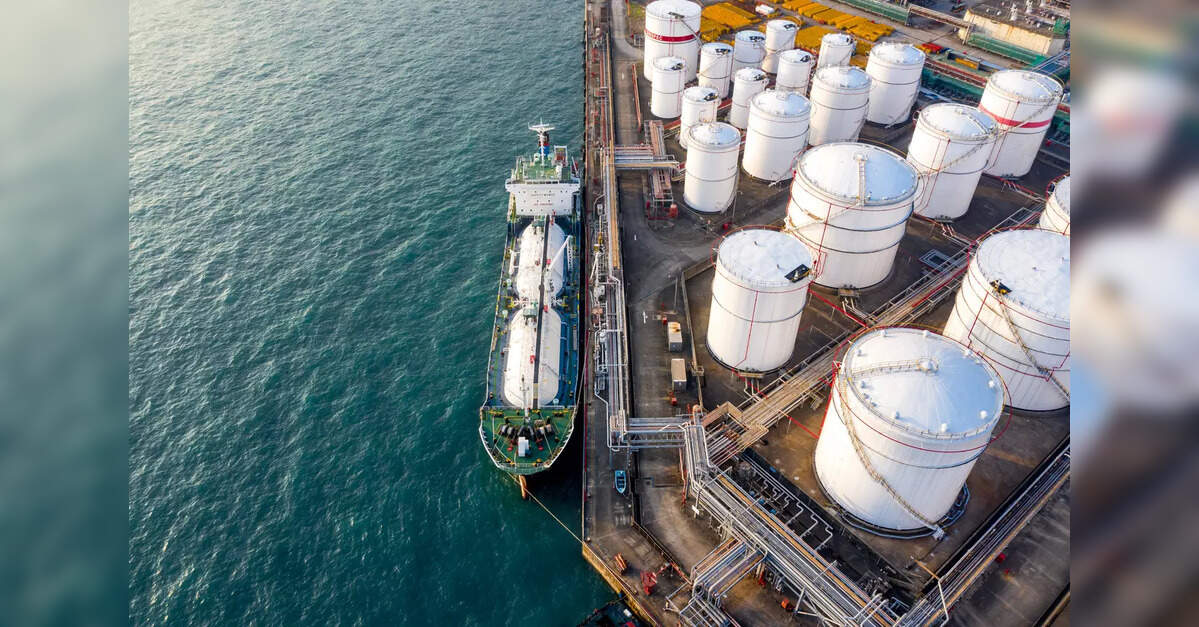
The global oil market continues its complex dance between geopolitical pressures, supply chain innovations, and fundamental demand, presenting both opportunities and significant risks for investors. A recent development involving a major Indian refinery, co-owned by steel tycoon Lakshmi Mittal’s energy joint venture, HPCL-Mittal Energy Limited (HMEL), highlights these intricate dynamics. The refinery, India’s tenth largest with an 11.3 million tonnes per year processing capacity, reportedly received nearly $280 million worth of Russian crude between July and September, transported on vessels allegedly using deceptive practices and previously designated under sanctions. This revelation underscores the persistent challenges in enforcing sanctions on Russian oil, the evolving landscape of global energy trade, and the heightened compliance risks for international businesses, all while the broader crude market experiences significant shifts.
Geopolitical Crosscurrents and Supply Chain Opacity
The alleged use of sanctions-listed vessels and “deceptive practices” to transport Russian oil to India’s Guru Gobind Singh Refinery shines a spotlight on the creative, yet risky, methods employed to circumvent international restrictions. Satellite imagery, shipping data, and customs records suggest these shipments originated from Russia’s Arctic port of Murmansk, reaching as far as the Gulf of Oman before ultimately supplying the Indian facility. This sophisticated network, involving vessels broadcasting false positions or shutting off transponders, raises critical questions about transparency and accountability within the supply chain. For investors, this scenario introduces substantial compliance risk, particularly for entities with exposure to companies operating in jurisdictions facing pressure from the United States. The recent sanctions imposed by the Trump administration on Russian energy giants Rosneft and Lukoil signal an intensified effort to restrict Moscow’s oil revenues, directly impacting the strategic calculus of nations like India, which has become a primary importer of Russian crude post-February 2022, acquiring an average of 1.7 million barrels per day this year. Navigating this opaque environment demands heightened due diligence and a clear understanding of potential reputational and financial repercussions.
Navigating Current Market Volatility: A Price Retreat Amidst Uncertainty
Against this backdrop of geopolitical maneuvering, the physical oil market is experiencing notable volatility. As of today, Brent crude trades at $90.38, reflecting a sharp 9.07% decline within the day, with prices fluctuating between $86.08 and $98.97. Similarly, WTI crude stands at $82.59, down 9.41%, having traded in a range of $78.97 to $90.34. Gasoline prices are also feeling the pressure, currently at $2.93, a 5.18% drop for the day. This daily downturn is part of a broader trend; our proprietary data indicates Brent crude has shed a significant $22.4, nearly 19.9%, since March 30th’s peak of $112.78. This pronounced retreat from recent highs underscores the market’s sensitivity to a confluence of factors, including global economic outlook, demand expectations, and, critically, the geopolitical stability of supply routes. Investors must consider how the sustained pressure on Russian oil flows, even as they find new pathways, contributes to this underlying uncertainty, potentially exacerbating price swings as the market recalibrates for evolving supply dynamics and enforcement risks.
Investor Focus on Future Supply and Demand Signals
Our first-party reader intent data reveals that investors are keenly focused on understanding future market direction, with queries like “What do you predict the price of oil per barrel will be by end of 2026?” and “What are OPEC+ current production quotas?” dominating discussions. These questions highlight a collective concern over supply stability and the factors that will shape crude prices in the medium term. This week offers critical data points and events for investors seeking clarity. The upcoming OPEC+ Joint Ministerial Monitoring Committee (JMMC) Meeting on April 19th, followed by the full OPEC+ Ministerial Meeting on April 20th, are pivotal. Any adjustments to production quotas or statements on market strategy from these meetings will directly impact global supply expectations and could either stabilize or further destabilize current price levels. Furthermore, the API Weekly Crude Inventory report on April 21st and the EIA Weekly Petroleum Status Report on April 22nd will provide fresh insights into U.S. inventory levels, offering crucial indicators of domestic supply and demand balances. Investors will also closely monitor the Baker Hughes Rig Count on April 24th for signs of future production trends. These recurring data releases, along with the strategic decisions from key producers, are essential for anticipating market movements and informing investment strategies in a volatile environment shaped by ongoing geopolitical tensions.
The Long-Term Imperative: Adapting to Evolving Trade Landscapes
The situation involving HMEL and Russian oil is not an isolated incident but rather indicative of a broader, long-term shift in global energy trade patterns. As traditional buyer-seller relationships are disrupted by sanctions, new alliances and supply chains emerge, often pushing the boundaries of compliance. India’s strategic imperative to secure affordable energy for its vast and growing economy means it will likely continue to explore diverse sourcing options, even if they involve navigating complex geopolitical landscapes. For investors, understanding these evolving trade routes and the associated risks is paramount. Companies involved in refining, shipping, and trading, especially those with significant exposure to emerging markets like India and China, must demonstrate robust compliance frameworks and adaptability. The sustained pressure from the U.S. on entities dealing with sanctioned Russian oil means that the costs of non-compliance, both financial and reputational, are rising. Successful investment strategies in this environment will demand a nuanced appreciation for energy security needs versus geopolitical mandates, recognizing that the global oil market is now permanently rewired with new layers of complexity and risk.


