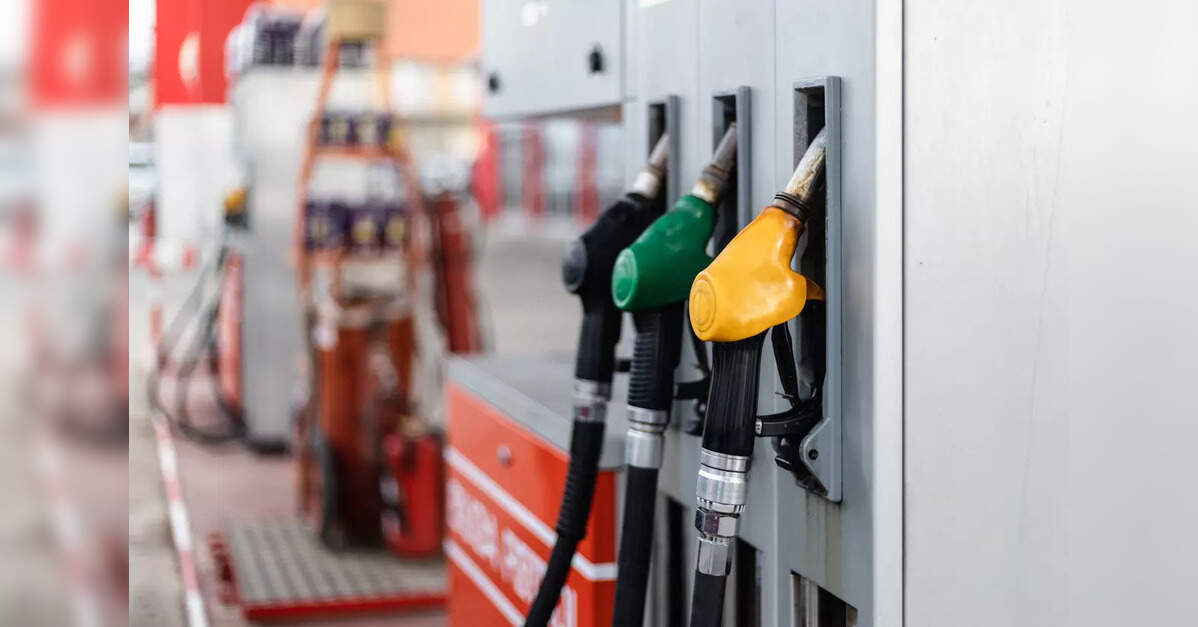
The energy sector is currently navigating a complex interplay of environmental mandates, economic realities, and political pressures. A prime example of this dynamic is the ongoing debate around ethanol blending targets, a critical area for investors tracking both traditional oil and gas markets and the burgeoning biofuels segment. While the government has already set a 20 percent ethanol blending mandate, the ethanol industry is actively lobbying for an additional 1-2 percent increase, citing significant idle capacity and the potential for greater agricultural support. This push, however, faces considerable resistance from automakers and consumers who point to reduced fuel efficiency and a lack of direct economic benefits. For astute oil and gas investors, understanding these conflicting forces is crucial for assessing future fuel demand, refining margins, and the strategic direction of energy policy.
Ethanol’s Blending Ambitions Collide with Market Resistance
The Grain Ethanol Manufacturers’ Association (GEMA) has articulated a clear desire for an incremental increase in ethanol blending, specifically targeting a 1-2 percent hike beyond the current 20 percent mandate. Their rationale is rooted in economic necessity: over half of the industry’s installed capacity lies dormant, making it challenging to achieve breakeven points. C.K. Jain, president of GEMA, highlights that such a modest increase could significantly boost the struggling grain-based ethanol sector. The sector’s capacity expansion was largely driven by repeated government signals indicating a future blend target of 25-30 percent, prompting substantial investment. This demand is further bolstered by political considerations, particularly from states like poll-bound Bihar, a major maize producer, which sees higher blending as a boon for its agricultural economy. In the first procurement cycle for the 2025-26 ethanol year (November–October), grain-based manufacturers offered a substantial 1,300 crore litres of ethanol to oil marketing companies, yet only 750 crore litres were ultimately allocated, underscoring the underutilization issue.
However, this ambition faces a formidable wall of opposition. Automakers are firmly pushing back, citing a significant reduction in fuel efficiency – up to 6 percent when transitioning from E0 to E20 petrol. A senior auto industry executive recently confirmed that there is “no consideration at present to raise the ethanol blend.” Consumers, too, have expressed dissatisfaction, as the production cost of E20 fuel is higher, eliminating any price advantage at the pump. This lack of consumer benefit, coupled with efficiency concerns, fuels public criticism and complicates the political calculus for further blending mandates. Investors must weigh the government’s commitment to agricultural support and energy independence against the practical and economic challenges of higher ethanol integration.
Crude Volatility and the Economics of Blending
The broader macroeconomic environment, particularly the fluctuating price of crude oil, profoundly impacts the viability and political appeal of ethanol blending. As of today, Brent crude trades at $90.38 per barrel, marking a significant 9.07% decline within the day, with its price range spanning $86.08 to $98.97. Similarly, WTI crude is at $82.59, down 9.41%. This immediate downturn follows a more pronounced trend, with Brent having fallen by $22.4, or 19.9%, from $112.78 on March 30th to its current level. Gasoline prices have also seen a corresponding drop, now at $2.93 per gallon, down 5.18% today.
This volatility in crude prices directly influences the economic calculus of ethanol blending. When crude prices are high, alternative fuels like ethanol gain more appeal as a means of energy security and cost stabilization. However, with crude experiencing sharp declines, as it has recently, the perceived urgency for ethanol can diminish. The fact that E20 fuel already carries a higher production cost, offering no pump price advantage, becomes even more salient in a falling crude market. A sustained period of lower crude prices could reduce consumer acceptance of ethanol blends and potentially weaken the government’s resolve to push for higher mandates, as the economic incentive to replace cheaper conventional fuel lessens. For investors in oil marketing companies (OMCs) and refining operations, these dynamics directly impact profitability and demand forecasting, as blending mandates can alter the composition of their product sales and procurement strategies.
Navigating Policy Roadblocks and Future Trajectories
The path forward for ethanol blending is heavily dependent on clear policy direction and inter-ministerial coordination. The industry eagerly awaits Niti Aayog’s policy roadmap for higher blending targets, a document expected to provide much-needed clarity on the government’s long-term vision. GEMA acknowledges that an immediate leap to 25-30 percent blending might not be feasible, but they urge an increase to the “tolerance level” of existing vehicles to provide immediate relief to the grain ethanol industry, which has already invested heavily to meet enhanced requirements. The industry has also expressed readiness to collaborate on distribution infrastructure, highlighting that timely policies are critical to sustaining momentum.
Looking ahead, GEMA advocates for emulating Brazil’s progressive blending model, starting from E27 and potentially moving towards 55 percent under a flex-fuel regime. This ambitious long-term vision underscores the industry’s belief in ethanol’s expanded role. Investors should closely monitor upcoming energy events for signals that could indirectly impact this policy trajectory. For instance, the OPEC+ JMMC Meeting on April 19th and the subsequent OPEC+ Ministerial Meeting on April 20th will shape global crude supply and price expectations. Similarly, the EIA Weekly Petroleum Status Reports on April 22nd and April 29th, alongside the API Weekly Crude Inventory reports on April 21st and April 28th, will offer insights into domestic petroleum demand and inventory levels. While these events don’t directly address ethanol policy, they establish the macro energy environment. A decision by OPEC+ to significantly alter production, for example, could create ripples that either support or dampen the economic rationale for accelerating domestic biofuel mandates, thereby influencing the government’s pace on ethanol blending targets.
Investor Sentiment and Strategic Implications
Our proprietary reader intent data reveals that investors are keenly focused on the broader trajectory of crude oil prices, with common questions including “what do you predict the price of oil per barrel will be by end of 2026?” and “What are OPEC+ current production quotas?” These questions are highly relevant to the ethanol blending debate. A market expectation of sustained high crude prices would naturally bolster the economic and strategic arguments for aggressive ethanol blending, as it enhances energy security and supports domestic agriculture. Conversely, if the consensus shifts towards lower crude prices, the economic rationale for expensive ethanol expansion might weaken, putting pressure on existing mandates and slowing the pace of future increases.
For investors, the ethanol blending narrative presents a nuanced picture. Investments in agricultural commodities tied to ethanol production could see benefits from increased mandates, particularly given the political support from key agricultural regions. However, for oil marketing companies and refiners, higher blending mandates could alter demand for conventional gasoline, requiring adjustments in refining configurations and supply chain logistics. The key takeaway for investors is to monitor not just the direct policy announcements from Niti Aayog and other governmental bodies, but also the global crude oil market dynamics and domestic political considerations, such as support for the farm economy. The balance between these forces will ultimately dictate the pace and extent of ethanol integration into the fuel supply, creating both opportunities and challenges across the energy investment landscape.


