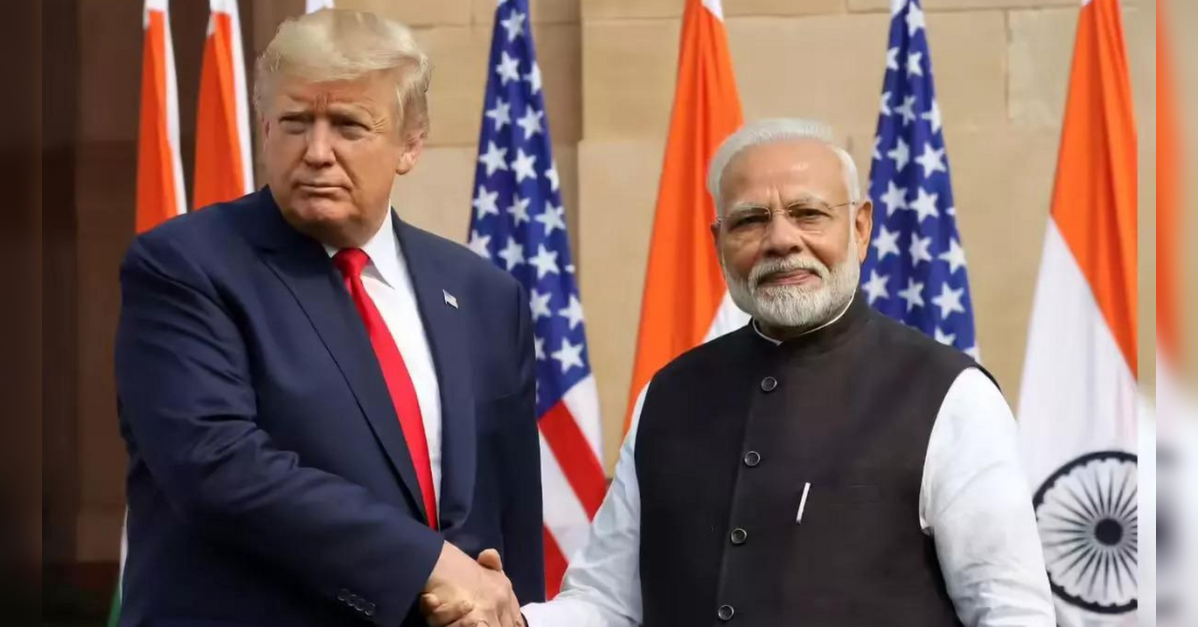
The global energy landscape continues to be shaped by a complex interplay of geopolitics, supply-demand fundamentals, and shifting international alliances. Recent claims by former US President Donald Trump regarding India’s intention to significantly reduce its oil imports from Russia, made during a conversation with Prime Minister Narendra Modi, have injected fresh uncertainty into an already volatile market. While New Delhi has historically prioritized its consumers’ energy security and rejected previous similar claims, the mere suggestion of such a shift can reverberate through trading desks, influencing sentiment and investment strategies. For oil and gas investors, dissecting these geopolitical pronouncements against a backdrop of live market data and an eventful calendar is crucial for navigating the path ahead.
Geopolitical Claims and Their Market Echoes
Former President Trump’s assertion that India would “not buy much oil from Russia” due to a desire to see the conflict in Ukraine end, underscores the ongoing efforts by Western powers to isolate Russian energy exports. This claim, reportedly made during Diwali celebrations, has not been officially confirmed by India. Indeed, previous statements from New Delhi have consistently emphasized that India’s import policies are guided solely by the objective of safeguarding the interests of the Indian consumer in a volatile energy scenario. Given India’s status as a significant importer of oil and gas, any perceived shift in its sourcing strategy holds considerable weight for global crude flows and pricing. Investors must critically evaluate such claims, understanding that official policy declarations, rather than speculative political statements, will ultimately dictate market realignments. The potential for such rhetoric to create short-term market noise, however, is undeniable.
Current Market Snapshot: Volatility Reigns
The immediate market reaction to geopolitical uncertainties and broader economic concerns has been stark. As of today, Brent Crude trades at $90.38 per barrel, marking a significant 9.07% decline within the day, with prices fluctuating between $86.08 and $98.97. Similarly, WTI Crude has seen a sharp drop, now standing at $82.59, down 9.41% for the day, after trading in a range of $78.97 to $90.34. This intense intraday volatility reflects an underlying nervousness among traders and investors. Looking at the broader trend, Brent has experienced a notable downturn over the past two weeks, falling from $112.78 on March 30, 2026, to its current $90.38, representing a $22.4 or 19.9% depreciation. This downward trajectory suggests that while geopolitical claims can amplify daily movements, deeper fundamental concerns about global demand or oversupply are likely at play. Gasoline prices have followed suit, currently at $2.93, down 5.18%, directly impacting consumer spending and broader economic activity.
Investor Questions: Seeking Clarity Amidst Uncertainty
The current environment of geopolitical rhetoric and price volatility is clearly driving investor anxiety, as evidenced by the questions our readers are posing. Many are asking “what do you predict the price of oil per barrel will be by end of 2026?”, highlighting a pervasive desire for clarity on future market direction. This question directly reflects the struggle to reconcile short-term noise with long-term fundamentals. Another query, “How well do you think Repsol will end in April 2026?”, indicates a focus on specific company performance within this turbulent backdrop, implying a need for granular insights into how individual players might weather market shifts. These questions underscore the challenge of forecasting in a market where geopolitical statements can trigger rapid price swings, making detailed analysis of supply-demand balances and upcoming events more critical than ever.
Navigating the Near-Term Horizon: Critical Calendar Events
For investors seeking to understand the potential drivers of future price movements and address questions about market direction, the upcoming energy calendar holds several pivotal events. The immediate focus will be on the OPEC+ Joint Ministerial Monitoring Committee (JMMC) Meeting on April 19, 2026, followed by the full OPEC+ Ministerial Meeting on April 20, 2026. These meetings are crucial for determining the cartel’s production policy, and given the significant price depreciation over the past two weeks, investors will be keenly watching for any signals regarding adjustments to current production quotas. Our reader data indicates strong interest in “OPEC+ current production quotas,” suggesting that any deviation from the status quo could trigger substantial market reactions.
Beyond OPEC+, the API Weekly Crude Inventory reports on April 21 and April 28, 2026, followed by the EIA Weekly Petroleum Status Reports on April 22 and April 29, 2026, will provide crucial insights into US supply and demand dynamics. These weekly data points offer a granular view of inventory levels, refinery utilization, and product supplied, which are key indicators of underlying market health. Finally, the Baker Hughes Rig Count on April 24 and May 1, 2026, will offer a glimpse into future US production trends, with any significant changes potentially impacting global supply expectations. Collectively, these events will provide tangible data points against which to measure the impact of geopolitical statements and broader economic sentiment, offering investors a clearer picture of market fundamentals.
Broader Trade Tensions and Investment Implications
While the focus remains largely on oil, former President Trump’s comments also touched upon broader trade policies, including the imposition of significant tariffs on China and renegotiated deals with the European Union, Japan, and South Korea. He stated that “as of November 1st, China will have about 155% tariffs put on it,” arguing such measures strengthen national security and generate revenue. While not directly tied to oil markets, escalating global trade tensions can have profound indirect effects. Economic friction between major trading blocs can slow global economic growth, which in turn reduces overall energy demand. For investors, this broader macro-economic backdrop adds another layer of complexity. Diversification strategies and a keen eye on global economic indicators, beyond just energy-specific news, become increasingly important to mitigate risks and identify opportunities in a highly interconnected global market.


