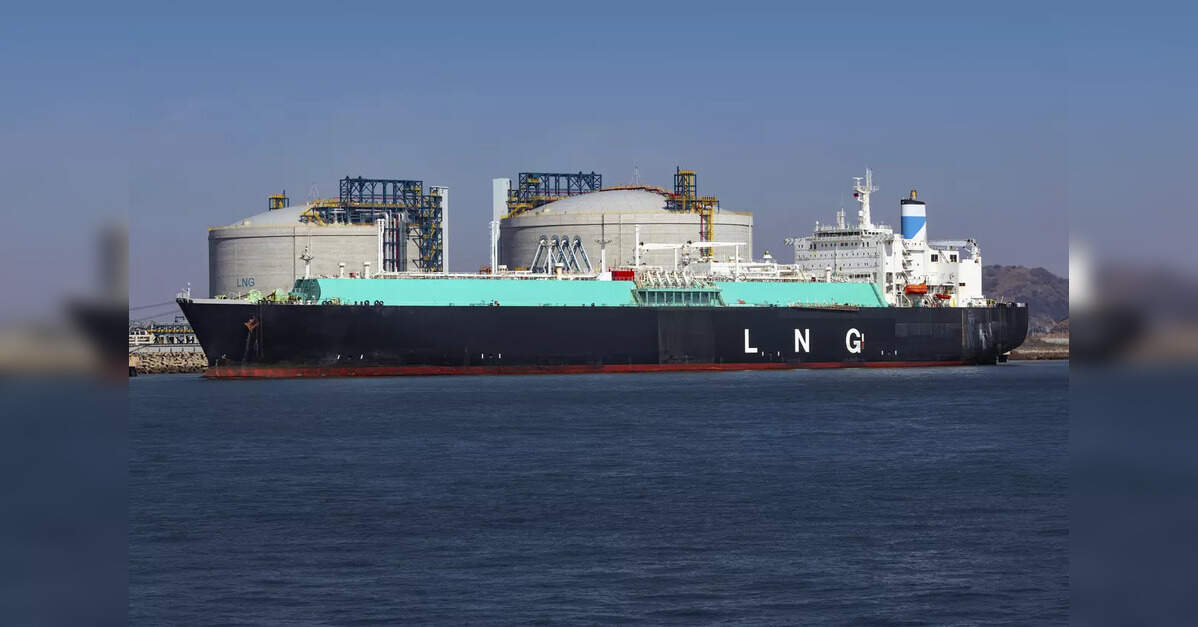
Japan’s energy policy continues to walk a tightrope, deftly balancing critical national interests against the persistent demands of the international community. Recent statements from Trade Minister Yoji Muto underscore Tokyo’s unwavering commitment to its own energy security, particularly regarding vital liquefied natural gas (LNG) imports from Russia’s Sakhalin-2 project. While Japan has steadily reduced its overall reliance on Russian energy since the 2022 invasion of Ukraine, aligning with G7 commitments to phase out Russian oil, the continued procurement of Sakhalin-2 LNG highlights a strategic carve-out driven by domestic necessities. This nuanced approach has significant implications for global energy markets, influencing trade flows, price dynamics, and the broader geopolitical landscape, all while investors grapple with an increasingly complex supply picture.
Japan’s Strategic Imperative: Balancing Energy Security and Geopolitics
Tokyo’s stance on Russian energy is a textbook example of prioritizing national interest in the face of international pressure. Trade Minister Muto’s assertion that Japan will “act appropriately based on its national interest” serves as the guiding principle. This is most evident in the nation’s continued participation in the Sakhalin-2 LNG project. This facility is not merely another import source; it is a cornerstone of Japan’s energy stability, accounting for approximately 9% of its total LNG imports and contributing around 3% of the country’s electricity generation. To abruptly cease these imports, as implicitly suggested by US Treasury Secretary Scott Bessent in talks with Japanese Finance Minister Katsunobu Kato, would create an immediate and potentially catastrophic energy deficit for the resource-poor nation.
While Japan has aligned with other G7 nations to phase out Russian oil imports, demonstrating its commitment to international cooperation, the distinction for LNG is critical. Oil markets are more fungible, allowing for easier redirection of supplies. LNG, however, requires specialized infrastructure and long-term contracts, making rapid substitutions challenging and prohibitively expensive. This strategic pragmatism ensures that Japan maintains a stable energy supply for its industries and citizens, even if it means navigating diplomatic friction with key allies. The impending visit of US President Donald Trump to Asia later this month will undoubtedly bring this issue back into focus, but Tokyo’s position on Sakhalin-2 appears resolute for the foreseeable future.
Market Volatility and Japan’s Stance: A Price Driver?
The geopolitical undercurrents of energy policy play out against a backdrop of significant market volatility. As of today, Brent crude trades at $90.38 per barrel, marking a substantial 9.07% decline within the day, with its range spanning $86.08 to $98.97. WTI crude also saw a sharp drop, sitting at $82.59, down 9.41% from its open, trading between $78.97 and $90.34. Gasoline prices reflect this broader weakness, currently at $2.93, down 5.18%.
This daily fluctuation comes against a notable downward trend in Brent over the past two weeks, shedding $22.40, or nearly 20%, from $112.78 on March 30th to today’s $90.38. Such significant price movements highlight the sensitivity of global energy markets to perceived supply and demand imbalances, as well as broader macroeconomic concerns. In this environment, Japan’s decision to maintain critical LNG imports from Russia, despite external pressure, acts as a subtle but important stabilizer, preventing an additional layer of demand-side panic or supply disruption that could further exacerbate price swings. While it may not be the primary driver of today’s sharp decline, the absence of a sudden halt in Sakhalin-2 LNG helps to mitigate potential upward price pressures that would arise from a sudden deficit in a key Asian market. Conversely, the ongoing Western pressure on other major Asian buyers, particularly India and China, could reshape global trade flows, potentially redirecting cheaper Russian supplies and influencing benchmark pricing.
Investor Outlook: Navigating Geopolitical Supply and Upcoming Catalysts
For investors, understanding these complex geopolitical maneuvers is paramount, as they directly impact global supply dynamics and, consequently, crude and natural gas prices. Our proprietary reader intent data reveals a keen investor interest in how these factors will shape future market conditions, with frequent queries like “what do you predict the price of oil per barrel will be by end of 2026?” and “What are OPEC+ current production quotas?”. Japan’s nuanced approach, combined with the broader Western push to restrict Russian energy sales, directly influences the supply side of this equation.
Looking forward, investors are keenly watching a series of upcoming events that promise to provide further clarity on market direction. The OPEC+ Joint Ministerial Monitoring Committee (JMMC) Meeting on April 19th, followed immediately by the full OPEC+ Ministerial Meeting on April 20th, are critical. Any adjustments to production policy from this influential group could significantly alter the supply landscape, especially as the market grapples with the complexities of geopolitical sourcing shifts. Further insight into market fundamentals will come from the API Weekly Crude Inventory report on April 21st and the EIA Weekly Petroleum Status Report on April 22nd, offering crucial data on US stock levels, refining activity, and demand indicators. These reports, alongside the Baker Hughes Rig Count on April 24th, will provide a clearer picture of short-term supply dynamics, shaping investor sentiment and potentially influencing the trajectory of oil prices into the latter half of 2026.
The Broader Asian Energy Equation and Future Implications
Japan’s “national interest first” strategy also holds broader implications for the energy security strategies of other major Asian economies. As Washington continues to exert pressure on China, India, and Japan to reduce Russian energy purchases, and with Britain already imposing sanctions on Chinese and Indian entities (with more EU sanctions potentially on the horizon), the global energy map is being redrawn. Trade sources and analysts suggest that US and European pressure could restrict India’s oil imports from December, potentially leading to cheaper, redirected Russian supplies for China.
Japan’s steadfast commitment to Sakhalin-2 LNG provides a precedent for other nations that might face similar dilemmas between geopolitical alignment and immediate energy needs. This situation highlights the inherent tension between global political objectives and the fundamental economic requirements of energy-intensive nations. While the push for energy transition continues, the immediate imperative of energy security ensures that traditional fossil fuel supplies, even from controversial sources, remain critical components of national strategies. Investors should monitor how these pressures evolve, as the redirection of trade flows and the potential for new sanctions could introduce fresh layers of complexity and risk, influencing everything from shipping costs to regional pricing differentials across Asia and beyond.


