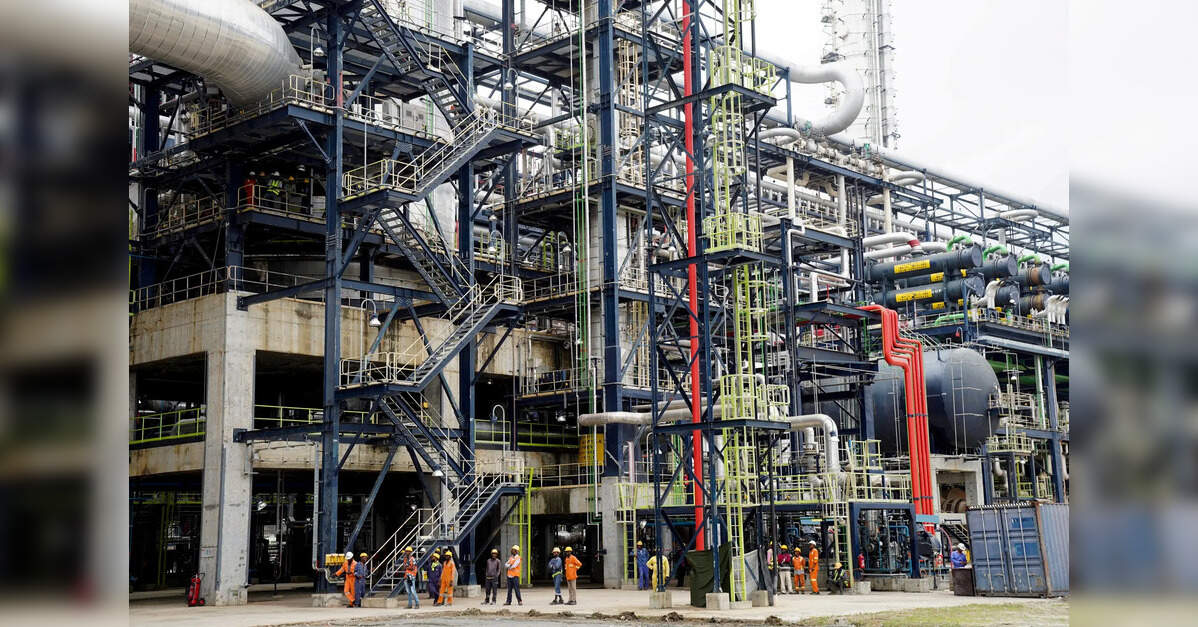
The operational narrative surrounding Nigeria’s 650,000 barrel-per-day Dangote Refinery has recently drawn significant investor attention, particularly concerning its crude procurement strategy. Reports indicated a reduction in crude inflows, attributed by the facility’s leadership to a strategic response to elevated global prices rather than operational distress. However, a deeper dive, utilizing our proprietary market intelligence, reveals a more nuanced picture, balancing the refinery’s stated rationale against the backdrop of an exceptionally volatile global energy market and unique domestic challenges. This analysis will explore the interplay of global crude price dynamics, the refinery’s operational realities, and the upcoming macro-economic catalysts that will shape its profitability and investment appeal.
Navigating Crude Volatility: Dangote’s Procurement Strategy Under Scrutiny
The assertion that reduced crude inflows were a strategic move in response to high global prices warrants careful examination, especially when juxtaposed with recent market movements. As of today, Brent Crude trades at $90.38, marking a significant decline of 9.07% within a single day, with its range fluctuating between $86.08 and $98.97. This sharp downturn is not an isolated event; our proprietary data reveals Brent’s price has plummeted by $22.4, or nearly 20%, from $112.78 just two weeks ago on March 30, to its current $90.38. This dramatic shift highlights the extreme volatility facing refiners. While the refinery’s initial decision to curb purchases might have been prudent at higher price points, the current market dynamic presents new opportunities and challenges. The ability of a mega-refinery to adapt its procurement rapidly to such swings is critical for maintaining healthy refining margins. The substantial drop in crude prices could now incentivize increased purchasing, potentially boosting throughput and product output, but also introduces inventory valuation risks for previously acquired higher-priced crude. WTI Crude mirrors this trend, currently at $82.59, down 9.41% today, indicating a broad-based weakness in crude benchmarks. For a facility of Dangote’s scale, these price fluctuations directly impact feedstock costs and, consequently, the competitiveness of its refined products like gasoline, which is currently priced at $2.93, a 5.18% decrease today. Investors must consider how agile the refinery’s procurement and sales departments are in capitalizing on, or mitigating risks from, such rapid market shifts.
Operational Realities and Unconventional Risks
Beyond market price dynamics, the Dangote Refinery’s operational stability is a key concern for investors. While the company maintains that its 650,000 bpd facility is designed for a five-year turnaround maintenance cycle – a notably longer period than many older plants – the reported frequency of shutdowns for its gasoline unit raises questions. Our internal monitoring indicates several maintenance-related stoppages within its first year of operation, an unusual cadence for a brand-new, state-of-the-art facility. While some initial teething issues are expected with any project of this magnitude, the cumulative effect of these intermittent shutdowns directly impacts crude demand and projected output, thereby affecting revenue streams. Compounding these operational hurdles are claims of internal sabotage attempts. Management has documented 22 such incidents, including efforts to ignite fires and tamper with critical equipment. While the refinery’s advanced fire protection and automated control systems reportedly prevented significant damage, these allegations point to a unique layer of operational risk. Sabotage is an atypical challenge for private-sector refineries, contrasting sharply with the long-standing issues of neglect and corruption plaguing Nigeria’s state-owned facilities. This aspect introduces an unpredictable variable into the refinery’s cost structure and operational uptime, demanding heightened security measures and potentially impacting insurance premiums. For investors, understanding the efficacy of internal controls and security protocols against such threats is paramount to assessing long-term operational reliability.
Macro Catalysts on the Horizon: Shaping Future Crude Prices and Refining Margins
The strategic decisions made by the Dangote Refinery, particularly regarding crude procurement, are intrinsically linked to the broader global energy landscape, which is poised for significant movement in the coming weeks. Our proprietary calendar of upcoming energy events highlights several critical dates that will directly influence crude pricing and, consequently, the refinery’s profitability. Investors are keenly watching the OPEC+ Joint Ministerial Monitoring Committee (JMMC) Meeting on April 19th, swiftly followed by the full OPEC+ Ministerial Meeting on April 20th. These gatherings are pivotal, as any alterations to production quotas will ripple through the global supply chain, directly impacting crude availability and pricing. Our reader intent data shows a strong focus on “what are OPEC+ current production quotas?” and “what do you predict the price of oil per barrel will be by end of 2026?” This underscores investor anxiety regarding future supply-side stability. If OPEC+ decides to maintain or even tighten output, crude prices could rebound, challenging the refinery’s current procurement strategy. Conversely, an unexpected increase in supply could sustain the downward pressure we’ve observed in Brent and WTI. Further insights into demand-side dynamics will come from the API Weekly Crude Inventory reports on April 21st and 28th, and the EIA Weekly Petroleum Status Reports on April 22nd and 29th. These data points offer crucial snapshots of U.S. inventory levels, a key indicator of global demand health. Finally, the Baker Hughes Rig Count reports on April 24th and May 1st will provide a read on future supply potential from North American producers. Collectively, these events will create the pricing environment that the Dangote Refinery must navigate, directly influencing its input costs and, ultimately, its refined product margins through the remainder of 2026.
Investment Outlook: Balancing Potential with Peril
For investors considering exposure to the refining sector, particularly in emerging markets like Nigeria, the Dangote Refinery presents a complex risk-reward profile. On one hand, its sheer scale (650,000 bpd) and strategic location offer significant potential to meet domestic and regional refined product demand, a sector historically plagued by reliance on imports and underperforming state facilities. This strategic importance, coupled with Nigeria’s abundant crude reserves, positions the refinery as a potentially transformative asset. However, the operational challenges, including the higher-than-expected frequency of maintenance shutdowns and the unprecedented claims of internal sabotage, introduce a layer of operational uncertainty not typically seen in such modern facilities. These factors, alongside the volatile global crude market – where prices can swing nearly 20% in two weeks as we’ve observed – underscore the need for robust risk management. Investors must weigh the long-term strategic advantage of a highly integrated refinery against the immediate challenges of operational stability, security, and the agility required to profit from rapidly changing crude prices. The ability of the refinery’s management to consistently optimize crude procurement amidst global price swings, ensure uninterrupted operations despite internal threats, and effectively capitalize on the regional demand deficit will be the ultimate determinants of its long-term financial success and, by extension, its attractiveness as an investment.


