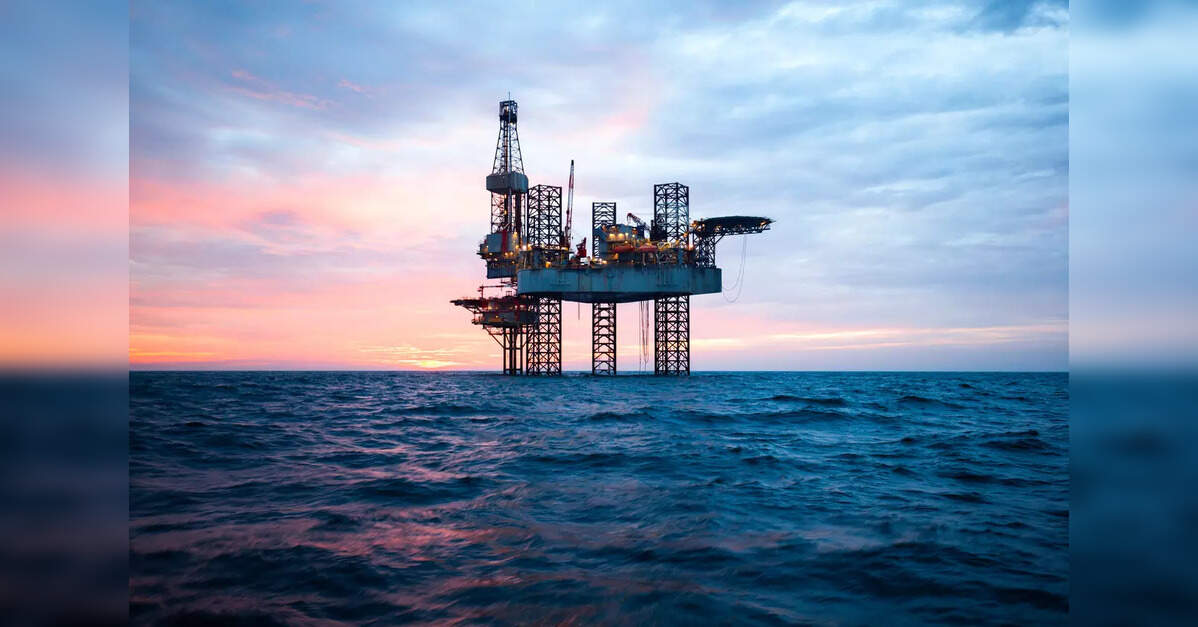
In a strategic move underscoring the enduring appeal of the Eastern Mediterranean basin, QatarEnergy has recently expanded its significant global footprint by acquiring a 27% participating interest in the North Cleopatra block offshore Egypt. This pivotal transaction, involving a stake from Shell, highlights QatarEnergy’s unwavering commitment to diversifying its upstream portfolio and securing future energy supplies, particularly in natural gas. For investors tracking the long-term trends in global energy, this acquisition represents more than just a deal; it signals a calculated bet on the region’s vast hydrocarbon potential and QatarEnergy’s strategic vision, even amidst prevailing market volatility.
QatarEnergy’s Eastern Mediterranean Gambit
QatarEnergy’s latest acquisition sees it taking a 27% stake in the North Cleopatra block, located in the frontier Herodotus basin within the Eastern Mediterranean Sea. This block is substantial, covering an area exceeding 3,400 square kilometers, with water depths reaching up to 2,600 meters. The deal positions QatarEnergy alongside a robust consortium: Shell, the current operator, retains a 36% participating interest, while Chevron also holds a 27% stake, and the Egyptian oil and gas firm Tharwa Petroleum Company rounds out the partnership with 10%. This collaboration with established international players and a national oil company mitigates risk and leverages collective expertise, a critical factor for successful exploration and development in deepwater frontier regions.
This move is entirely consistent with QatarEnergy’s broader global expansion strategy. The state-owned energy giant has been actively building a diversified portfolio across various basins, including significant investments in Guyana, Lebanon, Namibia, and South Africa. Its recent acquisition of additional exploration blocks offshore Egypt further cements its commitment to the region, signaling confidence in its geological prospectivity for both oil and natural gas. For investors, QatarEnergy’s methodical approach to securing high-quality, long-life assets in strategic locations offers a clear signal of where future energy supply growth is anticipated to originate, particularly for LNG, where Qatar is already a dominant global force.
Navigating Current Market Headwinds and Long-Term Value
The timing of such strategic investments often prompts investors to scrutinize the immediate market landscape. As of today, the energy market is experiencing significant downward pressure. Brent Crude currently trades at $90.38 per barrel, marking a sharp decline of 9.07% within the day, with its range extending from $86.08 to $98.97. WTI Crude is mirroring this bearish trend, standing at $82.59, down 9.41% for the session. This recent volatility is not an isolated event; Brent crude has plummeted by nearly 20% over the last two weeks, dropping from $112.78 on March 30 to its current level of $90.38 on April 17, 2026. Gasoline prices have also seen a downturn, now at $2.93, a 5.18% decrease today.
Despite these immediate market headwinds, QatarEnergy’s investment in North Cleopatra underscores a long-term perspective. Major upstream projects, especially in frontier deepwater basins, require multi-decade horizons for exploration, development, and production. These decisions are not swayed by daily or weekly price fluctuations but by fundamental supply-demand projections spanning well into the future. The Eastern Mediterranean, particularly with its substantial natural gas discoveries, is viewed as a critical future hub for gas supply to Europe and other markets. For investors, understanding this distinction between short-term commodity price movements and long-term asset value is crucial in evaluating the merits of such large-scale energy sector commitments.
Upcoming Catalysts Shaping the Outlook
The immediate future holds several key events that could influence the broader sentiment for oil and gas investments, indirectly impacting the perceived value and development timelines of projects like North Cleopatra. Investors will be keenly watching the OPEC+ Ministerial Meeting scheduled for April 19th. Any decisions regarding production quotas, particularly in light of recent price declines, could significantly shift the short-term crude price trajectory. A consensus on output adjustments could lend stability to the market, fostering a more predictable environment for long-term capital allocation.
Beyond OPEC+, the coming weeks will see regular data releases that provide critical insights into supply and demand dynamics. The API Weekly Crude Inventory report on April 21st and the EIA Weekly Petroleum Status Report on April 22nd will offer a snapshot of U.S. crude and product balances, crucial indicators for global supply health. Similarly, the Baker Hughes Rig Count on April 24th will provide a measure of drilling activity, signaling future production trends. These recurring data points, alongside their counterparts on April 28th, April 29th, and May 1st, collectively paint a picture of industry activity and market fundamentals that influence the capital available and strategic direction for companies investing in significant upstream plays like offshore Egypt.
Addressing Investor Questions on Future Value and Strategy
Our proprietary reader intent data reveals that many investors are grappling with fundamental questions about the future of energy markets. A common query this week is, “What do you predict the price of oil per barrel will be by the end of 2026?” While precise predictions are challenging, QatarEnergy’s actions suggest a belief in sustained long-term demand for hydrocarbons, particularly natural gas. Their investment strategy is clearly not based on oil staying at $90.38 or falling further in the short term, but rather on the multi-decade energy transition path that still requires significant fossil fuel supply.
Furthermore, questions about “OPEC+ current production quotas” highlight investor anxiety regarding market stability. The stability provided by major producers’ policies creates the necessary investment climate for projects in frontier basins. QatarEnergy’s choice to invest in the Eastern Mediterranean, a region with considerable natural gas reserves, aligns with the global energy transition narrative that sees gas as a bridging fuel. By securing these assets, QatarEnergy is not only diversifying its geographic risk but also positioning itself to meet anticipated growth in global LNG demand, leveraging its deep expertise in gas liquefaction and export. This proactive approach to securing future supply, irrespective of daily price swings, underscores a robust, long-term investment thesis for the company and the region.


