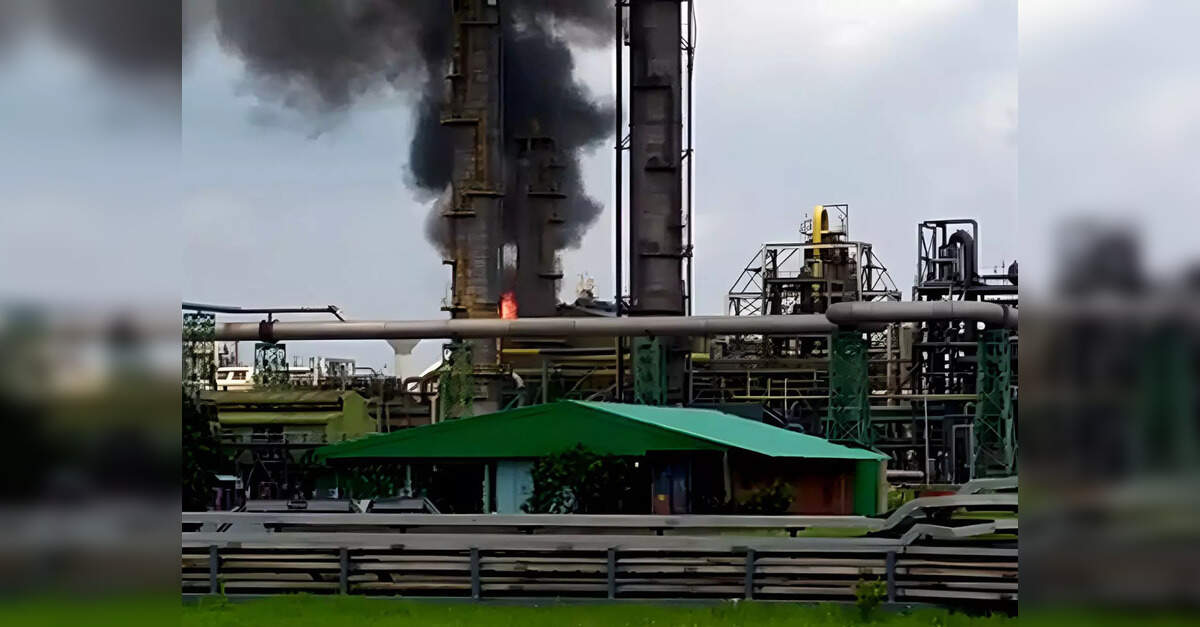
India is rapidly emerging as a formidable force in the global petrochemicals sector, a strategic pivot that promises to significantly reshape Asia’s intricate supply balance. This ambitious expansion, drawing parallels to China’s earlier trajectory, signals a determined push towards greater self-sufficiency in essential chemicals – the building blocks for countless everyday products from plastics to automotive components. For investors tracking the energy and chemicals landscape, India’s move represents both a profound opportunity within its burgeoning domestic market and a complex challenge for established regional exporters, necessitating a re-evaluation of long-held supply chain assumptions and investment strategies across the Asia-Pacific.
Asia’s Petrochemical Supply Dynamic Under Pressure
The strategic drive by both China, the world’s largest chemical consumer, and India, the third largest, to reduce import dependency is fundamentally altering the global petrochemical map. India’s substantial capacity additions are poised to intensify competition across the broader Asian industry in the coming years, mirroring the supply overhang already created by China’s prior expansions. This initiative is not merely a short-term trend; India’s major investment plans, particularly the estimated $25 billion committed by public sector undertakings, are largely considered “sticky” due to their deep integration with existing refinery expansions. An additional $12 billion in planned private sector capital expenditure, while potentially more flexible, still underscores the scale of this commitment. For regional petrochemical exporters who traditionally supplied over half of China and India’s chemical imports, this shift presents a direct challenge. The economic viability of redirecting these significant volumes to alternative markets, such as the United States, is questionable given existing tariff barriers, suggesting potential negative impacts on earnings and a likely catalyst for consolidation within the industry.
Navigating Volatile Crude Markets and Feedstock Costs
The macroeconomic environment and crude price volatility play a critical role in the profitability and strategic decisions within the petrochemical sector. As of today, Brent crude trades at $90.38, reflecting a significant 9.07% decline within the day, with prices fluctuating between $86.08 and $98.97. This sharp intraday movement contributes to a broader trend seen over the past two weeks, where Brent has shed $22.40, a nearly 20% drop from $112.78 on March 30th. WTI crude mirrors this sentiment, currently at $82.59, down 9.41%, while gasoline prices have also felt the pressure, sitting at $2.93, a 5.18% decrease. This downward price pressure on crude, the primary feedstock for many petrochemical processes, creates a complex scenario. While lower input costs could theoretically boost margins for integrated producers, particularly those with access to cheaper domestic crude, it simultaneously signals potential weakness in global demand, which could exacerbate the existing structural overcapacity in the Asian petrochemical market. Investors must closely monitor these price movements and their implications for feedstock economics and product pricing power.
India’s Domestic Demand: A Critical Mitigating Factor
Despite the looming specter of regional oversupply, India’s petrochemical sector benefits significantly from robust domestic demand. Unlike many other Asian economies facing sluggish recovery, India’s internal consumption provides a crucial buffer for its expanding production capabilities. The country is on track to surpass the United States and claim the position of the world’s second-largest consumer of polyethylene, a foundational plastic material used across countless industries. This strong internal market demand offers a degree of resilience for Indian producers, allowing them to absorb a substantial portion of their increased output without immediately flooding export markets or relying heavily on international demand recovery. For investors, this highlights the importance of differentiating between companies with a strong domestic market focus versus those heavily reliant on regional exports when evaluating petrochemical investment opportunities in Asia. The narrative of self-sufficiency for India is not solely about production; it’s intrinsically linked to its immense and growing consumer base.
Forward Outlook: Upcoming Events and Investor Priorities
The trajectory of the petrochemical market, and indeed the broader energy complex, remains subject to key upcoming events and prevailing investor sentiment. Our proprietary reader intent data reveals a keen investor focus on future oil price predictions, with many asking “what do you predict the price of oil per barrel will be by end of 2026?” and “What are OPEC+ current production quotas?” These questions underscore the uncertainty surrounding future supply-demand balances and the critical role of OPEC+ decisions. Investors are keenly awaiting the OPEC+ Full Ministerial Meeting on April 19th. The outcome of these discussions could significantly influence crude supply levels and, consequently, the feedstock prices for petrochemicals, impacting margins across the value chain. Further insights into market fundamentals will emerge from the API Weekly Crude Inventory on April 21st and the EIA Weekly Petroleum Status Report on April 22nd, providing critical data points on current demand and supply balances. These reports, alongside the Baker Hughes Rig Count on April 24th, offer crucial short-term indicators for investors assessing the immediate market environment. In an era where self-sufficiency goals in India and China are intensifying structural overcapacity, particularly amid a lacklustre global demand recovery, these forward-looking data points and policy decisions are paramount for investors seeking to optimize their portfolios and identify resilient assets within the evolving petrochemical landscape.


