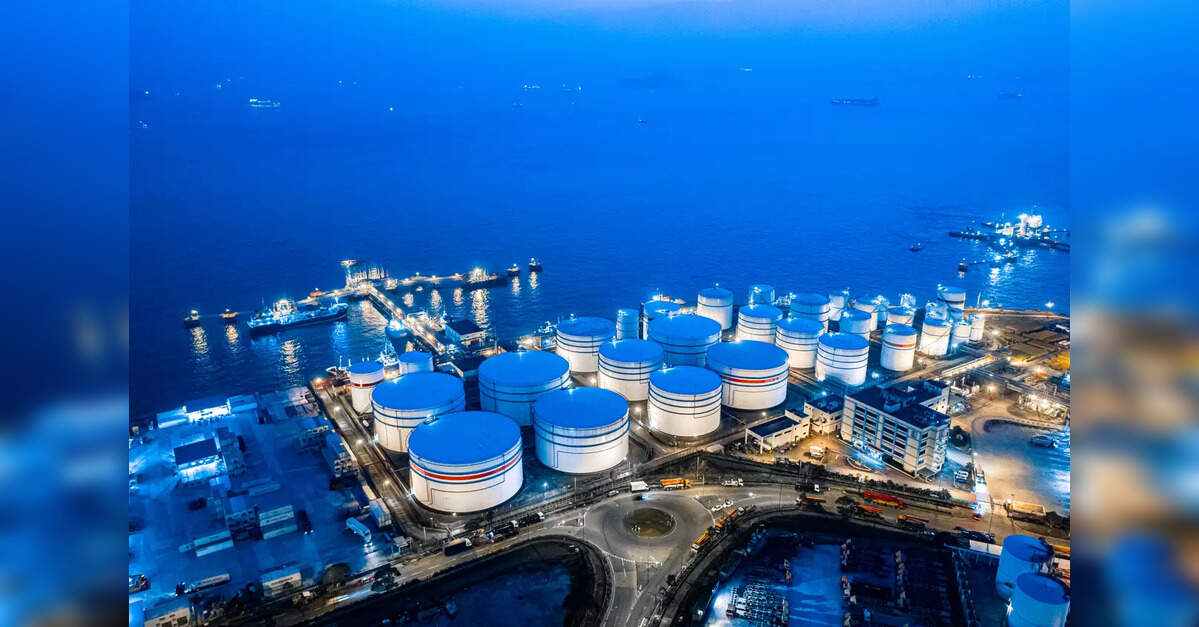
India’s natural gas sector is charting an ambitious course towards greater transparency and efficiency, a development underscored by the recent Memorandum of Understanding (MoU) between the Indian Gas Exchange (IGX) and PRISMA European Capacity Platform GmbH (PRISMA). This collaboration, signed in Leipzig, is not merely a procedural agreement; it signifies a strategic pivot designed to modernize India’s gas market infrastructure. For global energy investors, this pact represents a critical step towards establishing a more predictable and accessible environment, fostering confidence in a market poised for significant growth amidst a dynamic global energy landscape.
Catalyzing India’s Gas Market Modernization
The IGX-PRISMA MoU is fundamentally about enhancing market mechanisms through digital innovation and shared expertise. The core objective is to explore advanced digital solutions for the booking and trading of natural gas and LNG, alongside fostering extensive knowledge exchange and regulatory dialogue. This initiative will see joint workshops, training programs, and capacity-building initiatives tailored for regulators, operators, and market participants, directly addressing the foundational elements required for a mature energy market. By adopting best practices in digital platform development and exchanging insights on regulatory frameworks, India aims to cultivate a gas market characterized by superior transparency and operational efficiency. IGX’s Managing Director & CEO, Rajesh Kumar Mediratta, aptly described India’s natural gas sector as being at a “turning point,” with digital solutions being instrumental for transparent and efficient growth. This commitment to structural improvement is a powerful signal to investors seeking long-term stability and growth opportunities in emerging energy markets.
Navigating Global Volatility with Strategic Domestic Growth
While India builds out its domestic gas market infrastructure, the global energy markets continue to demonstrate significant volatility, demanding careful consideration from investors. As of today, Brent crude trades at $90.38, reflecting a notable 9.07% decline within the day, with its trading range spanning $86.08 to $98.97. Similarly, WTI crude has seen a sharp 9.41% drop to $82.59, moving within a day range of $78.97 to $90.34. This immediate downturn follows a broader trend: our proprietary data indicates Brent crude has shed 18.5% over the past 14 days, falling from $112.78 on March 30th to $91.87 on April 17th. This recent price erosion underscores persistent anxieties around global demand and supply dynamics. However, India’s strategic push for a more transparent and efficient gas market, as exemplified by the IGX-PRISMA MoU, positions it as a market increasingly capable of weathering such global price swings. By strengthening its domestic gas ecosystem, India aims to enhance energy security and provide a more stable, predictable environment for gas-centric investments, distinguishing it from the often-turbulent crude oil sector.
Upcoming Events and Their Influence on India’s Energy Trajectory
The immediate future holds several critical events that will shape global energy sentiment, which, while primarily focused on crude, will inevitably ripple into broader energy investment decisions, including those impacting India’s burgeoning gas market. Investors are keenly awaiting the outcomes of the OPEC+ Joint Ministerial Monitoring Committee (JMMC) meeting scheduled for tomorrow, April 18th, followed by the Full Ministerial meeting on April 19th. These gatherings hold the potential to redefine production quotas and significantly influence global crude supply and pricing. Beyond OPEC+, further insights into U.S. supply-demand dynamics will emerge from the API Weekly Crude Inventory report on April 21st and the EIA Weekly Petroleum Status Report on April 22nd, with subsequent reports scheduled for April 28th and 29th, respectively. For India, a more stable global crude price environment could alleviate pressure on LNG import costs, indirectly supporting the development of its domestic gas market. The IGX-PRISMA initiative, by creating a robust internal market structure, helps ensure that India’s gas sector can capitalize on these global shifts more effectively, attracting investment regardless of short-term crude volatility by offering transparent access and operational certainty.
Addressing Investor Intent: Clarity, Growth, and Predictability
Our proprietary reader intent data offers a direct window into the pressing questions occupying investors’ minds this week. A recurring theme revolves around long-term price predictions, with questions such as “what do you predict the price of oil per barrel will be by end of 2026?” highlighting a desire for foresight amidst current market uncertainty. Simultaneously, there’s significant interest in specific company performance, evidenced by inquiries like “How well do you think Repsol will end in April 2026,” alongside a sharp focus on supply-side fundamentals, particularly “What are OPEC+ current production quotas?” These questions collectively point to an investor base seeking clarity, stability, and identifiable growth catalysts. The IGX-PRISMA collaboration directly addresses these underlying needs for the Indian gas market. By fostering transparent trading, enhancing market access, and streamlining regulatory frameworks, this initiative mitigates key investment risks and provides a clearer path for capital deployment. For investors looking to diversify beyond traditional crude plays, the structural improvements in India’s gas sector offer a compelling narrative of predictable growth and enhanced market liquidity, providing a robust counterpoint to the broader market’s immediate uncertainties and offering a long-term investment horizon supported by foundational market reforms.


