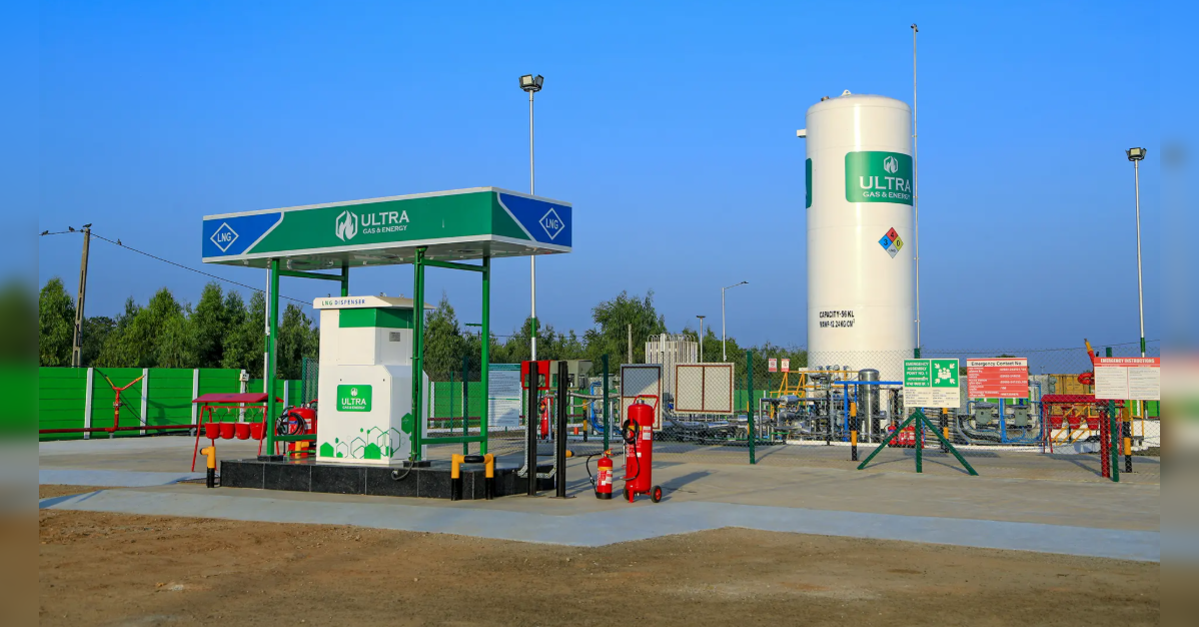
Essar’s venture, Ultra Gas & Energy Ltd (UGEL), has recently cemented its position as a dominant force in India’s emerging liquefied natural gas (LNG) autofuel market. This significant achievement, marked by becoming the nation’s largest private operator with the highest dispensing LNG refuelling outlets, underscores a pivotal shift in India’s logistics sector towards cleaner, more sustainable energy solutions. For investors, UGEL’s rapid expansion and substantial investment plans signal a compelling growth narrative within the broader global energy transition, offering a unique play on decarbonization in one of the world’s fastest-growing economies. This analysis delves into the strategic implications of Essar’s move, examining its potential against current market dynamics, upcoming industry catalysts, and key investor considerations.
Essar’s Strategic Foothold in India’s Green Logistics
Ultra Gas & Energy Ltd (UGEL), a key Essar entity, has solidified its leadership in India’s private LNG refuelling sector, boasting six operational stations strategically positioned across the nation’s vital freight corridors. These high-capacity outlets, located in Bhilwara (Rajasthan), Anand (Gujarat), Chakan-Pune (Maharashtra), Jalna (Maharashtra), Toranagallu (Karnataka), and Vallam (Tamil Nadu), are more than mere dispensing points; they represent critical nodes in a nascent, cleaner logistics network. Each station is designed with a scalable capacity of 50 tonnes, enabling the efficient refuelling of up to 600 LNG trucks monthly. This operational scale translates directly into substantial environmental benefits, with each station projected to reduce up to 66,000 tonnes of CO₂ emissions annually. Collectively, UGEL’s current network is set to prevent one million tonnes of CO₂ from entering the atmosphere each year, a testament to the transformative potential of LNG in heavy-duty transportation. This aggressive rollout positions Essar at the forefront of India’s commitment to reducing carbon footprint within its burgeoning industrial and logistics sectors, aligning perfectly with global decarbonization trends and creating a robust foundation for future growth in the sustainable energy space.
Ambitious Expansion and Investment Outlook for LNG Infrastructure
UGEL’s current success is merely a stepping stone in its grander vision: establishing India’s largest LNG fuelling network, targeting 100 retail outlets nationwide. This ambitious expansion plan is backed by a substantial planned investment of ₹900 crore, signaling Essar’s deep commitment to the clean-tech sector. The rollout is already underway in strategically important states, including Gujarat, Tamil Nadu, Maharashtra, Rajasthan, Haryana, Punjab, Karnataka, Odisha, Chhattisgarh, and Jharkhand – regions characterized by high-density logistics traffic. This targeted approach ensures maximum impact in accelerating the critical shift from conventional diesel to cleaner, more efficient LNG for long-haul trucking. From an investor perspective, this significant capital deployment into future-proof infrastructure presents a compelling opportunity. While some investors might be asking about the long-term trajectory of traditional crude oil prices, particularly “what do you predict the price of oil per barrel will be by end of 2026?”, Essar’s investment in LNG provides a strategic hedge. By focusing on a fuel that offers both environmental advantages and a stable, often more predictable cost structure compared to volatile crude derivatives, UGEL is building resilience. This strategy diversifies Essar’s energy portfolio and positions it to capture market share in a segment driven by sustainability mandates and a growing demand for cost-effective, cleaner transportation solutions, regardless of short-term fluctuations in global crude markets.
Navigating Market Dynamics Amidst Crude Volatility
The strategic build-out of LNG infrastructure by Essar’s UGEL unfolds against a backdrop of significant shifts in the global energy markets. As of today, Brent crude trades at $90.38, reflecting a notable -9.07% drop within the day, with its range fluctuating between $86.08 and $98.97. Similarly, WTI crude stands at $82.59, down -9.41%, trading in a day range of $78.97-$90.34. This immediate volatility follows a broader trend, with Brent having declined by over 18% from $112.78 on March 30th to $91.87 just yesterday. Gasoline prices have also seen a dip, currently at $2.93, down -5.18% for the day. Such pronounced swings in crude prices inevitably influence the economic calculus for alternative fuels like LNG. When crude prices are high, the cost advantage of LNG for transportation becomes more pronounced, accelerating adoption. Conversely, a sustained period of lower crude could narrow this economic gap, though the environmental imperative and regulatory push for cleaner fuels remain strong drivers. Investors, perhaps pondering questions like “How well do you think Repsol will end in April 2026?”, are keenly aware of how macro energy trends impact even niche markets. Essar’s aggressive expansion into LNG, despite recent crude price dips, signals a long-term conviction in the fuel’s role, driven not just by economics but by the irreversible global push towards decarbonization. This positions UGEL as a key player in an evolving energy landscape, offering a stable growth trajectory independent of the more speculative short-term crude movements.
Forward-Looking Catalysts and Strategic Investor Insights
The trajectory of Essar’s LNG venture will be significantly shaped by both its internal expansion efforts and the broader macro energy environment, heavily influenced by upcoming industry events. The next 14 days are packed with critical catalysts, starting with the OPEC+ Joint Ministerial Monitoring Committee (JMMC) meeting today, April 18th, followed by the full OPEC+ Ministerial Meeting tomorrow, April 19th. These gatherings are pivotal; any decisions regarding production quotas will directly impact global crude supply and, consequently, price stability. Investors, frequently asking “What are OPEC+ current production quotas?”, understand that these decisions have ripple effects, influencing the competitive landscape for all energy sources, including LNG. A tightening of quotas could push crude prices higher, bolstering LNG’s economic appeal, while an increase in supply might exert downward pressure. Further insights into demand and supply dynamics will come from the API Weekly Crude Inventory reports on April 21st and 28th, and the EIA Weekly Petroleum Status Reports on April 22nd and 29th. These reports provide a granular view of market health and potential shifts in demand. Additionally, the Baker Hughes Rig Count on April 24th and May 1st will offer an indication of future supply-side activity. For investors evaluating Essar’s long-term play, monitoring these macro indicators is crucial. While UGEL’s strategy is rooted in the fundamental shift towards cleaner fuels and India’s inherent demand growth, the interplay of global crude policy and supply-demand metrics will continue to inform the pace and profitability of this transition. Essar’s commitment to building a resilient, green energy infrastructure positions it well to capitalize on both the decarbonization imperative and the strategic opportunities presented by a dynamic global energy market.


