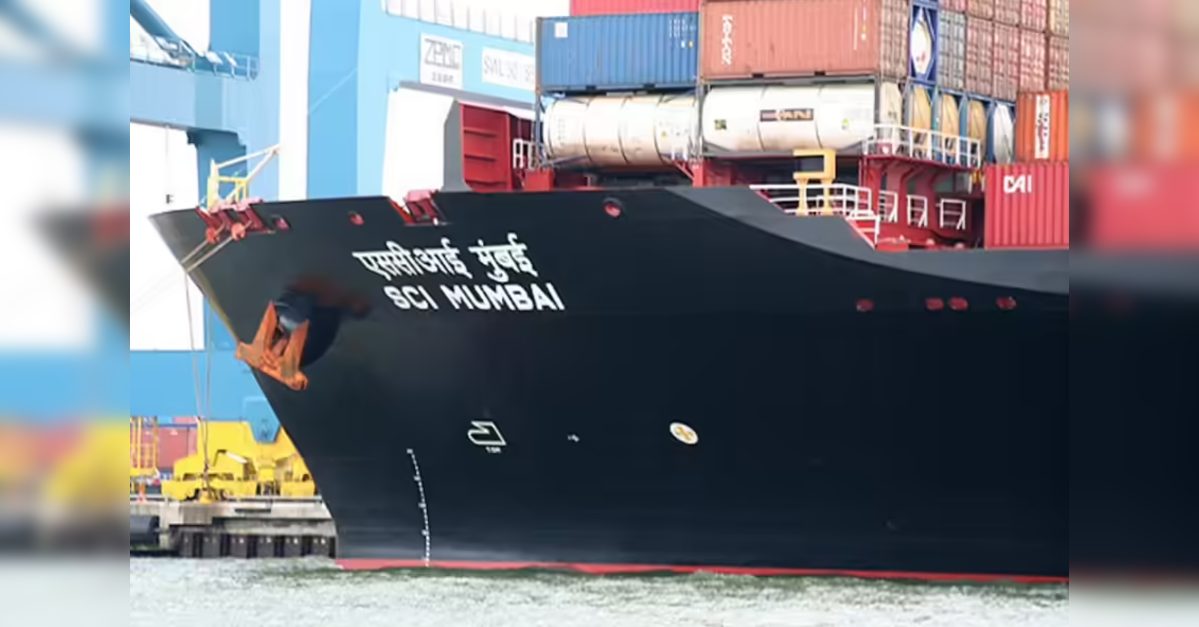
India’s leading public sector oil and gas entities are embarking on a strategic joint venture, signaling a significant shift in the nation’s energy logistics and a bold move towards self-reliance. Shipping Corporation of India Ltd (SCI) is joining forces with Indian Oil Corporation Ltd (IOCL), Bharat Petroleum Corporation Ltd (BPCL), and Hindustan Petroleum Corporation Ltd (HPCL) to establish a new entity focused on procuring ships from local yards. This initiative, formalized through a recent Memorandum of Understanding signed at Bhavnagar, is far more than a simple procurement agreement; it’s a foundational step towards fortifying India’s energy security, bolstering domestic shipbuilding capabilities under the “Aatmanirbhar Bharat” initiative, and crucially, curtailing the substantial outflow of foreign exchange currently spent on international shipping freight.
The Strategic Imperative: Fueling Self-Reliance and Forex Savings
The joint venture represents a calculated response to India’s considerable reliance on foreign-flagged vessels for its vast import cargo needs. Annually, India’s shipping freight bill is estimated to be between $75 billion and $80 billion. A significant portion of this immense sum is paid in foreign exchange, primarily due to the necessity of hiring non-Indian ships for hauling Free-on-Board (FOB) imports, a direct consequence of an inadequate supply of Indian-flagged vessels. This new collaboration is designed to directly address this economic drain. SCI brings its extensive technical, operational, and regulatory expertise to the table, while IOCL, BPCL, and HPCL commit to providing crucial cargo volumes through long-term charter contracts. This integrated approach not only guarantees demand for Indian-built ships but also aims to localize a critical component of the energy supply chain, thereby reducing the “outgo” of foreign currency and strengthening India’s macro-economic stability. By fostering domestic shipbuilding, the initiative also promises to create jobs, transfer technology, and develop a more resilient indigenous maritime ecosystem.
Navigating Market Headwinds: Geopolitical Spillovers and Investor Focus
The timing of this strategic move is particularly pertinent given the current volatility in global energy markets. As of today, Brent Crude trades at $98.1 per barrel, marking a 1.3% decline, with an intraday range of $97.92 to $98.67. WTI Crude similarly stands at $89.58, down 1.74%, fluctuating between $89.52 and $90.26. This recent downturn follows a notable trend, with Brent having shed $14, or 12.4%, from $112.57 just two weeks ago. Such price swings underscore the inherent unpredictability of the global oil landscape. Investors are keenly watching these dynamics, with frequent inquiries about “OPEC+ current production quotas” and “the current Brent crude price” highlighting a collective focus on supply stability and price drivers. India’s domestic tanker procurement initiative, while a long-term play, offers a significant hedge against such external market volatility. By increasing control over its shipping logistics, India can better insulate its energy import costs from the fluctuating spot charter rates driven by geopolitical events and supply-demand imbalances, a key concern reflected in investor sentiment.
Project Execution and Overcoming Bottlenecks: A Look Ahead
While the joint venture’s vision is clear, its path forward is not without historical challenges. A previous plan to order 10 medium-range (MR) oil tankers for state-owned oil companies, despite a directive from the Prime Minister’s Office to initiate the process by June of the preceding year, failed to gain traction. The tender process, spearheaded by IOCL as the nodal agency for all three oil PSUs, encountered significant opposition from the Indian National Shipowners’ Association (INSA). The lobby group argued that over 30 MR tankers already operating under the Indian flag were sufficient to meet the oil companies’ requirements. This new joint venture structure, however, aims to circumvent such historical roadblocks by integrating the demand (from IOCL, BPCL, HPCL) directly with the supply development (via SCI’s expertise and commitment to local yards). The upcoming OPEC+ Ministerial Meeting, scheduled for April 18th, and subsequent weekly API and EIA inventory reports on April 21st and 22nd, respectively, will provide fresh insights into global supply-demand balances. While these events don’t directly impact the JV’s immediate execution timeline, they continuously shape the volatile market environment this domestic initiative seeks to navigate and mitigate risks from, reinforcing the strategic urgency for self-sufficiency in energy logistics.
Investment Implications and Long-Term Outlook
For investors, this joint venture presents a multi-faceted opportunity and a strong signal of India’s long-term energy strategy. For Shipping Corporation of India, participation in this JV promises stable, long-term revenue streams backed by committed cargo contracts from the oil majors, leveraging its core expertise in maritime operations. For IOCL, BPCL, and HPCL, the move represents enhanced energy security, greater control over their supply chains, and significant potential for long-term cost efficiencies by reducing dependence on foreign currency payments for freight. Furthermore, the initiative is a substantial boost for Indian shipyards, guaranteeing a pipeline of orders and fostering technological advancement and capacity expansion within the domestic shipbuilding sector. This commitment to “Aatmanirbhar Bharat” in a critical infrastructure sector could unlock significant value across the entire maritime and energy value chain. Looking ahead, the success of this initial phase with MR tankers could pave the way for similar ventures in other vessel categories, further cementing India’s ambition to build a robust, self-reliant shipping ecosystem capable of supporting its burgeoning energy demands.


