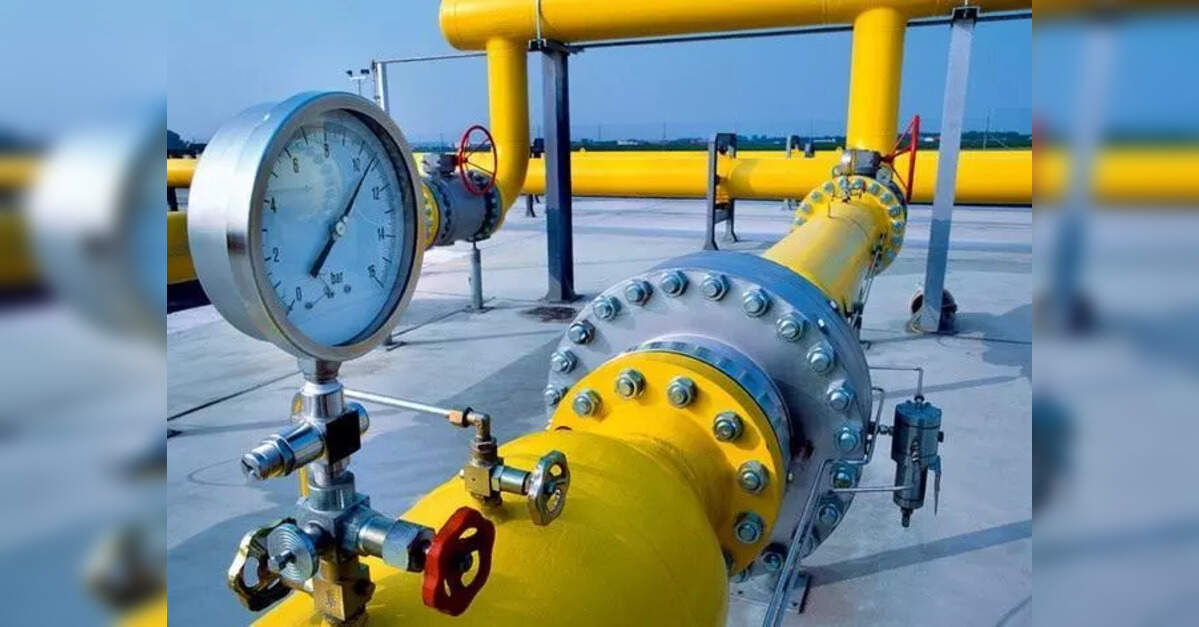
India’s energy landscape is witnessing a significant strategic pivot, with Gas Authority of India Limited (GAIL) embarking on an ambitious infrastructure expansion set to redefine natural gas distribution across the nation. This move, centered on leveraging Adani Group’s Dhamra LNG terminal and integrating it into a comprehensive pipeline network, represents a critical step towards bolstering energy security and meeting escalating industrial and consumer demand. For investors tracking the subcontinent’s burgeoning energy sector, GAIL’s latest initiative signals robust long-term growth potential in gas infrastructure, offering a compelling narrative of strategic asset development and demand-driven expansion.
De-risking India’s Gas Supply Chain and Driving Demand
GAIL’s plan to pump Liquefied Natural Gas (LNG) from Adani’s Dhamra port in Odisha through its pipeline connecting Nagpur to Jharsuguda is more than just a logistical upgrade; it’s a strategic de-risking maneuver for India’s gas supply. By establishing a two-way gas flow capability, sourcing LNG from both the eastern (Dhamra) and western (Dahej and Dabhol) coasts, GAIL significantly enhances supply reliability and operational flexibility. This dual-coast strategy ensures resilience against potential disruptions at a single point of entry and helps maintain optimal pressure across the extensive pipeline network. The newly laid Mumbai-Nagpur pipeline, extending further to Jharsuguda, is poised to become the backbone of this integrated system, with the Mumbai-Nagpur section expected to be charged within a month, bringing initial supplies to Butibori. The subsequent 2-3 months will see the full extension to Jharsuguda operational, unlocking gas access for a wide array of industries and consumers across central and eastern India. This expansion directly addresses the foundational requirement for sustained economic growth: reliable and affordable energy, positioning GAIL as a pivotal player in India’s energy transition.
Adani’s Strategic Play and Terminal Utilization Upside
The Adani Group’s Dhamra LNG terminal stands as a critical asset in this strategic partnership. With an impressive handling capacity of 5 million tonnes per annum (MTPA) and a peak capability of 6.5 MTPA, the terminal possesses substantial untapped potential. Currently, its utilization hovers around 2.3 MTPA, meaning less than half of its capacity is being leveraged. GAIL’s enhanced commitment to sourcing LNG from Dhamra, alongside existing procurements by Indian Oil Corporation Limited (IOCL), promises to significantly boost this utilization rate. For investors, this presents a clear upside: increased throughput at Dhamra translates directly into higher revenue generation for Dhamra LNG Terminal Private Limited, a wholly-owned subsidiary of Adani-Total Private Limited. The Adani Group’s broader investment strategy, which includes an additional Rs 10,000 crore for port expansion, underscores a long-term vision for infrastructure development that aligns perfectly with GAIL’s gas distribution ambitions. As India’s demand for cleaner fuels grows, facilities like Dhamra will become increasingly vital, offering a clear growth trajectory for investors in Adani’s energy infrastructure portfolio.
Navigating Market Headwinds: Brent, WTI, and Investor Sentiment
The macro energy environment remains a critical determinant for investor sentiment surrounding large-scale infrastructure projects. As of today, Brent Crude trades at $98.36, reflecting a 1.04% decline within the day’s range of $97.92-$98.67. Similarly, WTI Crude stands at $89.96, down 1.33% with a day range of $89.57-$90.26. This recent price action follows a more significant downward trend for Brent, which has shed $14, or 12.4%, from $112.57 on March 27th to $98.57 on April 16th. Such volatility naturally prompts questions from our readership, with a recurring theme being, “What is the current Brent crude price and what model powers this response?” This indicates a keen investor focus on crude price drivers and their potential ripple effects. While natural gas prices operate on different fundamentals, a sustained downturn in crude can influence broader energy sector investment appetite and the competitive landscape for gas as an industrial feedstock. However, the intrinsic demand for natural gas in India, driven by industrialization and environmental mandates for cleaner fuels, often acts as a robust counter-cyclical force, underpinning the long-term viability of projects like GAIL’s pipeline expansion despite short-term crude price fluctuations.
Forward Catalysts: Upcoming Events and Project Milestones
Looking ahead, several key events will shape the broader energy market, directly or indirectly impacting the investment outlook for gas infrastructure. The upcoming OPEC+ meetings, with the Joint Ministerial Monitoring Committee (JMMC) convening on April 18th and the Full Ministerial Meeting on April 20th, are particularly significant. Any decisions regarding production quotas will inevitably influence global crude supply and pricing, setting the tone for the entire energy complex. Investors are actively asking, “What are OPEC+ current production quotas?” underscoring the importance of these decisions. Concurrently, weekly data releases such as the Baker Hughes Rig Count (April 17th, April 24th), API Weekly Crude Inventory (April 21st, April 28th), and EIA Weekly Petroleum Status Report (April 22nd, April 29th) will provide granular insights into supply-demand dynamics. Closer to home, the operational milestones for GAIL’s pipeline project — specifically the charging of the Nagpur-Mumbai section in the coming month and the completion of the Jharsuguda extension in 2-3 months — serve as direct, tangible catalysts for value creation. These developments will progressively bring new regions online for gas consumption, translating directly into increased throughput and revenue streams for GAIL and its partners, irrespective of short-term crude market gyrations.


