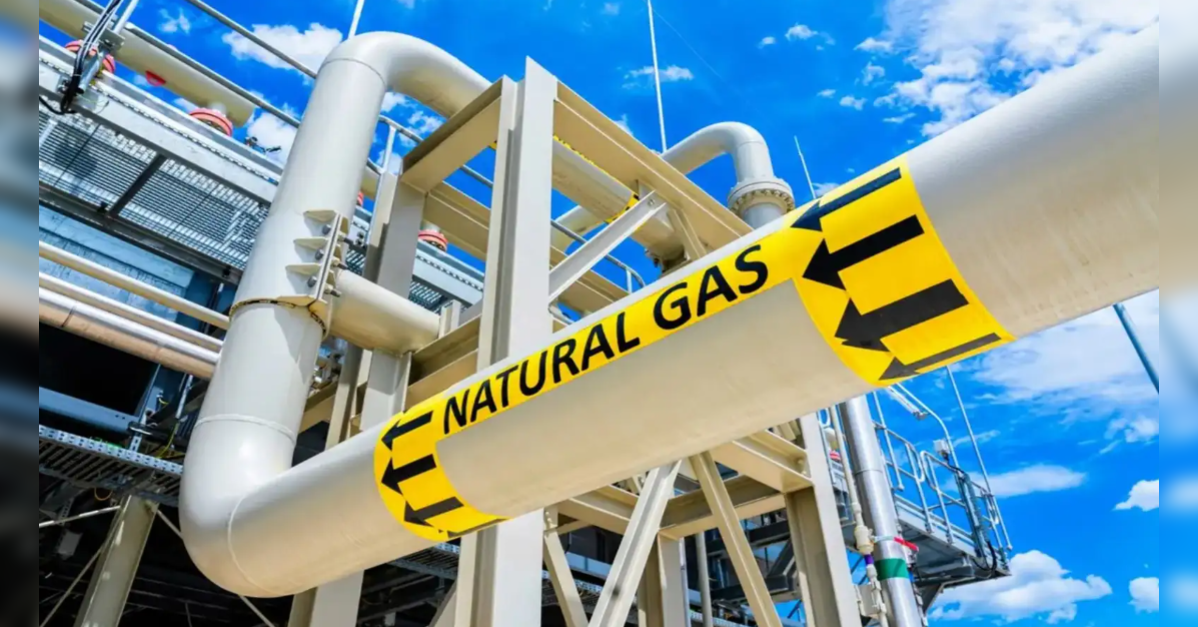
Natural Gas: The Indispensable Bridge in a Shifting Energy Landscape
As the global energy transition accelerates, the narrative often focuses on the rapid expansion of renewables and the eventual decline of all fossil fuels. However, a deeper look at long-term projections reveals a more nuanced picture, particularly concerning natural gas. While coal and oil are indeed facing structural headwinds, natural gas is uniquely positioned to not only maintain but increase its share in the energy mix of key global economies, including the United States, China, and India, through 2050. This isn’t merely a byproduct of inertia; it’s a strategic necessity driven by gas’s role as a cleaner alternative to coal and a reliable, flexible complement to intermittent renewable sources. For investors, understanding this critical distinction is paramount to identifying resilient opportunities amidst broader energy sector volatility.
The Structural Case for Gas Growth in Major Economies
Proprietary analysis of sector updates confirms that natural gas stands alone among fossil fuels in projecting an increased energy mix contribution for the US, China, and India by 2050. This trend underscores its designation as a “transition fuel.” Despite aggressive renewable capacity build-out worldwide, fossil fuels are still expected to constitute over 50% of the global energy basket by mid-century, with renewables rising from a mere 4% today to approximately 20%. In India, for instance, where fossil fuels currently dominate at 77% and renewables are a nascent 2%, the shift by 2050 is projected to see fossil fuels drop to 66% and renewables climb to 16%. Within this evolving landscape, natural gas offers a cleaner, more flexible alternative to coal, enabling countries to pursue climate targets without compromising energy security. The scalability and commercial challenges inherent in a direct, immediate leap from coal to renewables make gas an essential bridge, a factor that cannot be overstated for long-term energy planning and investment.
Navigating Current Market Dynamics and the Gas Investment Thesis
While the long-term outlook for natural gas shines, the broader energy market remains subject to short-term fluctuations. As of today, Brent crude trades at $98.17, reflecting a 1.23% decline, with its daily range spanning $97.92 to $98.67. Similarly, WTI crude is at $89.74, down 1.57% within a range of $89.57 to $90.26. Gasoline prices also saw a marginal dip to $3.08, down 0.32%. This immediate snapshot comes after a more significant trend: Brent crude has experienced a notable 12.4% drop over the past 14 days, falling from $112.57 on March 27th to $98.57 on April 16th. Such volatility in crude markets highlights the contrast with natural gas’s more stable, structurally driven demand growth. For investors, this divergence suggests that while crude investments remain subject to geopolitical shifts and immediate supply-demand imbalances, the natural gas sector offers a more predictable growth trajectory underpinned by fundamental energy transition requirements.
Upcoming Catalysts and Addressing Investor Concerns
Our proprietary intent data reveals that investors are actively seeking clarity on key market drivers, with questions frequently centering on OPEC+ production quotas and the real-time dynamics of crude prices. This acute focus underscores the immediate impact of supply-side decisions on market sentiment. The upcoming energy calendar is packed with events that will shape near-term sentiment: the Baker Hughes Rig Count on April 17th and 24th will offer insights into drilling activity, while the OPEC+ JMMC meeting on April 18th, followed by the Full Ministerial meeting on April 20th, are critical for understanding future crude supply policies. Additionally, the weekly API and EIA inventory reports on April 21st/22nd and April 28th/29th will provide vital data on petroleum stocks. While these events primarily influence crude markets, they are part of the broader energy ecosystem. For natural gas, the forward-looking analysis hinges less on immediate cartel decisions and more on the sustained implementation of energy transition policies and infrastructure build-out. Investors must consider how these short-term crude catalysts might indirectly affect capital flows and broader energy sentiment, even as the long-term gas thesis remains robust.
Policy, Infrastructure, and Unlocking Gas’s Full Potential
The projected rise of natural gas in global energy mixes is not an automatic outcome; it is heavily contingent on strategic policy and infrastructure development. The lag in coal-to-gas substitution in regions like India, compared to the favorable transitions seen in the US, Europe, and Southeast Asia, highlights the necessity of proactive measures. Without systemic flexibility, comprehensive gas market reforms, and scaled-up storage capacity, even well-intentioned climate ambitions risk falling short. Government schemes, such as those that have successfully driven the shift from traditional biomass to LPG in India, demonstrate the power of targeted interventions. Extending such support through tax and pricing reforms for natural gas could unlock its full potential as the “cleanest fossil fuel,” playing a crucial balancing role in achieving net-zero targets. For investors, this translates into identifying companies that are well-positioned to capitalize on these policy tailwinds, whether through upstream production, midstream infrastructure, or downstream distribution, particularly in markets poised for significant coal-to-gas switching.


