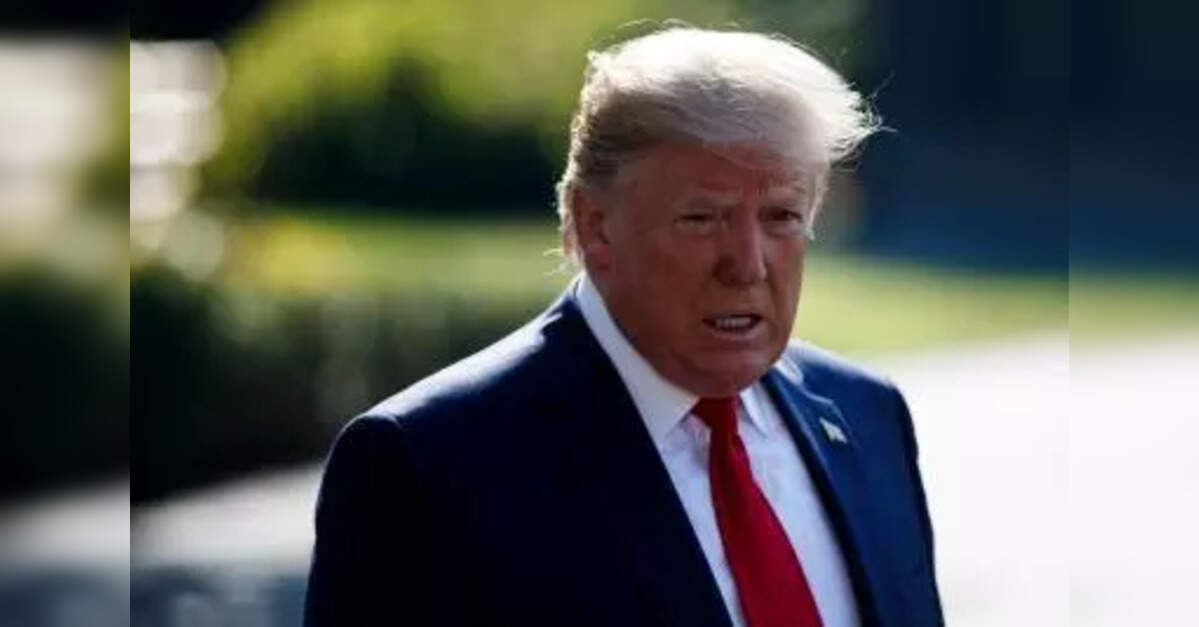
The global oil market faces a renewed wave of geopolitical uncertainty as former President Trump escalates rhetoric against nations purchasing Russian oil and threatens significant tariffs on China. These pronouncements, challenging existing alliances and trade relationships, introduce a complex layer of risk that oil and gas investors must carefully navigate. As the world grapples with persistent geopolitical tensions, the prospect of new, far-reaching economic sanctions and tariffs could profoundly reshape energy trade flows, impact crude prices, and challenge the stability of international energy supply chains. For investors, understanding the feasibility and potential ripple effects of these threats is paramount in positioning portfolios for future volatility.
Geopolitical Pressures and the Intricacies of Energy Trade
The recent statements by former President Trump signal a potential paradigm shift in the approach to sanctioning Russia, moving beyond direct measures to target major buyers. His criticism of NATO allies for “shocking” purchases of Russian oil, coupled with the imposition of punitive tariffs on India (a 25% punitive tariff on top of a 25% reciprocal tariff), underscores a growing willingness to apply economic pressure across a broader spectrum of countries. The most significant threat looms over China, with a proposed 50% to 100% tariff if Beijing does not cease its purchases of Russian oil, predicated on the assertion that China holds substantial influence over Moscow.
However, the practical implementation of such sweeping measures faces considerable hurdles. European Union members, 22 of which are also NATO members, collectively engaged in $79.1 billion worth of goods trade with Russia last year. Crucially, $42.13 billion of these were imports, with fuel accounting for a substantial $26.17 billion. Similarly, NATO member Turkiye recorded $52.6 billion in trade with Russia. These figures reveal deeply entrenched economic relationships that cannot be easily severed without significant domestic economic repercussions. The sheer scale of these trade volumes, far surpassing India’s $68.7 billion total trade with Russia (with imports at $63.84 billion), highlights the immense political and economic capital required to enforce such widespread disengagement, a reality that investors frequently consider when assessing the longevity of sanctions regimes.
Market Volatility and the Price of Uncertainty
The escalating geopolitical rhetoric inevitably translates into heightened market volatility. As of today, Brent crude trades at $98.21 per barrel, down 1.19% from yesterday’s close, while WTI sits at $89.87, a 1.43% decline. This modest intraday pullback occurs within a broader context: Brent crude has seen a significant correction over the past two weeks, shedding approximately $14 from its high of $112.57 on March 27th to $98.57 yesterday. While recent inventory reports and broader economic sentiment often drive short-term movements, the specter of new, substantial tariffs on major consumers like China introduces a formidable risk premium that can quickly reverse trends.
Investors are keenly focused on real-time Brent crude prices and the underlying models that power these responses, reflecting a critical need for accurate data in a rapidly shifting landscape. A tariff of 50% to 100% on China’s oil imports would not only dramatically reconfigure global crude flows but also profoundly impact refining margins and energy demand projections. Such a move could lead to a glut of Russian crude seeking alternative markets, potentially depressing prices for specific grades, while simultaneously increasing costs for Chinese refiners and, by extension, consumers. This dynamic introduces a significant element of unpredictability, making robust scenario planning essential for market participants.
OPEC+’s Balancing Act Amidst Political Crosswinds
The geopolitical pressures emanating from Washington directly impact the strategic decisions of OPEC+. The upcoming Joint Ministerial Monitoring Committee (JMMC) meeting on April 18th, followed by the Full Ministerial Meeting on April 20th, takes on added significance. Investors are constantly seeking clarity on OPEC+’s current production quotas and their future trajectory, especially when faced with such unpredictable external factors.
Should the threats of tariffs on China or stricter enforcement against NATO allies materialize, OPEC+ would face an even more complex balancing act. The group’s primary objective has been market stability, often achieved through managed supply. However, punitive actions against major consumers could significantly alter global demand forecasts, forcing the alliance to re-evaluate its production strategy. The cohesion of OPEC+ could be tested, as members with closer ties to Russia or who are heavily reliant on Chinese demand might react differently to Western pressures. The outcomes of these meetings will be crucial in determining how the world’s major oil producers intend to navigate a market increasingly influenced by geopolitical brinkmanship rather than pure supply-demand fundamentals, adding another layer of complexity to future inventory reports from API and EIA, scheduled for April 21st/22nd and April 28th/29th, respectively.
Investment Strategies and Long-Term Outlook
For oil and gas investors, the current environment demands a nuanced and adaptive strategy. The credibility and enforceability of these geopolitical threats are key. While the rhetoric is strong, the practical challenges of implementing such widespread tariffs without significant economic blowback for the imposing nations are considerable. Investors should assess the likelihood of these threats moving from political statements to concrete policy actions.
Companies with diversified asset portfolios and robust hedging strategies may be better positioned to weather increased volatility. Midstream companies involved in global shipping and logistics could see significant shifts in trade routes and demand for specific vessel types. The long-term implications underscore a continued global drive towards energy security and diversification of supply, accelerating investments in alternative energy sources and new upstream projects outside of politically contentious regions. Ultimately, the market will factor in not just the immediate impact of any implemented tariffs, but also the potential for prolonged trade disputes and the erosion of established energy partnerships, demanding a vigilant and data-driven approach to investment decisions.


