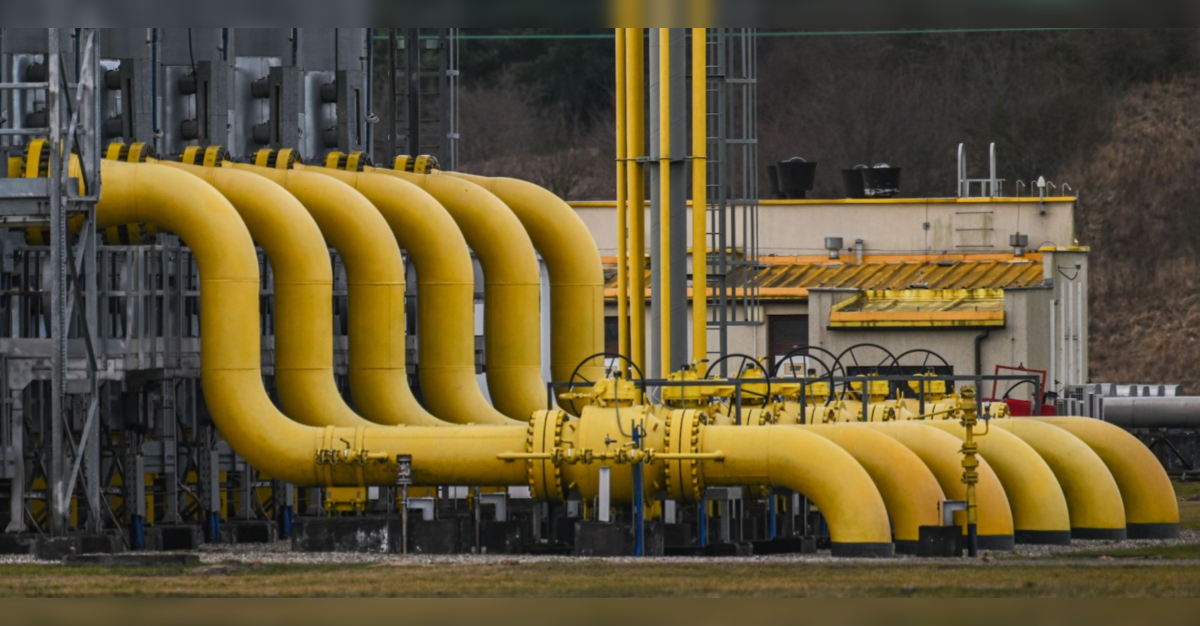
The European Union’s potential acceleration of its Russian gas phase-out, from an ambitious 2028 target to a more immediate 6-12 month timeline, represents a pivotal shift in global energy markets. This aggressive stance, championed by US Energy Secretary Chris Wright following discussions with EU Energy Commissioner Dan Jorgensen, signals a heightened commitment to severing energy ties with Moscow. For oil and gas investors, this development is not merely a geopolitical headline; it’s a critical catalyst demanding reassessment of supply chains, commodity price forecasts, and strategic asset allocation. Our proprietary data pipelines at OilMarketCap.com reveal a market grappling with complex signals, balancing geopolitical tensions against broader economic headwinds and an evolving energy landscape.
The Accelerated European Energy Pivot and LNG Demand
The notion of Europe phasing out Russian gas within six to twelve months, primarily through increased reliance on US liquefied natural gas (LNG), marks a significant departure from previous, more gradual strategies. While the EU’s initial legal proposals aimed for a complete phase-out by January 2028, with short-term contract bans beginning next year, the US is pushing for a much faster transition. Secretary Wright’s assertion that this could “easily be done within 12 months, maybe within six months,” underscores the urgency from Washington to further cut Russia’s most lucrative export revenue. Europe has already made substantial progress, reducing its dependence on Russian gas to approximately 13% this year, a dramatic decrease from roughly 45% before the 2022 invasion of Ukraine. However, achieving near-zero dependence in such a short timeframe requires immense logistical coordination and a robust global LNG market.
This accelerated pivot has profound implications for LNG producers and infrastructure developers. Increased demand for US LNG is a clear tailwind for American export terminals, potentially driving further investment in liquefaction capacity and export infrastructure. Investors are increasingly focusing on companies positioned to capitalize on this surge in demand, considering not only direct LNG exporters but also related services, shipping, and regasification facilities in Europe. Our first-party intent data indicates that investors are keenly interested in understanding the long-term price trajectory for natural gas, directly linking to the sustained demand pressures exerted by Europe’s energy security imperative.
Market Volatility and Crude Price Dynamics Amidst Geopolitical Shifts
Despite the intensifying geopolitical focus on European energy security, the broader crude market has experienced notable volatility. As of today, Brent Crude trades at $90.38 per barrel, marking a significant daily decline of 9.07%, having moved within a day range of $86.08 to $98.97. Similarly, WTI Crude stands at $82.59, down 9.41% for the day, with its range spanning $78.97 to $90.34. These sharp daily movements extend a more pronounced trend observed over the past two weeks, where Brent Crude has fallen from $112.78 on March 30th to $91.87 on April 17th, representing an 18.5% depreciation. Gasoline prices have also followed suit, currently at $2.93 per gallon, a 5.18% drop today.
This divergence between geopolitical pressure to restrict Russian energy supply and falling crude prices highlights the complex interplay of factors influencing the market. While a faster EU phase-out of Russian gas could theoretically tighten global energy markets, the current downturn in crude prices suggests that other forces are at play. Investors are actively questioning the sustainability of oil prices, with many asking what the price of oil per barrel will be by the end of 2026. The recent decline may reflect growing concerns over global economic slowdowns, potential demand destruction, or a perception that alternative supplies, particularly LNG, can adequately backfill European requirements without causing an immediate, severe shock to crude markets. The market is evidently weighing the impact of heightened energy security efforts against broader macroeconomic anxieties, leading to increased price discovery and volatility.
Navigating Geopolitical Hurdles and Unanimous Approval
While the US is actively pressing for an accelerated timeline, the political realities within the EU present substantial hurdles. New sanctions, particularly those impacting crucial energy imports, require unanimous approval from all 27 member states. This requirement has historically proven challenging, with countries like Hungary and Slovakia explicitly opposing sanctions on Russian gas, citing their deep reliance and the potential for severe economic disruption. This internal division was precisely why the initial 2028 phase-out proposal was structured to allow approval by a reinforced majority, bypassing the need for full unanimity on gas. The tension between US Secretary Wright’s push for “faster pressure on Russia” and Commissioner Jorgensen’s emphasis on avoiding “energy price spikes or supply shortages” underscores the delicate balancing act faced by EU leadership.
For investors, this political friction translates into inherent uncertainty regarding the ultimate pace and scope of the gas phase-out. While the intent is clear, the execution remains subject to intense negotiation and compromise. This dynamic impacts investment decisions in European energy infrastructure, where the long-term viability of LNG import terminals and interconnectors hinges on consistent policy and supply certainty. Companies with exposure to European gas markets must navigate this complex political landscape, understanding that even with significant political will, the practicalities of unanimous consent can prolong or alter the trajectory of energy transition policies.
Upcoming Events to Watch: Shaping the Energy Outlook
The immediate horizon holds several critical events that will undoubtedly shape energy market sentiment and provide further clarity on supply-demand dynamics. Investors are closely monitoring the upcoming **OPEC+ Joint Ministerial Monitoring Committee (JMMC) Meeting on April 18th** and the subsequent **Full Ministerial Meeting on April 19th**. Given the recent downturn in crude prices, our proprietary reader intent data shows a significant increase in questions regarding OPEC+’s current production quotas and their potential future adjustments. Any signals from this influential bloc about production levels will directly impact crude price stability and the broader energy complex.
Beyond OPEC+, the weekly cadence of US inventory data provides crucial insights. The **API Weekly Crude Inventory reports on April 21st and 28th**, followed by the **EIA Weekly Petroleum Status Reports on April 22nd and 29th**, will offer a snapshot of US supply and demand. These reports are vital for assessing the health of the world’s largest oil consumer and producer. Concurrently, the **Baker Hughes Rig Count on April 24th and May 1st** will indicate the trajectory of drilling activity and future production capacity in the US. The interplay of these supply-side indicators with the evolving European energy security narrative will be critical for investors aiming to forecast commodity prices and identify strategic opportunities in an increasingly volatile global energy market.


