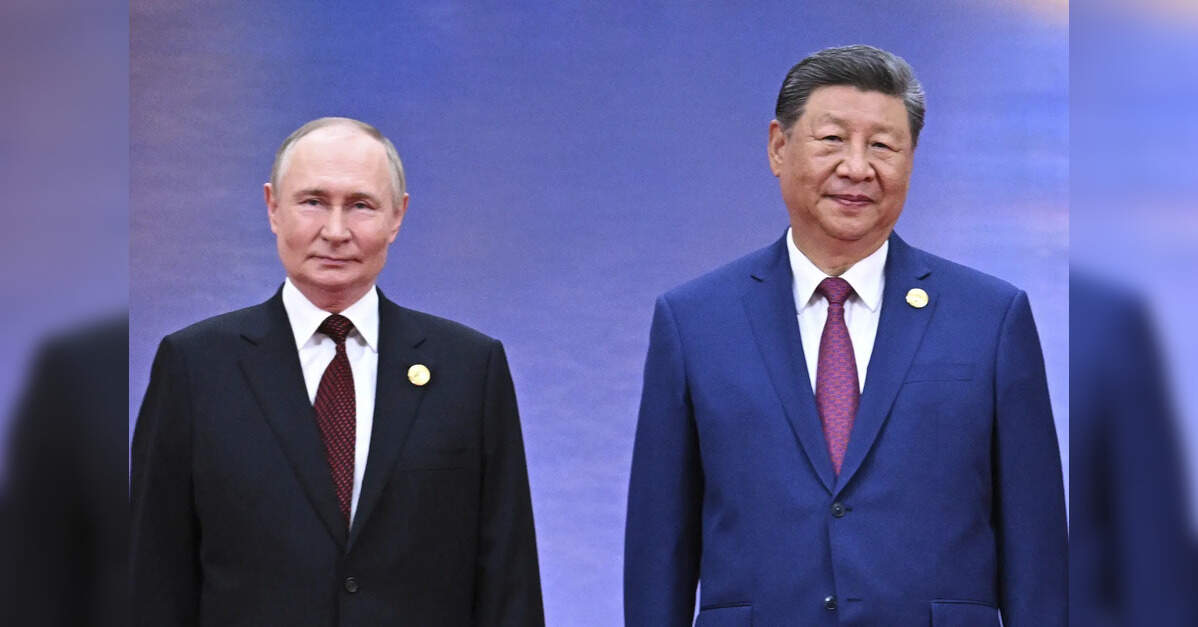
The recent trilateral gathering featuring Chinese President Xi Jinping, Russian President Vladimir Putin, and Indian Prime Minister Narendra Modi in China has moved beyond mere diplomatic symbolism to signal a profound reshaping of global energy markets. While the optics of camaraderie dominated headlines, the underlying agreements and affirmations confirm the rapid solidification of an energy axis with significant implications for investors. This alliance, primarily forged through energy ties, presents a formidable counterweight to traditional Western influence, challenging existing trade flows, pricing mechanisms, and the very concept of energy security in the 21st century.
The New Energy Nexus: Power of Siberia 2 and India’s Steadfast Demand
At the heart of this emerging axis lies a renewed commitment to energy collaboration. A major development from the recent meeting was Russia’s announcement of an agreement with China on the Power of Siberia 2 pipeline. This project, which Beijing had previously shown reluctance to advance, now signals a deeper strategic alignment. While specific pricing details remain under wraps, the decision to move forward now, despite China’s perceived lack of immediate need for additional gas or desire for increased energy dependence on its neighbor, underscores a significant geopolitical pivot. This move is not merely commercial; it’s a strategic assertion of energy independence from Western pressures.
Concurrently, India unequivocally signaled its intention to continue procuring oil from Russia. This stance persists even as the United States has targeted such purchases with punitive tariffs, highlighting India’s determination to secure its energy needs on its own terms. This bilateral energy trade, bolstered by the Russia-China gas pipeline, represents a critical inflection point in global energy dynamics. Matthew Bartlett, a former State Department official, aptly described this as “a significant and serious inflection point,” emphasizing how energy security has become intrinsically linked to national security in an increasingly complex world. For investors, this translates into a fundamental shift in supply-demand relationships and geopolitical risk premiums.
Market Volatility and the Geopolitical Premium
The implications of this burgeoning energy axis are already rippling through global markets, exacerbating existing volatility. As of today, Brent crude trades at $98.57, reflecting a marginal daily dip of 0.83% within a range of $97.92 to $98.57. WTI crude similarly hovers at $90.18, down 1.09% for the day. While these daily movements appear modest, they mask a more substantial underlying trend. Our proprietary data indicates that Brent crude has experienced a significant decline of $14, or 12.4%, from its level of $112.57 just two weeks ago on March 27th. This sharp correction underscores the market’s sensitivity to a confluence of factors, including global demand concerns and the evolving geopolitical landscape.
This volatility is compounded by the strategic decisions emanating from the Russia-China-India alliance. The increased certainty of Russian energy flows to non-Western markets, particularly China and India, reconfigures global supply chains and potentially mitigates the effectiveness of future sanctions or embargoes. Gasoline prices, currently stable at $3.09, also reflect the broader market sentiment, but sustained shifts in crude supply dynamics from this new axis could introduce upward pressure in the medium term. Investors must recognize that a geopolitical premium is increasingly baked into current prices, reflecting the inherent uncertainty and the potential for further market fragmentation.
Investor Focus: Decoding Supply Signals and Future Implications
Our proprietary reader intent data provides valuable insight into what is currently top of mind for oil and gas investors. A recurring theme in questions posed to our AI assistant revolves around “What are OPEC+ current production quotas?” and “What is the current Brent crude price?” This direct feedback underscores the market’s intense focus on supply-side decisions and real-time pricing. The formation of the Russia-China-India energy axis directly impacts these critical investor concerns.
The collective power of these three nuclear nations is immense, encompassing a third of the world’s population, vast natural resources, and formidable manufacturing capabilities. Their combined gross domestic product now accounts for roughly a quarter of global GDP, a substantial increase from about 5% at the turn of the century. This economic heft, coupled with their energy collaboration, means that their energy decisions will increasingly influence global supply and demand dynamics, potentially lessening the traditional market impact of Western consumer nations. For instance, if Russia, China, and India continue to deepen their energy ties and potentially explore alternatives to the US dollar for transactions, as suggested by some analysts, it could fundamentally alter the global financial architecture around energy trading. Investors need to monitor not just the physical flow of oil and gas, but also the financial mechanisms that underpin these trades, as they could introduce new layers of risk and opportunity.
Navigating Upcoming Catalysts and the Evolving Energy Map
Looking ahead, the next few weeks present several critical calendar events that will interact with the ramifications of this new energy axis. The upcoming OPEC+ Joint Ministerial Monitoring Committee (JMMC) meeting on April 18th, followed swiftly by the Full Ministerial meeting on April 20th, will be particularly scrutinized. While these meetings typically focus on production quotas, the backdrop of Russia’s solidified energy ties with China and India introduces an additional layer of complexity.
Any decisions made by OPEC+ regarding supply adjustments will now be evaluated through the lens of this emerging geopolitical reality. Will Russia’s commitments to its new partners influence its stance within OPEC+? How will other members, sensitive to market stability and their own revenue streams, react to this evolving power dynamic? Beyond OPEC+, the routine releases of the API Weekly Crude Inventory (April 21st, April 28th) and the EIA Weekly Petroleum Status Report (April 22nd, April 29th) will provide crucial demand and inventory signals, while the Baker Hughes Rig Count (April 17th, April 24th) will offer insights into North American supply responses. Investors should pay close attention to how these data points reflect or diverge from expectations, as the market recalibrates to a world where a significant portion of global energy demand and supply is increasingly orchestrated outside of traditional Western spheres of influence.


