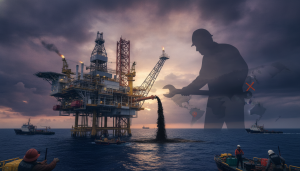
The United Arab Emirates, a cornerstone of global oil supply, presents a compelling paradox for energy investors. While synonymous with vast hydrocarbon wealth, this desert nation is increasingly grappling with the unpredictable forces of nature. Recent weather patterns, marked by intensified rainfall, are exposing critical infrastructure vulnerabilities and prompting a profound re-evaluation of national priorities. For investors, understanding this evolving dynamic—where a seemingly beneficial natural event like rain can exacerbate urban strains—is crucial for assessing the UAE’s long-term stability as a key energy player. The interplay between climate adaptation, rapid urbanization, and persistent resource demands is reshaping the investment landscape, challenging traditional views of an oil-rich state.
The Dual Edge of Desert Rain: Infrastructure Under Strain
In a region historically defined by arid conditions, the increasing frequency and intensity of rainfall in the UAE represent a significant, albeit counterintuitive, challenge. While rain might appear a blessing in a parched landscape, the reality for a nation with an estimated 10 million people, including approximately 4 million in Dubai alone, is far more complex. The rapid urban expansion, from Dubai’s modest 255,000 residents in 1980, has outpaced the development of infrastructure robust enough to handle the kind of deluges witnessed recently. Last year, the UAE experienced its heaviest recorded rainfall, causing widespread disruption to travel and daily life, highlighting a critical vulnerability.
These events underscore the immense pressure on existing infrastructure, designed for minimal precipitation, to manage significant water runoff. Streets become waterways, drainage systems are overwhelmed, and the very fabric of urban life, reliant on smooth transportation and uninterrupted services, faces severe tests. For the energy sector, while direct oil production facilities might be resilient, the broader economic ecosystem—including labor mobility, supply chains, and power grids—is susceptible. Investors must recognize that these climate-induced infrastructure woes introduce an additional layer of operational risk and necessitate considerable capital expenditure for upgrades, diverting resources that might otherwise be allocated to oil and gas expansion.
Water as the New Black Gold: Re-prioritizing National Investment
The UAE’s strategic imperative is shifting, with water security now commanding attention historically reserved for oil. The nation’s reliance on approximately 70 water desalination plants, with the Dubai Electricity and Water Authority producing an astonishing 683.7 billion liters last year, underscores the scale of this challenge. Despite extensive efforts, including cloud seeding to induce rain and the construction of dams, the UAE ranks seventh globally for water scarcity risk. This fundamental need has led to pronouncements like that from Sheikh Mohammed bin Zayed Al Nahyan in 2011, stating, “Water is more important than oil.”
This re-prioritization has direct implications for investors. Many are currently asking about the stability of Brent crude prices and OPEC+ production quotas. The answer, in part, lies in the UAE’s domestic capital allocation. Significant investment in water infrastructure and climate resilience is not merely a social expenditure; it’s an economic imperative to sustain population growth and, by extension, the workforce that supports the oil and gas industry. While not directly increasing crude output, these investments are crucial for maintaining the long-term operational stability and productive environment for the UAE’s dominant oil sector. This strategic pivot ensures the resilience of the nation’s economic engine, indirectly supporting its capacity to remain a consistent oil producer in the global market.
Navigating Market Dynamics Amidst Domestic Challenges
The UAE’s internal focus on climate adaptation and infrastructure resilience plays out against a backdrop of dynamic global oil markets. As of today, Brent crude trades at $98.57, reflecting a -0.83% decline within its daily range of $97.92-$98.57. Similarly, WTI crude is at $90.18, down -1.09% from its intraday high of $90.21. This snapshot follows a more significant trend: Brent crude has seen a notable 12.4% drop over the past 14 days, plummeting $14 from $112.57. This market volatility underscores the importance of reliable supply from major producers.
For investors, the question is how the UAE’s domestic challenges impact its perceived reliability. While the nation’s crude production assets are robust, the increasing strain on broader infrastructure due to extreme weather could indirectly affect logistics, labor availability, and the overall stability of the operating environment. In a market where every supply disruption, real or perceived, can trigger price movements, the UAE’s proactive investments in climate resilience become a crucial factor for risk assessment. These investments, while costly, aim to fortify the nation against future shocks, ensuring its ability to consistently meet its commitments, even as global prices fluctuate.
Forward Outlook: OPEC+ Decisions and Climate Adaptation Investment
The strategic direction of the UAE’s oil production capacity will be closely watched in the coming weeks, particularly with key OPEC+ meetings on the horizon. The Joint Ministerial Monitoring Committee (JMMC) is scheduled for April 18th, followed by the full OPEC+ Ministerial Meeting on April 20th. These gatherings are critical for setting global production quotas and assessing market stability.
From an investment perspective, it’s vital to consider how the UAE’s burgeoning domestic investment in water security and infrastructure upgrades might influence its stance during these high-stakes negotiations. The sheer scale of capital required to adapt to changing weather patterns and sustain rapid population growth could subtly re-direct national investment priorities. While the UAE remains committed to its role as a leading oil producer, the long-term capital drain for climate adaptation might temper the pace of aggressive upstream oil and gas expansion. Investors should monitor whether the nation’s increasing focus on environmental resilience translates into a more measured approach to production increases, ensuring domestic stability even as it navigates its international energy commitments. This interplay will define the UAE’s contribution to global oil markets in the years to come.