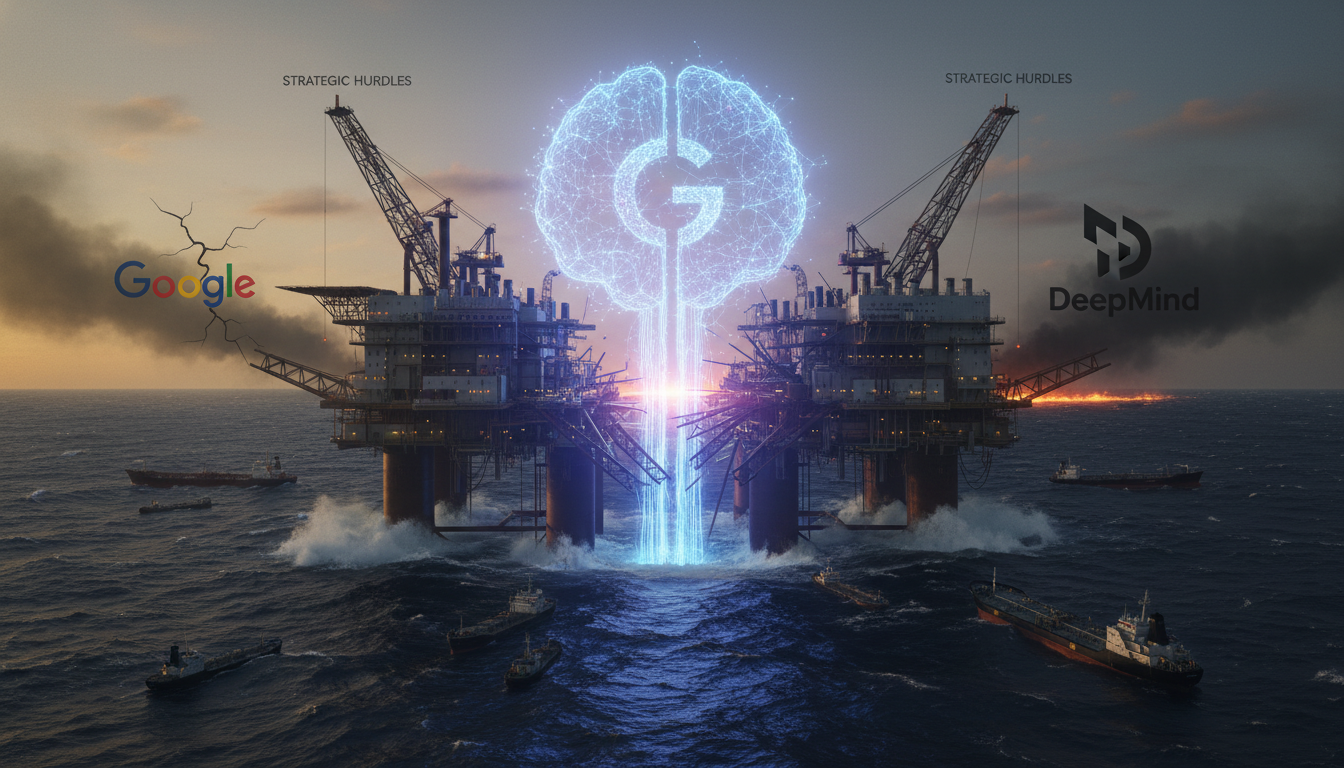
In today’s rapidly evolving corporate landscape, internal technology strategy and talent management represent critical vectors for investment analysis, particularly in capital-intensive sectors like oil and gas. While the headlines often focus on energy prices, geopolitical shifts, or production figures, the unseen battles over internal tooling and digital adoption within even the most advanced tech companies offer profound lessons for investors assessing the long-term viability and efficiency of their portfolio holdings. A recent internal dispute at a major technology titan provides a compelling case study on how differing access to cutting-edge tools can create significant operational friction and impact a company’s competitive edge.
Internal Tech Divides Create Unexpected Tensions
A notable schism has emerged within Google, specifically concerning access to advanced artificial intelligence tools. For several months, certain employees within Google DeepMind have been granted the ability to utilize Anthropic’s Claude AI for their coding requirements. This contrasts sharply with the company’s established policy, which generally restricts Googlers to internally developed tools or those custom-tailored for their proprietary systems. Claude, meanwhile, has rapidly become a favored AI coding assistant across the broader technology industry, lauded for its capabilities.
This differential access has stirred considerable unease among engineers in other divisions, who find themselves limited to Google’s proprietary Gemini AI models for their coding tasks. A prevailing sentiment among some of these employees suggests that Google’s internal models simply do not match Claude’s efficacy for coding. This perceived disparity is particularly problematic as Google increasingly mandates AI usage, even linking specific AI-related goals to performance reviews. In some instances, employees face expectations not only to generate code with AI but also to develop new tools to enhance their processes, all while operating with what they consider less effective internal technology. Such internal friction directly impacts productivity and could have broader implications for innovation and talent retention, aspects vital for any major enterprise, including integrated energy companies.
Leadership’s Stance and the ‘Dogfooding’ Imperative
Google’s rationale for maintaining a strict internal tool ecosystem stems partly from its custom-built infrastructure and its “dogfooding” philosophy. This practice, where employees rigorously test and utilize products before their public launch, is believed to accelerate improvement cycles. Yet, this approach stands in contrast to other tech giants; Meta, for instance, permits its employees to leverage external AI models like Claude, suggesting alternative strategies for fostering innovation and efficiency.
The internal debate spilled into the public sphere following observations from veteran programmer Steve Yegge, who noted on social media that Google’s internal AI adoption appeared to lag significantly. Citing a conversation with a Google director, Yegge highlighted concerns about the company’s pace in integrating AI. This post drew a sharp, public rebuke from Google DeepMind CEO Demis Hassabis, who dismissed the claims as “completely false and just pure clickbait.” However, Yegge reiterated his assertions, noting that further corroboration from Google employees reinforced his initial claims, specifically regarding DeepMind engineers using Claude while others remain restricted. He further revealed that an internal proposal to equalize access by removing Claude for everyone met fierce DeepMind resistance, with several engineers reportedly threatening to resign. This stark illustration of internal disagreement and potential talent flight underscores the delicate balance leaders must strike between proprietary development and leveraging external innovation.
Implications for Energy Investors: Navigating Digital Transformation
For investors focused on the oil and gas sector, these internal struggles within a tech giant offer critical insights. While the specifics revolve around AI coding tools, the underlying themes—technological adoption, internal efficiency, talent management, and leadership alignment—are universally relevant and profoundly impact the investment thesis for energy companies navigating their own digital transformation journeys. The global energy industry, particularly, competes fiercely for top-tier engineering and data science talent. If major energy firms are perceived as technologically constrained or offering inferior tools for their highly skilled workforce, it creates a significant disadvantage in attracting and retaining the intellectual capital essential for future growth and efficiency gains.
Operational efficiency in the oil and gas sector is paramount, directly influencing capital expenditure and operational costs. The choice between developing proprietary software platforms for geological modeling, reservoir simulation, or predictive maintenance, versus integrating best-in-class external solutions, carries substantial financial weight. Companies that effectively empower their technical teams with the most effective tools, regardless of their origin, are better positioned to optimize production, reduce downtime, and accelerate project timelines. Conversely, internal resistance to superior external technology, or a failure to adequately support internal development, can lead to inefficiencies, stifle innovation, and ultimately erode shareholder value.
The public leadership dispute surrounding Google’s AI strategy further highlights the importance of clear communication and unified vision within large, complex organizations. For oil and gas majors, whose multi-billion dollar projects rely on seamless cross-functional collaboration, internal disunity over technology strategy can be a significant drag. Investors must scrutinize how energy companies manage their digital ecosystems, foster internal innovation, and ensure that leadership is aligned on technological direction. The ability of an oil and gas firm to leverage cutting-edge analytics, automation, and AI—whether developed internally or acquired externally—will be a defining factor in its ability to navigate the energy transition, maintain competitiveness, and deliver consistent returns.
Ultimately, while the immediate context of this internal tech drama is a software company, the underlying lessons are universal. The efficient deployment of technology, the empowerment of a skilled workforce, and robust leadership in navigating digital change are not just ‘tech’ issues; they are fundamental drivers of corporate performance and, by extension, investor returns across all sectors, including the dynamic and capital-intensive world of oil and gas.